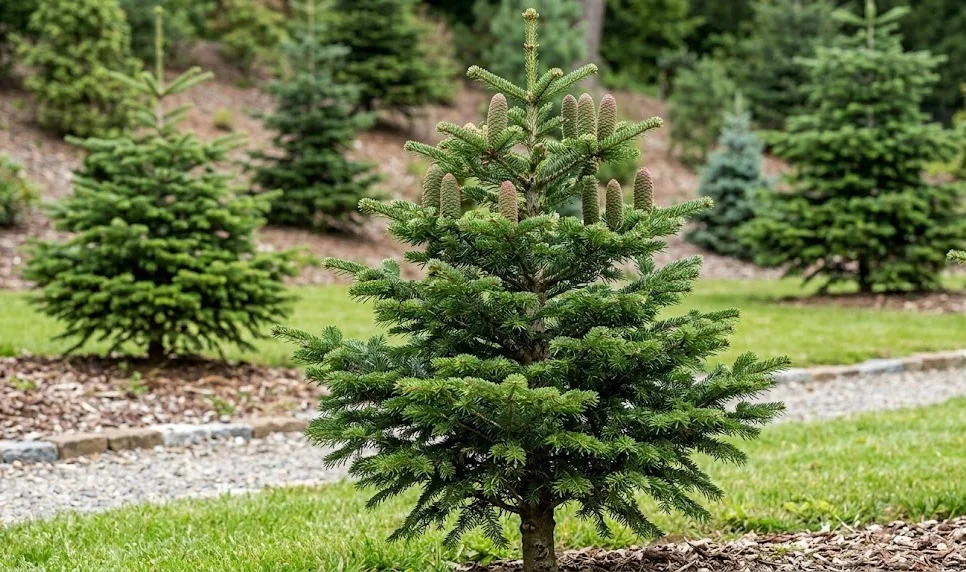

Proper hydration and nutrition are the twin pillars that support the vigorous growth and vibrant health of a nordmann fir throughout its life. You must recognize that while these trees are naturally robust, they have specific needs that differ from many other common garden conifers. Mastering the art of watering and the science of fertilization will ensure that your tree maintains its legendary needle retention and deep green color. A lack of attention to these two factors is the most frequent cause of secondary issues like pest infestations and environmental stress.
Water is the lifeblood of the tree, facilitating every biological process from nutrient transport to the regulation of leaf temperature. You should understand that the goal of watering is not just to keep the soil wet, but to provide moisture to the deep roots where it is needed most. Surface watering often leads to shallow root systems that make the tree more susceptible to windthrow and drought. Developing a watering technique that encourages deep, expansive roots is a hallmark of professional arboriculture.
Fertilization provides the chemical building blocks that the tree uses to create new tissue, produce seeds, and defend itself against invaders. You must be careful not to view fertilizer as a “cure-all” for a tree that is struggling due to poor site selection or bad soil structure. In fact, over-fertilizing a stressed tree can sometimes do more harm than good by forcing growth that the root system cannot support. A balanced, informed approach to nutrient management is essential for long-term sustainability.
Combining these two aspects of care requires a seasonal awareness and a willingness to adjust your methods based on the current weather conditions. You should pay close attention to the soil moisture levels and the visual cues the tree provides before deciding to water or apply nutrients. This professional level of engagement with the tree’s needs will prevent the common pitfalls of both neglect and over-maintenance. By being a careful steward of the tree’s resources, you allow it to reach its full majestic potential.
Hydration needs and water management
The nordmann fir has a moderate to high demand for water, particularly during the active growing season in late spring and early summer. You should aim to keep the soil consistently moist but never saturated, as “wet feet” can quickly lead to root rot and death. Understanding the texture of your soil will help you determine how often you need to apply water to maintain this balance. During periods of high heat and low rainfall, you may need to increase the frequency of your irrigation efforts significantly.
More articles on this topic
Deep watering is the most effective way to ensure that moisture reaches the entire vertical and horizontal extent of the root zone. You should apply water slowly, perhaps using a soaker hose or a drip irrigation system, to allow it to seep deep into the earth. This method prevents the runoff and evaporation that occur with overhead sprinklers or high-pressure hoses. By encouraging the roots to grow deeper in search of water, you create a more resilient tree that can better withstand natural dry spells.
During the first two years after planting, the tree’s water needs are at their most critical because the root system is still very limited. You must check the moisture level in the root ball and the surrounding soil at least twice a week during the summer months. If the top two inches of soil feel dry to the touch, it is time to give the tree a thorough, deep soaking. As the tree matures and its roots expand, it will become increasingly self-sufficient, but it will always benefit from supplemental water during extreme droughts.
Winter watering is an often-forgotten task that can be the difference between life and death for evergreens in many climates. You should provide water during mid-winter thaws if the ground is not frozen and there has been very little snow or rain. Evergreen needles continue to lose moisture through transpiration even in the cold, and if the soil is dry, the tree can suffer from winter desiccation. A final deep watering in late autumn before the ground freezes solid is one of the best gifts you can give your fir.
Seasonal irrigation strategies
Spring is the time when the tree breaks dormancy and begins its most rapid phase of growth, making it a period of high water demand. You should ensure that the tree has ample moisture as the buds begin to swell and the new needles start to emerge. Adequate water at this stage ensures that the new growth is lush and full, rather than stunted or sparse. If the spring is unusually dry, you should start your irrigation routine earlier than you might for other landscape plants.
More articles on this topic
In the height of summer, the focus of irrigation shifts from supporting new growth to helping the tree survive the intense heat. You should monitor for signs of heat stress, such as needles that lose their shine or branches that appear to droop slightly in the afternoon sun. Watering in the early morning or late evening is the most efficient practice, as it reduces the amount of water lost to evaporation. Keeping the root zone cool with a combination of water and mulch is your primary goal during the hottest months.
As autumn approaches, the tree’s water needs begin to decrease as it prepares to enter its dormant state for the winter. You should gradually reduce the frequency of your watering to allow the tree to naturally slow down its metabolic processes. However, do not stop watering entirely, especially if the autumn is dry, as the tree still needs to enter winter with fully hydrated tissues. The goal is to avoid stimulating late-season growth while still maintaining the overall health of the established foliage.
A professional irrigation plan also takes into account the impact of natural rainfall and the surrounding topography of the planting site. You should use a rain gauge to track how much water your trees are receiving from the sky and adjust your supplemental watering accordingly. Trees planted on slopes may require different techniques, such as creating a small berm to catch water, compared to those on flat ground. By tailoring your strategy to the specific conditions of the site, you ensure that every drop of water is used effectively.
Nutrient requirements and soil fertility
A nordmann fir requires a specific balance of macronutrients and micronutrients to maintain its health and characteristic appearance. You should focus on nitrogen for needle color and growth, phosphorus for root development, and potassium for overall winter hardiness and disease resistance. While these are the big three, trace elements like magnesium and iron are also vital for preventing chlorosis and other nutrient deficiencies. A soil test is the only way to know exactly what is missing from your particular piece of land.
Younger trees have different nutritional priorities compared to mature specimens that have already reached their desired size in the landscape. You should provide a more nitrogen-rich environment for young trees to encourage the rapid development of a strong framework and lush canopy. For older trees, the goal of fertilization shifts toward maintenance and the slow replenishment of soil nutrients that have been depleted over time. Over-fertilizing a mature tree can lead to excessive growth that requires more maintenance and may weaken the tree’s structure.
The timing of fertilizer application is just as important as the type of nutrients you choose to provide to the tree. You should apply fertilizer in early spring, just as the new growth is about to begin, to give the tree a boost for its active season. Avoid applying any nitrogen-heavy products in the late summer or autumn, as this can stimulate soft growth that will be killed by the first hard frost. This late-season growth can also act as a magnet for certain pests that are active during the cooling months.
Organic matter is a fantastic source of slow-release nutrients that also improves the physical structure and microbial life of the soil. You should consider top-dressing the area under the tree’s canopy with high-quality compost or well-rotted leaf mold every year or two. This mimics the natural forest floor where needles and organic debris decompose to feed the trees from the top down. Over time, this practice creates a rich, fertile environment that reduces the need for synthetic chemical fertilizers.
Organic vs mineral fertilization
Choosing between organic and mineral fertilizers depends on your specific goals for the tree and your overall gardening philosophy. Mineral fertilizers, often called synthetic or chemical fertilizers, provide a quick and predictable burst of nutrients that are immediately available to the tree. These can be very useful for correcting a severe deficiency or giving a young tree a rapid start in a competitive environment. However, they do not improve the soil quality and can sometimes lead to salt buildup if overused.
Organic fertilizers, such as bone meal, fish emulsion, or composted manure, release their nutrients much more slowly over a longer period. You should choose organic options if you want to build long-term soil health and encourage a diverse community of beneficial soil organisms. These products are less likely to burn the sensitive roots of the fir and provide a more balanced suite of micronutrients. While they may not produce the immediate visual results of synthetics, they contribute to a more resilient and sustainable ecosystem.
A combination approach is often the best path for a professional gardener who wants the best of both worlds for their nordmann fir. You can use a slow-release mineral fertilizer in the spring to provide a steady baseline of nutrients for the main growing season. Then, follow up with organic top-dressings in the autumn to improve the soil structure and feed the microbial life over the winter. This dual strategy ensures that the tree has what it needs for immediate growth while also securing its future health.
Whatever type of fertilizer you choose, you must always follow the application instructions carefully to avoid damaging the tree or the environment. You should apply the fertilizer to the “drip line” of the tree, which is the area directly under the outermost tips of the branches. This is where the most active feeder roots are located and where they can most efficiently absorb the nutrients. Watering the area thoroughly after application is essential for moving the nutrients into the soil where the roots can reach them.
Application methods and monitoring
The method you use to apply fertilizer can significantly impact how much of the product actually reaches the tree’s roots. You should broadcast granular fertilizers evenly across the soil surface, avoiding any direct contact with the trunk or the foliage. For larger plantations, specialized equipment like a broadcast spreader can ensure even coverage and save a significant amount of time. If you are using liquid fertilizers, they should be applied as a soil drench around the base of the tree to ensure deep penetration.
Monitoring the tree’s response to your fertilization efforts is a key part of becoming an expert at nordmann fir care. You should look for improvements in needle color, an increase in annual growth, and a generally more robust appearance over the following months. If you do not see a positive change, or if you see signs of stress like needle tip burn, you may need to re-evaluate your strategy. Keeping a log of what you applied and when will help you connect your actions with the results you see in the garden.
The pH of the soil should be checked periodically, as certain fertilizers can slowly change the acidity or alkalinity of the earth over time. You should remember that if the pH is not within the correct range, the tree may be unable to use the fertilizer you are providing. Adding lime to raise the pH or sulfur to lower it may be necessary before any fertilizer can be truly effective. A professional-grade soil test every three to five years is a small investment that pays big dividends in tree health.
Finally, you should always be mindful of the environmental impact of your watering and fertilization practices on the surrounding area. Excessive water or fertilizer runoff can pollute local waterways and harm other plants and animals in the ecosystem. Using slow-release products and watering at a rate the soil can absorb are the best ways to minimize these negative effects. By practicing responsible stewardship, you ensure that your beautiful nordmann fir is a benefit to your entire neighborhood and the environment.