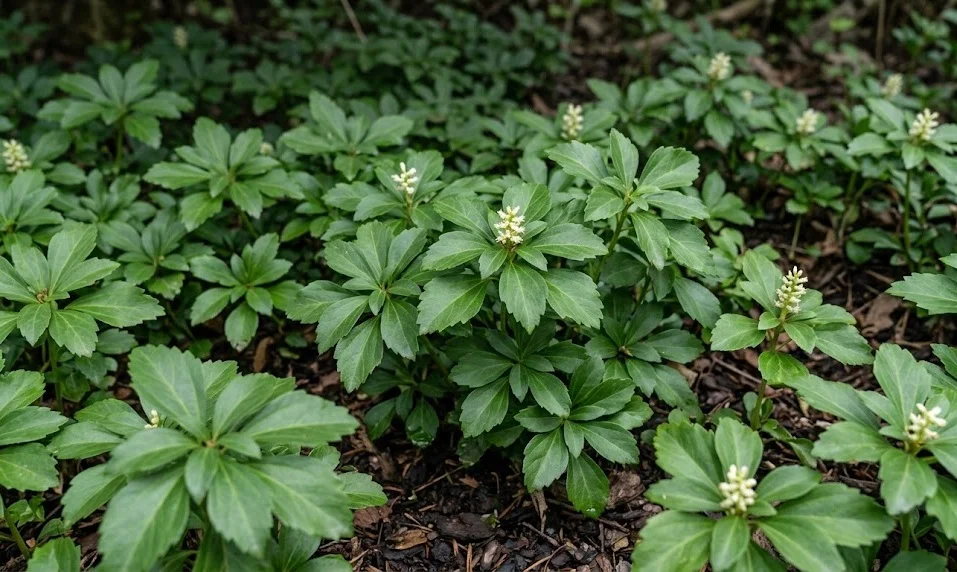

Maintaining the health of Japanese spurge involves more than just watering and feeding; it also requires a vigilant eye for potential threats. While this groundcover is generally considered a low-maintenance and hardy choice, it is not entirely immune to biological challenges. Gardeners must be able to recognize the early signs of infection or infestation to prevent localized issues from spreading across the entire garden bed. A proactive approach to plant health is the best way to ensure that your evergreen carpet remains a lush and attractive feature of your landscape.
Fungal diseases are the most frequent problem encountered with this species, often triggered by environmental conditions rather than poor care. High humidity, lack of air circulation, and excessive overhead watering create the perfect environment for spores to germinate and spread. If you notice dark spots on the leaves or stems that appear to be rotting, it is likely a sign of a fungal pathogen. Identifying these issues early allows you to take corrective action before the damage becomes irreversible and widespread.
Insects can also target the Japanese spurge, although they are generally less common than fungal issues. Some pests are so small that they are difficult to see with the naked eye, meaning you have to look for the symptoms of their presence instead. Distorted leaves, sticky residue, or tiny white specks on the undersides of the foliage are all common indicators of an insect problem. Understanding the life cycles of these pests will help you choose the most effective time and method for treatment.
General environmental stress can often be mistaken for a disease or pest problem, so a careful diagnosis is always necessary. Sunscald, winter desiccation, and nutrient deficiencies can all cause discoloration and leaf drop that mimics certain infections. Before applying any chemical treatments, you should evaluate the site conditions to rule out non-biological causes of the plant’s decline. A healthy plant in the right location is always the best defense against any type of biological threat.
Combating Volutella leaf blight
Volutella blight is perhaps the most serious and common disease that affects Japanese spurge in residential gardens. This fungal infection typically manifests as tan or brown circular spots on the leaves that gradually enlarge and merge. As the disease progresses, you may see pinkish spore masses forming on the undersides of the leaves or on the stems during wet weather. If left untreated, the blight can cause entire sections of the groundcover to die back, leaving unsightly bare patches in the bed.
More articles on this topic
The primary cause of Volutella outbreaks is often a combination of wounded plants and high moisture levels. Stems that have been damaged by winter weather or heavy foot traffic are particularly susceptible to the fungal spores. To manage this disease, it is crucial to remove and destroy all infected plant material as soon as it is discovered. Do not compost these clippings, as the spores can survive the composting process and return to your garden later.
Improving air circulation is a key cultural practice that can help prevent the development of leaf blight. If the mat of spurge has become too dense, consider thinning it out to allow more air to flow through the foliage. You should also avoid overhead irrigation, as keeping the leaves dry is one of the most effective ways to stop the fungus from spreading. In severe cases, a fungicide labeled for use on groundcovers may be necessary to bring the infection under control.
Regularly cleaning up fallen leaves from other trees is also important in the fight against Volutella blight. Large leaves that sit on top of the spurge trap moisture and create the stagnant, humid conditions that the fungus loves. By keeping the surface of the groundcover clear, you allow the plants to breathe and the soil surface to dry out between waterings. Consistency in these simple maintenance tasks will go a long way in keeping your garden free of this devastating disease.
Identifying and managing scale insects
Scale insects are the most persistent pests that target Japanese spurge, often appearing as small, white, or brown bumps on the stems. These insects feed by sucking the sap from the plant, which weakens its overall vigor and can lead to yellowing leaves. Because they are protected by a hard, waxy shell, they can be quite difficult to eliminate once they have established a large colony. A heavy infestation can eventually lead to the death of individual plants if the pest is not managed correctly.
More articles on this topic
One of the first signs of a scale problem is often the presence of honeydew, a sticky substance secreted by the insects as they feed. This honeydew can attract ants and lead to the growth of black sooty mold on the leaves, which further reduces the plant’s beauty. If you notice your spurge looking unusually sticky or covered in a dark film, inspect the stems closely for the presence of scale. Early detection is vital because young scale insects are much easier to treat than mature ones.
Horticultural oils and insecticidal soaps are effective treatments for scale, but they must be applied at the right time to work. These products work by smothering the insects, so they are most effective when applied to the “crawler” stage before the hard shell forms. This usually happens in the late spring or early summer, depending on your local climate and the specific species of scale. Complete coverage of the stems and the undersides of the leaves is necessary for these treatments to be successful.
In very dense plantings where the scale has become widespread, it may be necessary to cut the plants back severely to remove the bulk of the population. New growth that emerges from the base is often healthy, provided that you follow up with preventative treatments. Encouraging natural predators, such as ladybugs and lacewings, can also help keep the scale population in check over the long term. A balanced approach that combines cultural, biological, and chemical methods is usually the most effective strategy.
Root rot and moisture-related issues
Root rot is a common problem in gardens where the soil is heavy and the drainage is poor. This condition is caused by various soil-borne fungi that thrive in oxygen-deprived, waterlogged environments. The symptoms often start below ground, but you will soon see the effects in the form of wilted, yellowing, or stunted foliage. By the time the above-ground symptoms are obvious, the root system may already be severely compromised, making recovery difficult.
Preventing root rot starts with proper site selection and soil preparation before the first plant is even put in the ground. If your soil has a high clay content, incorporating organic matter and grit will help to create the drainage the plant needs. You should also avoid planting the spurge too deeply, as burying the crown can lead to moisture being trapped against the main stem. A well-placed plant in porous soil is very unlikely to suffer from any type of root-related disease.
If you suspect that a section of your groundcover is suffering from root rot, you should immediately reduce your watering frequency. Dig up a few of the affected plants to inspect the roots; healthy roots should be firm and white, while diseased roots will be soft, brown, or black. If the infection is localized, you can try to save the surrounding plants by improving the drainage in that area. However, severely infected plants should be removed and discarded to prevent the fungus from spreading through the soil.
Managing the environment is the most sustainable way to keep root rot at bay in your Japanese spurge beds. Avoid over-watering during the cooler months when the plant’s demand for moisture is lower and the soil stays wet longer. Mulching is beneficial, but you must ensure that the mulch is not packed too tightly around the base of the stems. Keeping the root zone healthy and aerated is the foundation of a resilient and long-lived garden.
Integrated pest management strategies
Adopting an integrated pest management (IPM) approach is the most professional way to handle the health of your Japanese spurge. This strategy involves regular monitoring, accurate identification of problems, and using the least toxic control methods first. By observing your garden closely, you can often catch small issues before they require any chemical intervention. A healthy ecosystem with diverse plant life and beneficial insects is the best natural defense against outbreaks.
When a problem is identified, start by using cultural controls such as pruning, thinning, or adjusting your watering habits. Often, simply changing the environment is enough to make it inhospitable for a particular pest or disease. If cultural methods are not sufficient, biological controls like releasing predatory insects can be a very effective and eco-friendly option. This approach respects the balance of your garden while still addressing the specific threat to your groundcover.
Chemical treatments should always be considered a last resort and used only when other methods have failed to protect the plants. If you must use a pesticide or fungicide, choose a product that is specific to the target problem to minimize the impact on non-target organisms. Always read and follow the label instructions carefully to ensure the safety of yourself, your pets, and the environment. Applying treatments in the early morning or late evening can also help protect beneficial pollinators that might be in the area.
Finally, remember that a certain level of imperfection is natural in any living garden and should be expected. A few spots on the leaves or a handful of insects do not necessarily mean that the entire planting is in danger. The goal of a professional gardener is to manage these populations so that they do not reach a level where they cause significant damage. With patience and consistent care, you can maintain a beautiful bed of Japanese spurge that thrives for decades.