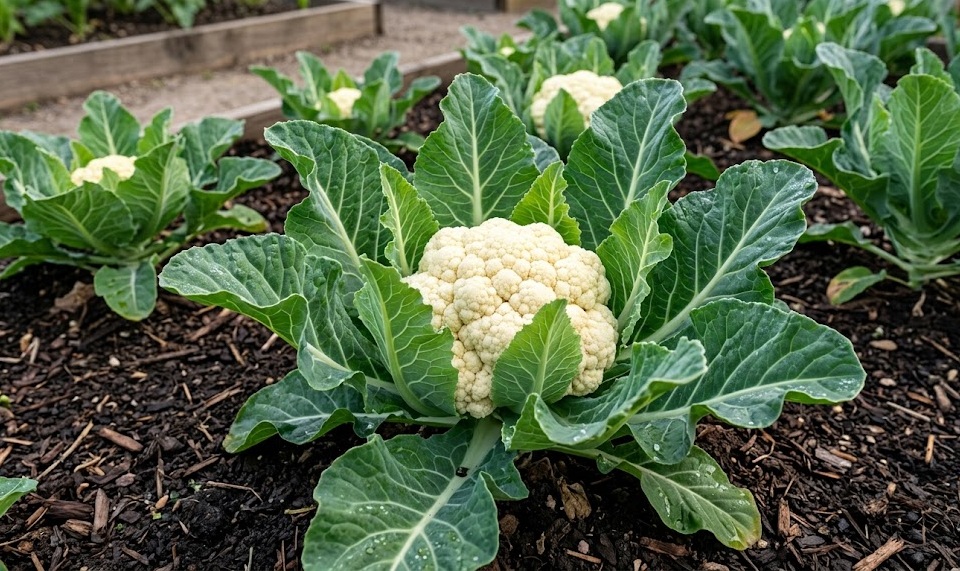

Pruning cauliflower is not as common as pruning tomatoes, but it can be a useful technique for managing plant health and space. You may choose to remove the lower, older leaves that are touching the ground or showing signs of yellowing. These leaves are often the first to be attacked by pests or infected by soil-borne pathogens like fungal spores. Removing them improves air circulation around the base of the plant and keeps the growing environment cleaner.
When removing leaves, always use a clean, sharp pair of garden shears or a professional harvest knife. A clean cut heals much faster than a jagged tear and reduces the risk of bacterial infection at the wound site. You should aim to make the cut as close to the main stem as possible without damaging the stem’s outer tissue. This level of precision is characteristic of a professional who treats their plants with care and respect.
You should be careful not to remove too many leaves, as the plant needs a large canopy to produce enough energy for the curd. A good rule of thumb is to never remove more than twenty percent of the total leaf area at one time. The outer leaves also provide natural protection for the developing head against the wind and physical damage. Balancing the need for airflow with the need for energy production is the art of professional plant maintenance.
If you notice leaves that are severely damaged by insects or disease, you should remove them immediately and dispose of them far from the garden. This “sanitation pruning” helps slow down the spread of the problem and allows the plant to focus its energy on healthy tissue. It is also a good opportunity to inspect the rest of the plant more closely for any hidden issues. Consistent and observant maintenance is what leads to a successful and professional-grade harvest.
Controlling size and growth habit
In some intensive gardening systems, such as square foot gardening, you may need to trim back the largest leaves to prevent them from shading out other crops. While this is not ideal for the cauliflower itself, it may be necessary to maintain the overall productivity of the garden bed. You should try to trim only the leaf tips or the most obstructive leaves to minimize the impact on the plant’s growth. Professional space management requires making these types of calculated trade-offs throughout the season.
More articles on this topic
Some growers choose to remove the side shoots that occasionally appear at the base of certain cauliflower varieties. These side shoots can divert energy away from the main central curd, resulting in a smaller and less impressive harvest. By removing them early, you ensure that all of the plant’s resources are focused on the primary goal of producing a high-quality head. This practice is especially common among commercial growers who are aiming for maximum uniformity in their produce.
Trimming can also be a useful strategy for managing plants that have become overly large and unwieldy due to excessive nitrogen. While a large plant is generally good, extreme vegetative growth can sometimes delay the formation of the curd. A light pruning can theoretically stress the plant just enough to trigger the reproductive phase and encourage heading. However, this is an advanced technique that should be used with caution and based on professional experience.
If you are growing cauliflower in a greenhouse or under a cover, managing the size of the plants is essential for maintaining proper ventilation. Large, overcrowded leaves can trap humidity and create a stagnant environment that is a playground for mold and rot. Trimming back the outer leaves to maintain a gap between plants can significantly reduce your disease risk in these enclosed spaces. A professional is always looking for ways to optimize the environment for their crops.
Post-harvest trimming and preparation
Once the cauliflower head is harvested, the remaining plant can be quite large and takes up valuable space in the garden. You should remove the entire plant, including the root system, as soon as the harvest is complete to prevent it from attracting pests. Chopping the plant into smaller pieces before adding it to the compost pile will help it break down more quickly. This final cleanup is a professional habit that keeps your garden ready for the next planting cycle.
More articles on this topic
Trimming the wrapper leaves on the harvested head is a key part of preparing the vegetable for the kitchen or the market. You should leave about an inch or two of the leaf stalks attached to provide a decorative and protective frame for the white curd. Using a sharp knife to make a clean, flat cut at the base of the head will give the produce a professional and polished appearance. This final touch is what makes the vegetable look its best for the end consumer.
If you are saving seeds, you will need to prune the flower stalks as they grow to prevent them from becoming too heavy and falling over. Staking the stalks and providing support is often necessary to ensure that the seeds mature properly and are easy to harvest. You may also need to remove any late-blooming flowers that will not have time to produce viable seeds before the end of the season. Managing the reproductive phase is a specialized form of pruning used by professional seed producers.
Finally, some growers use a technique called “leaf crimping” instead of traditional pruning to protect the head from the sun. Instead of removing the leaves, they are gently bent or “crimped” over the curd to provide shade without cutting the tissue. This keeps the leaves alive and functioning while still providing the benefits of blanching for a white and tender head. Understanding these different methods of physical manipulation allows you to choose the best tool for your specific situation.