
Preparing your garden for the cold months is a vital task for any professional landscaper or dedicated hobbyist. Georgia blue speedwell is valued for its excellent winter hardiness, but a bit of extra care ensures it returns with vigor in the spring. Understanding how to protect the root system and foliage from extreme temperatures and drying winds is the key to success. This article outlines the steps necessary to help your groundcover survive the winter and start the next growing season in peak condition.
Preparing for the first frost
The process of overwintering begins long before the first snow falls on the garden beds. As the days shorten and temperatures drop, the Georgia blue speedwell naturally begins to slow its growth and store energy in its roots. It is important to stop applying nitrogen-rich fertilizers in the late summer to prevent the production of tender new shoots. These soft stems would be the first to suffer damage when the temperatures drop below freezing.
Cleaning up the area around the plants is another essential step in the autumn preparation routine. Removing any fallen leaves from large deciduous trees prevents the low-growing foliage from being smothered during the wet winter months. A thick layer of wet leaves can block light and trap excessive moisture, leading to rot or fungal problems. Keeping the surface clear allows the plant to continue photosynthesizing as much as possible until it enters true dormancy.
Inspecting the groundcover for any signs of late-season pests or diseases is also a good practice. Treating any issues now prevents them from overwintering in the soil or plant tissue and causing problems early next year. Healthy plants are always better equipped to handle the stresses of a cold winter than those that are already struggling. A final tidying of the bed ensures that the garden looks professional even during the dormant season.
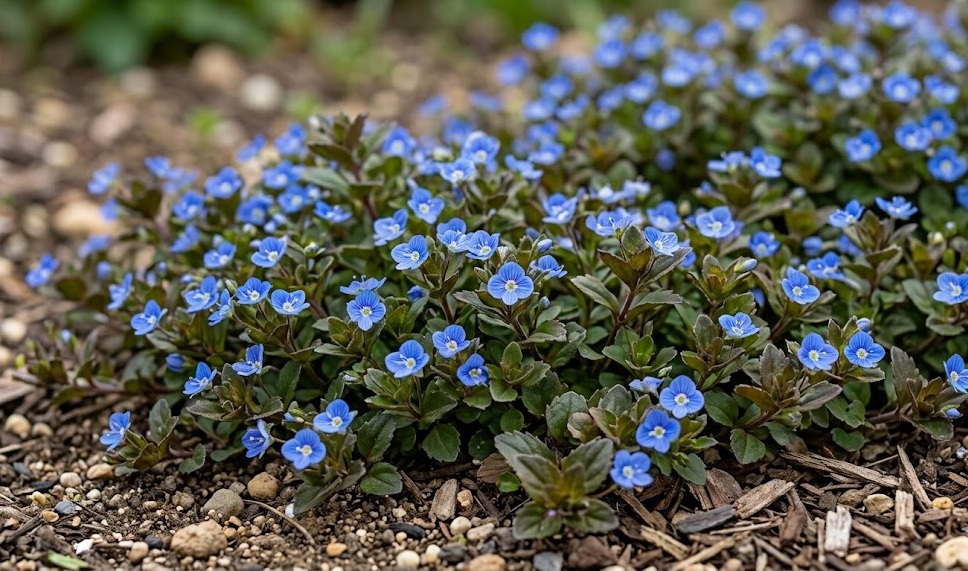
The bronze or reddish tint that the foliage often takes on in late fall is a natural response to the cooling weather. This color change is not a sign of poor health but rather a protective mechanism that the plant uses to cope with the cold. Embrace this seasonal shift as part of the visual interest that this variety brings to the winter landscape. Understanding the natural life cycle of the plant makes the winter care process much more straightforward and rewarding.
More articles on this topic
Mulching and surface protection
While Georgia blue speedwell is quite hardy, a layer of mulch provides an extra level of protection for the root system. Mulching helps to insulate the soil, preventing the rapid freezing and thawing cycles that can heave plants out of the ground. This “frost heaving” is particularly common in heavy soils and can leave roots exposed to the freezing air. A two to three-inch layer of organic material like shredded bark or pine needles is usually sufficient.
Care should be taken to avoid piling the mulch directly onto the center or “crown” of the plant. If the crown is buried too deeply under wet mulch, it can lead to rot during a rainy winter or a spring thaw. Instead, spread the mulch around the base and between the creeping stems to protect the soil surface. This technique keeps the roots warm while still allowing the foliage to breathe and receive some light.
In regions with extremely cold winters and no reliable snow cover, additional protection might be necessary. Evergreen boughs or a light layer of straw can be placed over the beds to act as a windbreak and an extra insulator. These materials are breathable and can be easily removed once the danger of severe frost has passed in the spring. Providing this extra buffer can make the difference between a plant that merely survives and one that thrives.
Snow itself is one of the best natural insulators for groundcovers like the blue speedwell. A consistent blanket of snow keeps the ground temperature relatively stable and protects the foliage from drying winter winds. If you live in an area with heavy snowfall, you can usually relax knowing that your plants are well-protected by nature. However, if the winter is dry and cold, you will need to be more proactive with your mulching and hydration strategies.
More articles on this topic
Winter moisture and hydration
One of the most common causes of winter kill in perennials is not the cold itself, but desiccation or drying out. Even though the plant is dormant, the roots still need a small amount of moisture to stay alive and healthy. If the ground is dry when it freezes, the plant cannot absorb any water, and the drying winds can pull moisture from the foliage. Ensuring that the soil is thoroughly hydrated before the first hard freeze is a critical step in winter care.
In areas where the ground does not freeze deeply or for long periods, you may need to water occasionally during the winter. Check the soil moisture during a warm spell, and if it feels dry several inches down, provide a light watering. This is especially important for plants in sandy soils or in raised beds that tend to dry out more quickly. A little bit of hydration during a mid-winter thaw can provide a significant boost to the plant’s survival.
Avoid watering during periods of extreme cold when the water will simply sit on the surface and turn to ice. The goal is to keep the root zone moist, not to create an ice rink around your garden specimens. Using a watering can or a handheld hose allows for precise application to the soil without getting the foliage excessively wet. Proper moisture management is a subtle but vital part of professional perennial maintenance.
Proper drainage remains just as important in the winter as it is during the growing season. If the soil becomes waterlogged during a thaw, the roots can quickly suffocate or rot in the cold, stagnant water. Ensuring that the site is well-drained before the winter begins is the best way to prevent these types of issues. A well-sited Georgia blue speedwell is a resilient plant that can handle a variety of winter conditions with ease.
Spring awakening and recovery
As the days begin to lengthen and the ground thaws, it is time to start preparing for the spring recovery. The first step is to gently remove any protective coverings like evergreen boughs or straw as soon as the weather stabilizes. You may notice some browning of the foliage, especially on the tips of the stems that were exposed to the wind. This is normal and usually does not indicate that the entire plant has been lost.
Once the new growth begins to emerge from the center of the plant, you can trim away any dead or damaged stems. This cleaning process allows light and air to reach the fresh green shoots and prevents the old, dry material from harboring pests. Be careful not to cut too deeply into the healthy crown of the plant during this initial cleanup. A light hand is always better when dealing with the first delicate growth of the new season.
Applying a light layer of compost or a balanced, slow-release fertilizer in the early spring provides the energy needed for recovery. This is also a good time to check the mulch and replenish it if it has thinned out over the winter. As the soil warms, you will see the foliage transition back to its vibrant green and the first blue flowers will appear. The successful overwintering of your groundcover is a rewarding conclusion to your year-round gardening efforts.
Observation is the best tool for learning how your specific garden microclimate affects the overwintering process. Take note of which areas of the bed performed best and whether certain types of protection were more effective than others. Over time, you will develop a routine that is perfectly tailored to your landscape and the needs of your plants. Professional gardening is a continuous process of learning, adapting, and enjoying the fruits of your labor.