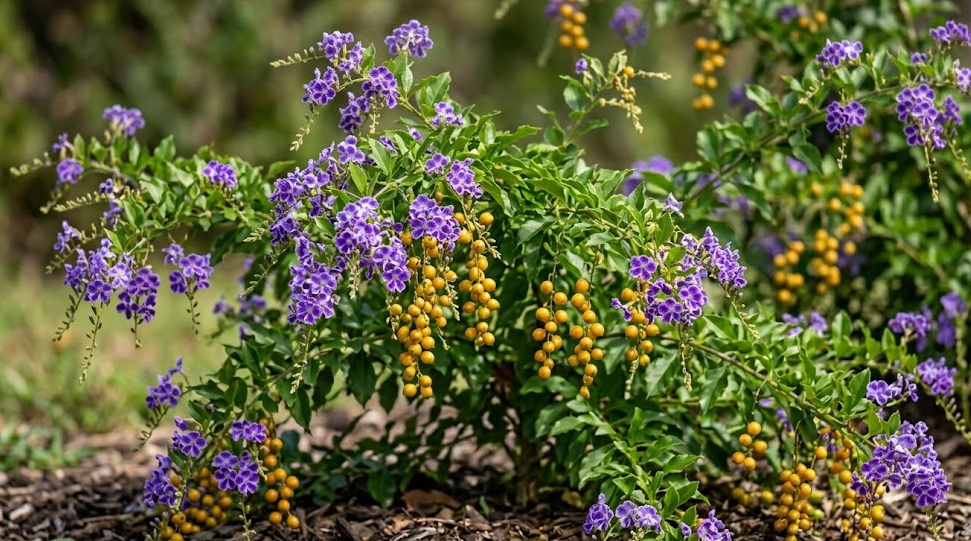

Light is the primary source of energy that fuels every biological process in the life of a golden dewdrop. Understanding how this plant interacts with the sun is essential for achieving the best possible growth and flower production. While it is known for its love of bright, sunny locations, there are nuances to its light requirements that every professional gardener should understand. By placing your plant in the perfect spot, you can unlock its full potential for beauty and vigor.
The amount of light a plant receives directly influences its overall shape, the color of its leaves, and the abundance of its flowers. In a location with plenty of sun, the golden dewdrop will grow as a dense, compact shrub with a high concentration of blooms. However, if the light is too low, the plant will become “leggy” as it stretches toward the nearest light source, leading to a much sparser appearance. Expert placement is the key to creating a specimen that looks as good as it feels.
Phototropism is the natural tendency of plants to grow toward the light, and it can significantly affect the symmetry of your shrub. If the light is coming primarily from one direction, you may need to rotate the plant regularly to ensure even growth on all sides. This is particularly important for container-grown plants on a porch or near a window. A well-balanced plant is more aesthetically pleasing and structurally sound over the long term.
Seasonal changes in the sun’s position and intensity mean that the “perfect spot” in the summer might be too dark in the winter. You must be prepared to move your plants or adjust their surroundings to maintain the ideal light levels throughout the year. Monitoring the light patterns in your garden or home is a fundamental part of expert horticultural practice. Your attention to these details will be rewarded with a plant that stays healthy and vibrant regardless of the season.
Maximizing exposure to direct sunlight
To get the most impressive display of flowers and the characteristic golden berries, your plant needs at least six to eight hours of direct sun daily. Full sun provides the intense energy required for the high metabolic demands of rapid growth and reproduction. You will notice that the leaf color is much richer and the stems are much stronger when the plant is given ample light. It is a plant that truly thrives in the spotlight of the garden.
More articles on this topic
The morning sun is often considered the best type of light because it is bright but not as intensely hot as the midday or afternoon rays. It allows the plant to start its photosynthetic processes early in the day while the air is still relatively cool. If you live in a very hot climate, providing some light afternoon shade can protect the foliage from the risk of scorching. Finding this balance between intensity and duration is a hallmark of an expert grower.
Reflected light from nearby walls or fences can also add to the total energy the plant receives during the day. This can be a useful way to boost the light levels in a slightly shaded corner of the garden. However, be careful that the reflected heat doesn’t become too intense, as this can lead to rapid dehydration and heat stress. Every microclimate is unique, and you must evaluate yours with a critical eye.
If you are growing your golden dewdrop indoors, placing it near a south-facing window is usually your best bet for success. You might even consider using supplemental grow lights to ensure the plant receives the spectrum and intensity it needs. Artificial lighting has come a long way and can be a very effective tool for maintaining tropical plants in less-than-ideal indoor conditions. Providing high-quality light is the best way to keep your indoor specimens looking their best.
Navigating shade and filtered light
While the golden dewdrop loves the sun, it can adapt to areas of partial shade, especially in regions with extremely high summer temperatures. In these conditions, the growth may be a bit slower and the flowering a bit less prolific, but the plant will still remain healthy. Filtered light, such as that found under a canopy of larger trees, can provide a beautiful and protective environment for this species. It is a versatile plant that offers options for many different parts of your landscape.
More articles on this topic
If you find that your plant is not flowering as much as you’d like, the most common reason is a lack of sufficient light. You can often solve this problem by simply thinning out the overhead canopy of nearby trees to let more sun reach the shrub. Small changes in the environment can lead to dramatic improvements in the plant’s performance over just a few weeks. Observation and intervention are the tools of a proactive and expert gardener.
Deep shade is the only lighting condition that this plant truly struggles with and should be avoided whenever possible. In the dark, the leaves will lose their vibrant green color and the plant will become highly susceptible to pests and diseases. It will also lose its natural weeping shape as it puts all its energy into a desperate climb toward any available light. If you only have shady spots available, you might need to reconsider your plant choice for that specific area.
Using light-colored mulch or decorative stones around the base of the plant can help reflect a bit of extra light back up into the lower canopy. This is a subtle but effective way to improve the light environment in a slightly shaded location. It also helps to keep the roots cool, providing a double benefit for the plant’s overall health. Every little adjustment counts when you are striving for horticultural excellence in your garden.
Recognizing symptoms of light stress
Too much intense sunlight, especially combined with low humidity, can lead to scorched leaf edges and a bleached appearance on the foliage. If you notice these symptoms, it is a sign that the plant is struggling to keep up with the rate of transpiration required by the heat. Providing a bit of temporary shade during the hottest part of the day can help the plant recover and prevent further damage. Light management is a dynamic process that requires you to respond to the plant’s feedback.
Conversely, a lack of light will result in small, pale leaves and very long gaps between the leaf nodes on the stems. The plant will look “stretched” and thin, losing the lush density that makes it so attractive in a landscape. If you see this happening, it is a clear signal that you need to move the plant to a brighter location as soon as possible. Reversing the effects of low light takes time, so it is best to act at the first sign of trouble.
The color of the golden berries can also be a good indicator of whether the plant is receiving enough light. In full sun, the berries will turn a deep, rich gold that glows against the green foliage and purple flowers. If the berries remain green or turn a pale, sickly yellow, the plant likely needs more energy from the sun. Every part of the plant tells a story about its environment to those who know how to read the signs.
Ultimately, your goal is to find the “sweet spot” where the plant is productive, healthy, and beautiful. This requires a bit of experimentation and a lot of careful observation over the course of the growing season. No two gardens are exactly the same, and your expertise will grow as you learn the unique patterns of your own space. With the right light, your golden dewdrop will be the crowning jewel of your horticultural collection.

While the article correctly identifies full sun as the ideal, it is important to distinguish between morning sun and the harsh afternoon heat of the Southern US. In my nursery, I’ve found that Duranta erecta actually performs best with about six hours of direct morning light followed by high-quality filtered light in the afternoon. This prevents the “bleaching” of the foliage that often occurs in peak July heat. If the leaves start to turn a pale yellow while the veins stay green, it might be a sign of light stress rather than just a nutrient deficiency. Are there specific light-meter readings you would recommend for commercial greenhouse production of this species? I’ve been trying to calibrate my shade cloth percentages for the upcoming growing season.
Marcus, for commercial production, I usually aim for around 4,000 to 5,000 foot-candles for optimal flower and berry production. Anything higher than 6,000 foot-candles for extended periods during the summer can lead to the leaf bleaching you mentioned. Using a 30% shade cloth is usually sufficient for our region to take the edge off the midday intensity. I’ve also noticed that the golden berries, which are a major aesthetic draw, simply don’t develop as well in partial shade. The plant will look lush and green, but you’ll lose that beautiful contrast of the yellow fruit against the purple flowers. Balancing that light intensity is truly an art form in itself.
I’ve noticed a significant difference in the growth habit of golden dewdrop when grown in slightly lower light conditions. In my clients’ shaded gardens, the plant tends to become much more sprawling and vine-like, which can be useful for covering fences if that is the goal. However, if you want that tight, shrub-like form mentioned in the excerpt, full sun is absolutely non-negotiable. I often use this plant as a focal point in Mediterranean-style landscapes where the sun is abundant. The aromatic quality of the blooms also seems much more pronounced when the plant is kept in a warm, sunny location. It really is a versatile plant if you understand how to manipulate its environment.