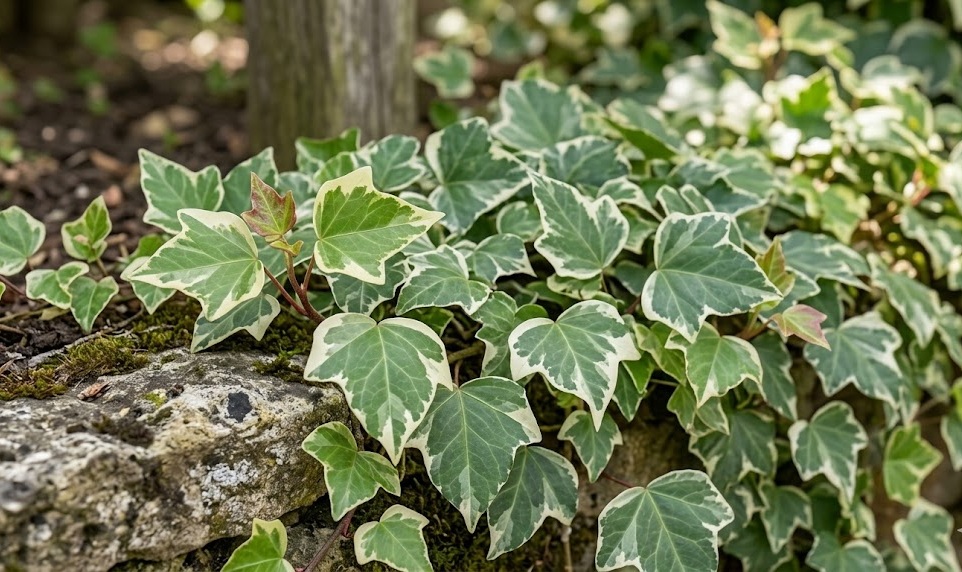

Starting your journey with Algerian ivy requires a clear plan for both planting and potential expansion through propagation. This plant is known for its vigor, but the initial stages of its life in your garden or home are the most critical for success. Understanding how to correctly place it in the ground and how to create new plants from cuttings will save you both time and resources. With the right techniques, you can easily turn a single specimen into a lush collection that covers your desired spaces.
Choosing the right location
The first step in planting is identifying a spot that meets the specific light and soil requirements of the species. You should look for an area that receives partial shade, especially during the hottest parts of the long summer days. While it can adapt to various light levels, a balanced environment prevents the foliage from bleaching or scorching. Consider the proximity to walls or fences if you want the plant to climb naturally.
Soil preparation is a task that should not be overlooked before you bring your new plant home. You need to ensure the ground is loose, well-aerated, and free of large stones or debris. Incorporating well-rotted manure or garden compost will give the ivy a significant nutrient boost right from the start. If your soil is naturally heavy clay, consider raising the planting bed to improve the drainage.
Space is a major consideration because this ivy grows much faster and larger than many people anticipate. You must give the plant enough room to spread without encroaching on delicate neighbors or blocking pathways. If you are planting multiple units to cover a wall, space them consistently to ensure even coverage over time. Planning for the mature size of the plant now prevents difficult pruning tasks in the future.
Finalizing the site also involves checking for potential hazards like underground pipes or sensitive structural foundations. While the roots are not as aggressive as some other species, they can still find their way into small cracks over many years. Choosing a site with a clear boundary will help you manage the growth more effectively as the plant matures. Once you have selected the perfect spot, you are ready to begin the physical planting process.
More articles on this topic
The planting process
When you are ready to plant, start by digging a hole that is twice as wide as the current root ball. The depth should be just enough so that the plant sits at the same level it was in its original nursery container. Avoid planting it too deep, as this can lead to stem rot near the soil line. If the roots are tightly coiled, gently tease them outward to encourage them to explore the new soil.
Place the plant in the center of the hole and begin backfilling with a mixture of native soil and organic amendments. Firm the soil down gently with your hands to remove any large air pockets that could dry out the roots. You want the plant to feel secure but not so compressed that water cannot penetrate the surface. Creating a small soil berm around the base can help direct water toward the root zone during the first few weeks.
Watering immediately after planting is essential to help the soil settle and reduce the shock of the transition. You should provide a deep, thorough soak that reaches the bottom of the planting hole. Monitor the moisture levels daily for the first two weeks, as young plants are very susceptible to drying out. If the weather is particularly windy or hot, you may need to provide some temporary physical protection.
Applying a layer of mulch around the base is the final touch for a successful planting session. Use wood chips, bark, or straw to help keep the roots cool and retain precious moisture in the soil. Make sure the mulch does not directly touch the stem of the plant to prevent moisture-related diseases. This simple step significantly increases the survival rate of new transplants and reduces the need for frequent weeding.
More articles on this topic
Propagation through stem cuttings
One of the easiest ways to multiply your Algerian ivy collection is through the use of stem cuttings. You should select healthy, vigorous vines that show no signs of pests or nutritional stress. Using a clean, sharp pair of shears, cut a section of the stem that is about six inches long. Make sure the cutting has at least two or three nodes, which are the points where leaves emerge.
Prepare the cutting by removing the lower leaves, leaving only a few at the top to facilitate photosynthesis. You can dip the cut end into a rooting hormone powder to speed up the process, although it is not strictly necessary. The prepared cutting can then be placed into a jar of clean water or directly into a moist potting mix. If using water, change it every few days to keep it oxygenated and free of bacteria.
If you choose to root your cuttings in soil, use a light, sandy mix that allows for easy root penetration. Place the pot in a warm, bright spot but away from direct sunlight which can dehydrate the stem. Covering the pot with a clear plastic bag can create a mini-greenhouse effect that maintains high humidity. You will know roots have formed when you see new leaf growth or feel resistance when gently pulling the stem.
Once the roots are a few inches long, the new plant is ready to be moved into its own permanent container. Treat these young starts with extra care, as their root systems are still delicate and developing. Gradually acclimate them to the conditions of their final location over a period of a week or two. This method is a cost-effective way to create a large number of plants for groundcover or gifts.
Layering and other methods
Layering is a highly reliable propagation technique that takes advantage of the plant’s natural tendency to root at the nodes. To do this, simply take a long, flexible stem that is still attached to the parent plant and pin it to the ground. You should slightly nick the underside of a node and cover that section with a small amount of moist soil. Keep the area watered, and within a few weeks, a new root system will develop at that point.
Once the roots are well-established, you can sever the connection between the new plant and the original vine. This method is often more successful than cuttings because the young plant continues to receive nutrients from the parent during the rooting phase. It is an excellent way to fill in gaps in a groundcover bed without buying new specimens. You can perform layering at almost any time during the active growing season.
Division is another option, though it is primarily used for older, container-grown plants that have multiple stems. You can remove the plant from its pot and carefully tease the root ball apart into two or more sections. Each section must have a healthy amount of both roots and foliage to survive the process. Replant the divisions immediately into fresh soil and provide plenty of water to help them recover from the trauma.
While growing ivy from seed is possible, it is rarely done by home gardeners because it is a very slow process. The seeds require specific treatments and a long period of time to germinate and reach a usable size. Most people find that cuttings or layering provide much faster and more consistent results. By sticking to vegetative propagation, you ensure that the new plants are genetically identical to the parent.
Propagation of Algerian ivy from stem cuttings is one of the easiest tasks in the nursery. I usually take semi-ripe cuttings in late summer, about 4-6 inches long, and strip the lower leaves before dipping them in a bit of rooting hormone. They root very quickly in a standard potting mix, often within just three or four weeks. You can even root them in a jar of water on a windowsill, though the transition to soil can be a bit more stressful for the plant. It’s a great way to get a lot of plants for a large groundcover project without spending a fortune. Do you have a preferred time of year for planting out the new starts?
Thomas, I find that planting out in early spring is the most successful for Algerian ivy. It gives the young plants an entire growing season to establish a robust root system before they have to face the challenges of winter. If you plant in the autumn, there’s a risk that a sudden cold snap might kill them before they’ve had a chance to settle in. I also like to add a bit of compost to the planting hole to give them a good head start. Once they take off, they really don’t need much help, but that first season is critical. I’ve also had good luck with “layering” longer stems directly into the ground to fill in gaps.
I recently moved into a house with a very large, bare retaining wall and I’m thinking about using Algerian ivy to cover it. This article was very helpful in explaining how to get started. I’m a bit worried about the weight of the plant once it reaches the top of the 6-foot wall, though. Should I provide some kind of wire mesh for it to cling to, or will it be able to attach itself directly to the concrete? I want to make sure it’s a long-term solution that won’t peel off in a storm. Any advice on the best spacing for a quick cover would also be greatly appreciated!