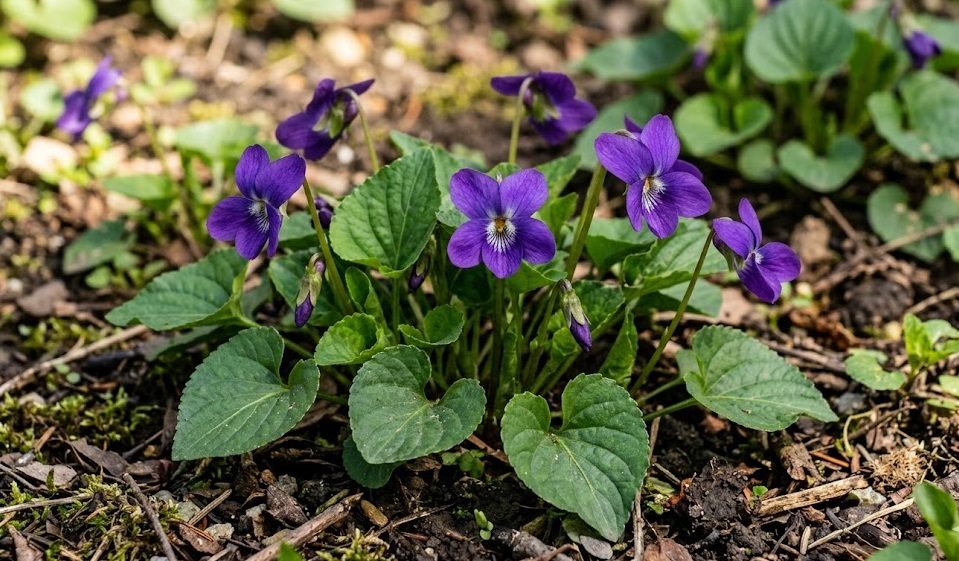

Maintaining the common blue violet requires a blend of observation and patience to ensure the plant thrives in a garden setting. These perennials are known for their resilience and ability to carpet forest floors with beautiful heart-shaped leaves and delicate blossoms. While they are often considered self-sufficient, providing the right environment will significantly enhance their ornamental value and longevity. You should approach their care by mimicking their natural woodland habitat, focusing on moisture balance and soil quality.
General maintenance practices for healthy growth
Regular monitoring of the foliage is essential to keep the plants looking vibrant throughout the growing season. You need to check for yellowing leaves which might indicate that the plant is receiving too much direct sunlight or insufficient water. Removing spent flowers can encourage a cleaner look, although it is not strictly necessary for the plant’s survival. Since these violets can spread quite rapidly, you might need to manage their boundaries to prevent them from overtaking other delicate garden species.
The density of the clumps should be managed every few years to maintain proper air circulation between the plants. When the center of a patch starts to look thin or woody, it is usually a sign that the group needs rejuvenation. You can simply thin out the older sections to give more space for the younger, more vigorous shoots to develop. Healthy air flow is the best defense against the moisture-related issues that often plague dense groundcovers in humid climates.
Seasonal changes dictate the specific care routine you should follow to keep the violets in peak condition. In the early spring, clearing away old leaf litter helps the new growth emerge without obstruction from the previous year’s debris. During the heat of summer, providing extra mulch can help the roots stay cool even when the air temperature rises significantly. As autumn approaches, allowing the plant to naturally wind down its growth cycle prepares it for the dormant winter months ahead.
Weeding around your violets is particularly important during their first two years of establishment in a new area. Once the colony becomes dense enough, the broad leaves will naturally shade out most competing weeds, reducing your workload. However, persistent perennial weeds can still find a foothold, so a quick monthly check is recommended to keep the area clean. Using a hand tool for weeding is preferred to avoid damaging the shallow and somewhat delicate root systems of the violets.
More articles on this topic
Understanding soil requirements and structure
The foundation of successful violet cultivation lies in providing a soil structure that is rich in organic matter and well-draining. These plants prefer a loamy texture that can hold onto moisture without becoming waterlogged or stagnant over time. You can improve heavy clay soils by incorporating generous amounts of compost or well-rotted leaf mold before planting. This modification ensures that the roots have easy access to oxygen while still finding the hydration they need to support lush foliage.
Ph levels play a significant role in how the common blue violet absorbs nutrients from the earth. They generally thrive in slightly acidic to neutral soil, which reflects the typical conditions found in deciduous forests. If your garden soil is excessively alkaline, you may notice the leaves becoming pale or chlorotic over time. Adding pine needles or elemental sulfur can gradually lower the pH to a range that is more suitable for these woodland dwellers.
Drainage is a critical factor that can make or break your success with this particular species of Viola. While they enjoy damp conditions, sitting in cold, wet soil during the winter months often leads to root rot and plant death. You should avoid planting them in low spots where water tends to collect after heavy rains or snowmelt. If your landscape is naturally prone to drainage issues, consider creating raised beds or mounds to lift the crowns above the saturation zone.
Microbial life within the soil contributes to the overall health and resilience of your violet colony. Encouraging beneficial fungi and bacteria through the use of organic amendments will create a living ecosystem that supports plant growth. Avoid over-using synthetic fungicides unless absolutely necessary, as these can disrupt the natural balance of the soil. A healthy soil biome helps the plants resist environmental stressors and reduces the need for supplemental fertilization.
More articles on this topic
Seasonal adjustments for optimal health
As the spring sun begins to warm the earth, the violets will rapidly transition from dormancy to active growth. This is the primary time to ensure the soil is consistently moist but never truly saturated as the new roots develop. You will notice the first buds appearing quite early in the season, often before the surrounding trees have fully leafed out. Providing a light application of organic mulch at this stage can protect the tender new growth from late-spring frosts.
Summer presents the greatest challenge for these plants, especially in regions with high temperatures and low rainfall. You will observe the plants entering a semi-dormant state if the conditions become too dry or the sun becomes too intense. To prevent the leaves from scorching, you should increase the frequency of deep watering sessions during July and August. Providing temporary shade during the hottest part of the afternoon can also help maintain the green color of the foliage.
The arrival of autumn signals the time for the plant to begin storing energy in its rhizomes for the following year. You should notice a decrease in new leaf production and a general slowing of the plant’s metabolic processes during this time. It is important to continue watering if the fall season is particularly dry, as the roots are still active beneath the surface. Avoid any heavy pruning or fertilization during this period, as it might stimulate late-season growth that won’t survive the frost.
Winter care is largely hands-off, provided you have prepared the site correctly during the previous months. The plants will naturally die back to the ground in many climates, leaving only the dormant crowns protected by the soil. If you live in an area with very little snow cover but extreme cold, a layer of straw or evergreen boughs can provide extra insulation. This protection prevents the soil from heaving during freeze-thaw cycles, which could otherwise expose the roots to the drying wind.
Managing the spreading habit of violets
One of the most notable characteristics of this species is its ability to spread through both seeds and underground runners. You will find that a small planting can quickly transform into a lush carpet covering several square feet within just a few seasons. While this is often desirable for groundcover, you must be proactive if you want to keep them within specific garden boundaries. Installing physical edging, such as plastic or metal strips, can help contain the rhizomes and prevent them from creeping into lawns.
The plant also utilizes a unique seeding mechanism called cleistogamy, where it produces closed, self-pollinating flowers near the ground. These flowers produce a large volume of seeds that are often dispersed by ants or mechanical ejection from the pods. You might find new violet seedlings popping up in unexpected places throughout your garden beds or even in sidewalk cracks. To limit this self-seeding, you can occasionally thin the patch before the secondary seed pods have a chance to mature and open.
If the plants become too aggressive for your liking, they are relatively easy to remove by hand due to their shallow root systems. You should try to pull them when the soil is moist, ensuring that you get the entire rhizome to prevent regrowth. Simply cutting the leaves off will not kill the plant, as the energy stored in the roots will quickly produce new foliage. Consistent management is much easier than trying to clear a large, established area that has been neglected for several years.
Finding the right balance between a lush groundcover and an invasive nuisance is key to enjoying these plants. You can use them effectively under large trees where grass struggles to grow, creating a low-maintenance green space. In these shaded areas, their spreading nature is a significant benefit rather than a drawback for the busy gardener. By understanding their growth patterns, you can utilize their natural tendencies to create a beautiful and cohesive landscape design.
Selecting companion plants for aesthetic balance
Choosing the right neighbors for your violets can create a stunning visual display and a healthier garden ecosystem. You should look for plants that share similar light and moisture requirements, such as ferns, hostas, or bleeding hearts. These species provide a taller structural element that complements the low-growing, spreading habit of the violets. The contrast between the broad violet leaves and the delicate fronds of a fern adds depth and texture to any shaded border.
Spring-flowering bulbs are also excellent companions because they bloom around the same time or slightly before the violets. Daffodils, tulips, and crocuses can grow through the violet carpet, creating a multi-layered effect of colors and shapes. Once the bulb foliage begins to yellow and die back, the expanding violet leaves will naturally cover the declining stems. This natural concealment keeps your garden looking tidy without the need for manual intervention or clearing.
Native woodland plants often work best because they have evolved to coexist in the same environmental conditions. Species like wild ginger or Solomon’s seal can provide an interesting interplay of different green hues and leaf structures. You should avoid planting very small or slow-growing alpines near violets, as they will likely be smothered by the vigorous growth of the Viola. Planning your garden layout with mature sizes in mind will ensure that every plant has the space it needs to shine.
Color coordination is another aspect to consider when designing your garden beds with common blue violets. The deep purple or soft blue tones of the flowers pair beautifully with silver-foliaged plants like lamium or certain varieties of brunnera. If you have the white-flowering version of this violet, it can brighten up the darkest corners of a shade garden when paired with dark green ivy. Experimenting with different combinations will help you find the most pleasing aesthetic for your specific outdoor living space.
Ensuring long term leaf and stem health
The foliage is the primary attraction of the common blue violet for most of the year, so maintaining leaf health is a priority. You should avoid overhead watering whenever possible to keep the leaves dry and reduce the risk of leaf spot diseases. If you notice any tattered or chewed leaves, it is often a sign of slugs or snails, which can be managed with organic barriers. Keeping the area around the plants free of excessive debris can also limit the hiding spots for these common garden pests.
Nutrient availability directly impacts the size and color of the leaves, with nitrogen being particularly important for green growth. While they don’t need heavy feeding, a thin layer of compost applied each spring provides a slow-release source of essential elements. If the leaves appear stunted or unusually small, it may be time to refresh the organic matter in the surrounding soil. Healthy leaves are better at photosynthesizing, which in turn strengthens the root system for the coming seasons.
Sun exposure must be carefully balanced to prevent the stems from becoming leggy or the leaves from burning. In too much shade, the plant might produce fewer flowers and the stems may stretch toward the light, losing their compact form. Conversely, too much direct sun, especially in hot climates, will cause the leaves to wilt and turn brown at the edges. Finding that “sweet spot” of dappled sunlight or morning sun with afternoon shade will result in the healthiest and most attractive plants.
Regularly inspecting the stems near the crown of the plant can alert you to potential issues before they become widespread. Any signs of mushiness or discoloration at the base of the plant should be addressed by improving drainage or reducing watering frequency. Strong, firm stems are a sign of a well-hydrated and properly nourished plant that is capable of supporting a full canopy of leaves. By paying attention to these small details, you can ensure your violets remain a beautiful part of your garden for many years.
Environment adaptation and resilience
One of the greatest strengths of the common blue violet is its ability to adapt to a wide range of environmental conditions. Whether you have a manicured garden or a more naturalized woodland area, these plants find a way to integrate themselves. They are remarkably tolerant of different light levels, though they clearly prefer the protection of partial shade in most regions. This adaptability makes them an ideal choice for gardeners who deal with varying microclimates across their property.
Urban environments can be challenging for many plants, but the common blue violet handles city conditions surprisingly well. They are not particularly sensitive to minor air pollution or the reflected heat from nearby structures, provided they get enough water. Their ability to grow in compacted soils, while not ideal, shows just how hardy they can be in less-than-perfect situations. This makes them a great option for small urban yards or narrow planting strips between buildings.
Deer and rabbit resistance is another factor that contributes to the resilience of this species in rural or suburban settings. While no plant is completely “animal-proof” if they are hungry enough, violets are generally low on the list of preferred forage. The presence of certain compounds in the leaves often discourages browsing, allowing the colony to remain intact even in areas with high wildlife pressure. This natural defense mechanism saves you the trouble and expense of installing fencing or using chemical repellents.
Ultimately, the goal of caring for common blue violets is to support their natural cycle rather than trying to force them into a rigid structure. By providing the basic necessities of moisture, organic soil, and appropriate light, you allow the plant’s natural beauty to emerge. They are a “plant and enjoy” species that rewards the gardener with consistent performance year after year. Embracing their wild nature while providing a little guidance will result in a thriving and harmonious garden space.