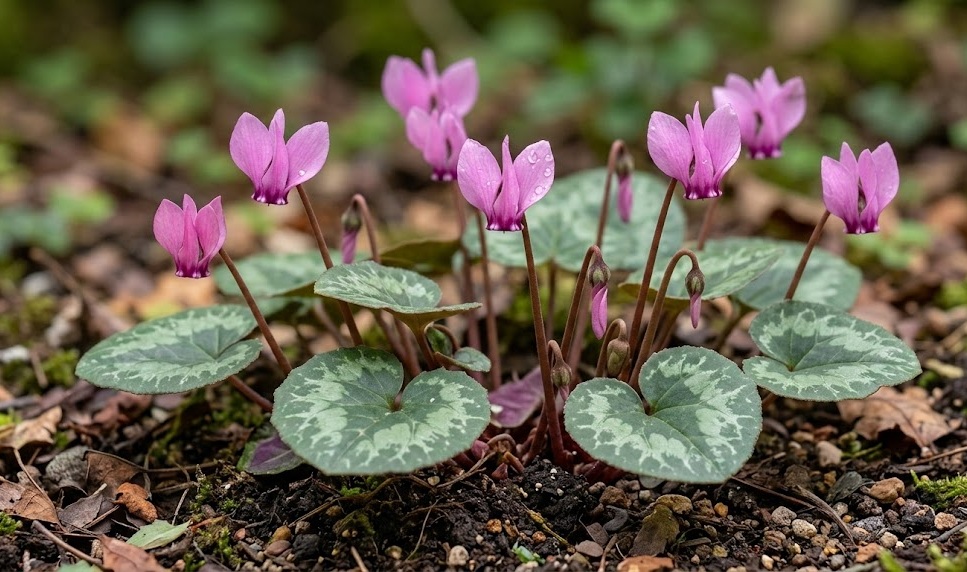

The art of pruning the European cyclamen is less about shaping the plant and more about maintaining its hygiene and directing its limited energy. You will find that this species requires very little intervention compared to traditional garden shrubs, but the few tasks you do perform are vital for its health. Proper pruning involves the careful removal of spent material to prevent the buildup of disease and to keep the plant looking its professional best. By understanding the correct techniques and timing for these simple tasks, you ensure that your cyclamen remains a vibrant and healthy part of your woodland collection.
Essential techniques for cleaning and grooming
The most frequent pruning task you will undertake is the removal of spent flowers and yellowing leaves throughout the growing season. You should not use scissors or pruners for this job, as they often leave a small “stub” of stem that can easily rot and infect the tuber. Instead, the professional method is to grasp the stem firmly near the base and give it a quick, sharp tug with a slight twist. This technique ensures that the entire stem detaches cleanly from the tuber, leaving no wounded tissue behind to attract fungal spores.
You should always wait until a leaf or flower stem has clearly finished its life cycle before attempting to remove it. A spent flower will have a withered bloom and a stem that starts to lose its firmness, while a dying leaf will turn yellow or brown. If the stem does not come away easily with a gentle tug, it is not yet ready to be removed, and you should wait a few more days. Forcing a stem to detach before it is ready can tear the skin of the tuber, creating an entry point for bacteria and rot.
Grooming your plant is a continuous process that you should ideally perform once a week during the peak growing seasons. This regular attention prevents the accumulation of dead organic matter in the center of the crown, which is the most vulnerable part of the plant. A clean crown allows for better air circulation and light penetration, both of which are essential for the development of new buds and leaves. You will find that this simple habit significantly reduces the risk of the common diseases that often plague neglected cyclamen plants.
If you notice any leaves that are damaged by pests or show signs of fungal spots, you should remove them immediately regardless of their age. This “sanitary pruning” is a professional way to stop a small problem from spreading to the rest of the plant or your wider collection. Always wash your hands or sterilize any tools you might have used after handling a diseased plant to prevent cross-contamination. Maintaining a high level of hygiene through careful grooming is the easiest way to ensure long-term horticultural success.
More articles on this topic
Strategic management of foliage and flowers
Managing the foliage and flowers of your European cyclamen is about balancing the plant’s aesthetic appeal with its biological needs. You should never remove healthy green leaves, as these are the “solar panels” that provide the energy for the tuber to grow and flower the following year. Even if a leaf looks slightly imperfect, it is still contributing to the plant’s overall health and should be left in place until it naturally yellowed. A professional gardener understands that a full canopy of leaves is the best indicator of a strong and well-fed tuber.
During the flowering season, you may want to remove some of the flowers for indoor arrangements, which the European cyclamen handles quite well. Its delicate fragrance is a wonderful addition to any room, and careful picking can actually encourage the plant to produce more blooms. You should follow the same “tug and twist” method when harvesting flowers to ensure the health of the parent plant. Be careful not to take too many at once, as the plant needs some flowers to potentially produce seeds for its own natural propagation.
If you are not interested in collecting seeds, you should remove all spent flowers as soon as they begin to fade. This prevents the plant from diverting its energy into seed production and instead directs that energy back into the tuber and leaf development. This practice, often called “deadheading,” is a standard professional technique used to prolong the flowering season and increase the plant’s vigor. However, if you want your cyclamen to spread naturally in the garden, you should leave a few of the strongest-looking flower stalks to mature and drop their seeds.
As the plant enters its summer dormancy, you will notice a more significant yellowing of the foliage, which is a natural part of its life cycle. You should continue to remove these leaves only as they become completely dry and detached from the tuber. Do not be tempted to cut the entire plant back to the ground in one go, as this can be a shock to the system. Allow the plant to pull the nutrients back from the leaves into the tuber at its own pace for the most successful and resilient summer rest.
More articles on this topic
Post-bloom care and seasonal transitions
The period immediately following the main flowering flush is a time for quiet observation and very light maintenance. You should focus on keeping the area around the base of the plant clear of any fallen petals or debris that could trap moisture against the soil. This is not a time for heavy pruning but rather for a gentle tidy-up that prepares the plant for its next phase. You might also take this opportunity to check the mulch and ensure it is still providing a good protective layer without burying the crown.
If you have allowed some seed pods to develop, you will see the flower stalks coil into tight spirals that pull the pods down toward the earth. You should be very careful not to disturb or prune these “coiled” stems, as they are performing a vital biological function. Once the seeds have been released, the stems will naturally wither and can then be removed using the standard professional technique. This patience allows the plant to complete its full reproductive cycle, which is a rewarding process to witness in a mature garden colony.
In the late summer, just before the new season of growth begins, you might perform a final “clean slate” grooming of any remaining old material. This ensures that the new leaves and flowers have a clear path to emerge and that the plant starts its active cycle in peak condition. It is also an excellent time to inspect the tuber for any signs of physical damage or pests that might have moved in during the dormant months. Starting the new season with a clean and healthy plant is a professional habit that sets the stage for another year of beauty.
Ultimately, pruning the European cyclamen is an exercise in restraint and respect for the plant’s natural processes. You are not trying to force the plant into a specific shape, but rather acting as a caretaker who removes the old to make way for the new. By mastering these simple grooming and cleaning techniques, you become a more effective and professional gardener. Your reward will be a collection of cyclamen that looks vibrant, healthy, and perfectly at home in your woodland garden or cool indoor space.