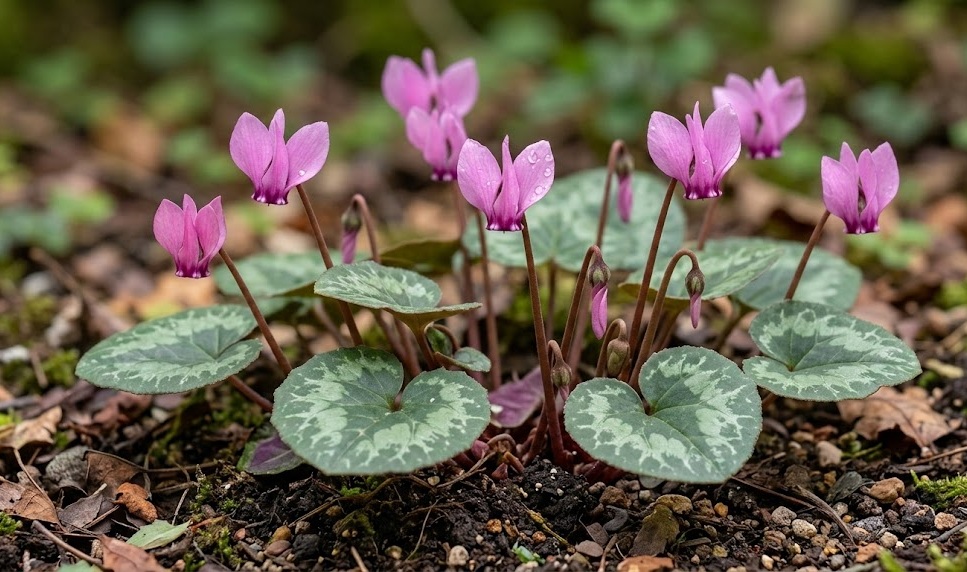

The process of planting and propagating the European cyclamen is a journey into the heart of woodland horticulture that requires patience and precision. Unlike many modern garden hybrids, these wild-type plants follow a deliberate growth pattern that cannot be rushed by artificial means. Successful establishment depends on choosing the right moment in the seasonal cycle and preparing the ground with professional care. Whether you are starting with a single tuber or trying to grow a colony from seed, understanding the biological requirements of this species is essential for achieving long-lasting results in your landscape.
Optimal timing and site preparation
The timing of your planting activities is the first and most crucial decision you will make in the propagation process. For the European cyclamen, the late summer or early autumn is the ideal window for planting dormant tubers into the garden or containers. This timing allows the plant to settle into its new environment as the temperatures begin to drop and the natural moisture levels increase. You will find that planting during this period gives the roots enough time to establish themselves before the onset of deep winter.
Site preparation must be thorough and focused on creating a long-term home, as these plants do not like to be moved once established. You should begin by clearing the area of aggressive weeds and loosening the soil to a depth of at least fifteen centimeters. Incorporating plenty of organic matter, such as leaf mold or well-aged compost, is a professional requirement for success. This preparation ensures that the soil is both fertile and structurally sound, providing the perfect medium for the developing tubers to expand.
Consider the drainage of your chosen site very carefully, as even a short period of standing water can be fatal to the tubers. If your garden has heavy or compacted soil, you should work in a significant amount of horticultural grit to improve the internal drainage. You might also consider planting on a slight slope or under the eaves of a building where the soil stays moist but never saturated. These small environmental adjustments make a massive difference in the survival rate of newly planted specimens.
Finally, you should think about the surrounding plants and how they will interact with your cyclamen over the coming years. Choosing companions that share the same woodland requirements, such as ferns or small spring bulbs, creates a harmonious and stable microclimate. These plants will help to shade the soil during the summer and provide a natural layer of leaf litter in the autumn. By preparing the entire area rather than just a single planting hole, you set the stage for a thriving and self-sustaining colony.
More articles on this topic
Professional techniques for tuber planting
When you are ready to plant your European cyclamen tubers, you must handle them with the utmost care to avoid damaging the delicate growth points. You should inspect each tuber for firmness and ensure there are no soft spots or signs of rot before they go into the ground. The tubers of this species are often irregular in shape, but you should look for the side with small bumps or dried roots to determine which way is up. If you are unsure, planting the tuber on its side is a safe professional trick that allows the plant to orient itself naturally.
The depth of planting is a point of frequent debate, but for the European variety, a depth of about three to five centimeters is usually recommended. You should dig a hole that is wide enough to accommodate the tuber without crowding it, and place it gently onto a layer of loosened soil. Cover the tuber with your prepared soil mix and firm it down lightly with your hands to remove any large air pockets. Avoid stepping on the area or using heavy tools, as the tubers can be easily crushed under pressure.
Spacing between tubers should be at least ten to fifteen centimeters to allow for future growth and adequate air circulation. While it may be tempting to plant them closer for an immediate effect, you must remember that these tubers will expand significantly over the years. Giving them enough space from the beginning prevents the need for thinning or transplanting later on, which can be stressful for the plants. A natural, staggered arrangement often looks better than a rigid grid and mimics the way they grow in the wild.
After planting, you should water the area thoroughly but gently to settle the soil around the tubers. This initial watering is crucial for triggering the end of dormancy and encouraging the first new roots to emerge. You may also want to apply a very thin layer of fine mulch, such as shredded leaves, to protect the soil surface from drying out or crusting over. Marking the planting site with a small stake or label is a wise professional habit, as the plants will remain underground for several weeks before any leaves appear.
More articles on this topic
Propagation through seed collection and sowing
Growing European cyclamen from seed is the most rewarding way to expand your collection, although it requires a significant investment of time. You should monitor your established plants in the late summer as the flower stalks begin to coil tightly toward the soil. This unique behavior brings the developing seed pods close to the ground, where they will eventually ripen and split open. Collecting the seeds at the exact moment of ripeness—when the pod is soft and the seeds are a dark amber color—is the key to high germination rates.
The seeds are coated with a sticky substance called an elaiosome, which in nature attracts ants to help with dispersal. You should soak the seeds in warm water with a drop of mild detergent for a few hours to remove this coating and any natural germination inhibitors. This cleaning process is a professional technique that significantly speeds up the time it takes for the seeds to sprout. After soaking, rinse the seeds thoroughly in clean water and prepare them for immediate sowing into a specialized seed-starting mix.
You should use a seed tray or small pots filled with a mixture of equal parts peat-free compost and perlite or vermiculite. Sow the seeds thinly on the surface and cover them with a layer of fine grit about half a centimeter deep. Cyclamen seeds require darkness to germinate, so you should place the trays in a cool, dark spot or cover them with a piece of dark plastic. Keeping the temperature around fifteen degrees Celsius is ideal, as higher temperatures can actually prevent the seeds from waking up.
Patience is essential, as it can take several months for the first tiny heart-shaped leaves to appear above the grit. You should keep the compost consistently moist but never soggy during this long waiting period. Once the seedlings have produced two or three leaves, you can begin to introduce them to very weak liquid fertilizer. Growing from seed allows you to produce a large number of plants that are genetically diverse and perfectly suited to your local garden conditions.
Nurturing young plants to maturity
The first two years of a young cyclamen’s life are the most critical, and they require more frequent attention than established adults. You should keep your seedlings in a sheltered, shaded spot where they are protected from extreme weather and hungry garden pests like slugs. If you have grown them in trays, wait until they have developed a small but distinct tuber before attempting to pot them on or move them to the garden. This usually occurs after the first full growing season when the leaves naturally begin to die back for the summer.
When transplanting young plants, you must be even more careful with the roots than you are with mature tubers. Use a small trowel or a spoon to lift the entire root ball, ensuring that the soil remains attached to the tiny tuber as much as possible. Place them into their new containers or garden positions at the same depth they were growing previously. You should continue to provide consistent moisture, as young tubers have less energy storage and are more susceptible to drying out.
It will typically take three to four years for a seed-grown European cyclamen to produce its first set of flowers. During this time, the tuber is focusing all its energy on increasing its size and building a strong root system. You should avoid the temptation to over-fertilize in an attempt to speed up this process, as it can lead to weak, unnatural growth. A steady, patient approach will result in a much heartier plant that will eventually flower reliably every single year.
Once the young plants have reached flowering size and are well-established, they can be treated with the same care routine as the rest of your collection. You will notice that these home-grown specimens often outperform store-bought plants because they have never experienced the stress of commercial transport. Building a garden full of cyclamen you have propagated yourself is a mark of a true expert gardener. It ensures the continuity of these beautiful woodland plants in your personal landscape for generations to come.