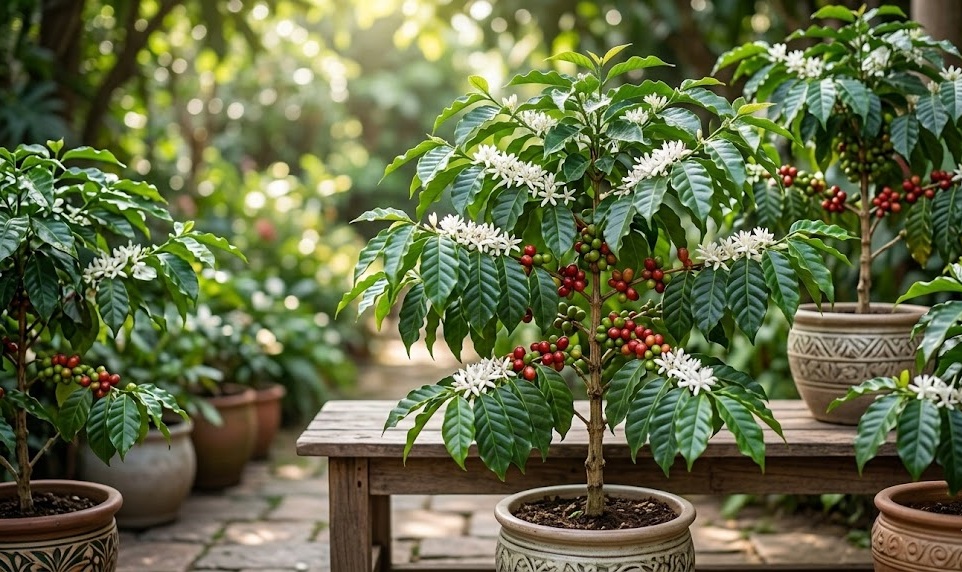

Light is the primary energy source for all plants, but for the arabian coffee plant, it is a factor that must be managed with extreme precision. These plants are evolved to thrive in the filtered, high-intensity light found in tropical mountain ranges, which is difficult to replicate indoors. A professional understanding of light quality, duration, and intensity is essential for preventing leaf damage and encouraging vigorous growth. This article explores the technical details of light management to help you provide the optimal solar environment for your coffee plant.
Direct versus indirect sunlight
The term “bright, indirect light” is frequently used in gardening literature, but for the coffee plant, it has a very specific meaning. In its natural habitat, the plant grows under the canopy of larger trees, receiving a constant stream of bright but diffused solar energy. Direct afternoon sun, especially through a glass window, can be too intense and will quickly cause the leaves to overheat and burn. You should aim for a location where the plant is bathed in bright light for most of the day but is shielded from the harshest rays.
Windows that face east are often considered the ideal location for coffee plants because they provide gentle morning sun without the intense heat of the afternoon. If you only have south-facing windows, you should place the plant several feet back from the glass or use a sheer curtain to soften the light. You can also use other, larger plants to provide a natural “canopy” that mimics the coffee plant’s native environment. A professional knows how to use the architecture of the room to create the perfect balance of brightness and protection.
In contrast, insufficient light will lead to a dramatic decline in the plant’s health and aesthetic appeal. You will notice the branches becoming long and thin as the plant “stretches” toward the nearest light source, a process known as etiolation. The leaves will also be smaller, spaced further apart, and may lose their characteristic deep green luster. If your plant is showing these signs, it is a clear indication that you need to move it to a brighter location or provide supplemental lighting.
Monitoring the plant’s response to light throughout the day is the best way to determine if its position is correct. If the leaves feel hot to the touch during the peak of the day, the light is likely too intense and could lead to sun scorch. On the other hand, if the soil stays wet for a very long time and growth is non-existent, the light levels are probably too low. A professional grower is always ready to make small adjustments to the plant’s position to maintain its physiological equilibrium.
More articles on this topic
Measuring light intensity
While human eyes are excellent at adjusting to different light levels, they are poor at accurately judging the intensity of light for photosynthesis. To manage a coffee plant like a professional, you should consider using a light meter to measure the actual foot-candles or lux available in your space. Coffee plants generally thrive in light levels between 1,500 and 3,000 foot-candles for several hours a day. Knowing these numbers allows you to move beyond guesswork and provide a scientifically optimized environment for your specimen.
Light intensity follows the inverse square law, meaning that even a small change in distance from a window can lead to a massive drop in available light. A plant sitting right on a windowsill might receive 2,000 foot-candles, while a plant just three feet away might only receive 200. You should be aware of how the seasons and the time of day affect these measurements, as a winter sun is much less intense than a summer sun. Regular testing with a light meter helps you stay ahead of these changes and make proactive adjustments to the plant’s placement.
The quality of the light, specifically the spectrum of wavelengths available, is just as important as the total intensity. Plants primarily use blue and red light for photosynthesis, which are the wavelengths most commonly found in natural sunlight. Some types of glass or window tints can filter out these essential parts of the spectrum, even if the room looks bright to us. A professional is aware of these invisible factors and ensures that the light reaching the plant is high in the wavelengths needed for growth.
Duration is the third component of the light equation, and coffee plants generally need about twelve to fourteen hours of light to remain healthy. During the winter, when the days are short, the plant may not be receiving enough total energy even if the intensity during the day is correct. You should consider the cumulative amount of light the plant receives over a twenty-four-hour period to understand its total energy budget. Balancing intensity, quality, and duration is the hallmark of a master indoor horticulturalist.
More articles on this topic
Artificial lighting options
When natural light is insufficient, artificial lighting can provide a reliable and consistent energy source for your coffee plant. LED grow lights have become the industry standard because they are energy-efficient and produce very little heat compared to older technologies. You can find full-spectrum LEDs that are specifically designed to mimic the spectrum of natural sunlight, providing the perfect balance of blue and red wavelengths. These lights allow you to grow a thriving coffee plant even in a basement or a room with no windows at all.
Positioning artificial lights requires the same careful consideration as natural light to avoid burning the leaves. Most LED panels should be kept at least twelve to eighteen inches above the top of the canopy to provide a safe but intense light. You should use a timer to ensure the lights are on for a consistent period every day, which helps to regulate the plant’s internal clock. A professional setup often uses multiple small lights to ensure that the lower leaves also receive enough energy to stay healthy.
One of the main benefits of artificial lighting is the ability to provide a stable environment regardless of the weather or the season. You can boost the light levels during the winter to prevent the common seasonal decline and keep the plant in a state of active growth. This is especially useful if you are trying to encourage a mature plant to flower and produce coffee cherries indoors. Using technology to supplement nature gives you total control over the most important factor in your plant’s life.
As with any tool, you should monitor the plant’s reaction to the new light source and adjust as necessary. If you see the leaves turning yellow or developing brown spots under the grow light, it may be too close or the duration may be too long. Conversely, if the plant continues to stretch, you may need to increase the intensity or lower the lights closer to the canopy. A professional approach to artificial lighting is one of constant observation and fine-tuning to achieve the best possible results.