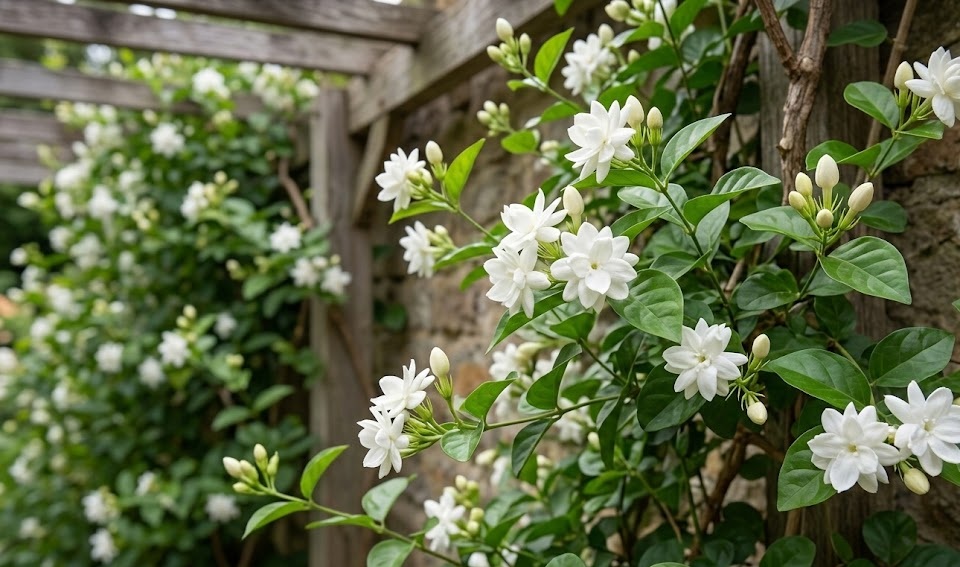

The amount and quality of light your Arabian jasmine receives will directly determine how often and how well it flowers. You must provide a high-light environment if you want to enjoy the full potential of its famous fragrance and white blooms. This plant is naturally adapted to sunny tropical regions, so it has a high tolerance for bright conditions. Understanding the nuances of light management is a key skill for any serious indoor or outdoor gardener.
Optimal sun exposure and placement
For the best results, you should aim to provide at least six to eight hours of bright light every single day. If you are growing the jasmine outdoors, a spot that receives full morning sun and some afternoon shade is ideal. This prevents the most intense heat of the day from drying out the plant too quickly or burning the leaves. In cooler climates, the plant can often handle full sun all day long without any issues.
When growing this jasmine indoors, a south-facing window is usually the best location for your container. You should place the plant as close to the glass as possible to maximize the intensity of the light it receives. If a south-facing window is not available, an east or west-facing one can work if there are no obstructions. You might need to rotate the pot every week to ensure that the plant grows evenly on all sides.
The intensity of the light is just as important as the duration of exposure for flower production. You will find that plants kept in lower light may grow long, thin stems as they reach toward the nearest light source. This “stretching” is a sign that the plant is not getting the energy it needs to maintain its compact shape. Providing enough light will result in a much sturdier plant with many more flowering nodes along the branches.
Symptoms of light imbalance
If your Arabian jasmine is not getting enough light, the first sign will be a lack of new flower buds. The leaves may also become a darker shade of green as the plant tries to capture every bit of available energy. You might notice that the spaces between the leaves on the stems become much longer than they should be. Moving the plant to a brighter spot usually resolves these issues within a few weeks of the change.
More articles on this topic
On the other hand, too much direct and intense sunlight can cause the leaves to turn a pale yellow or even brown. This sun scorch often appears as dry, papery patches on the parts of the leaves that are most exposed. You should be especially careful when moving a plant from a dim indoor room to a bright outdoor balcony. A gradual introduction to the sun is necessary to allow the plant’s tissues to adjust to the higher UV levels.
Sometimes the plant may look healthy but simply refuses to bloom because the light levels are just below the threshold. You should consider whether there are any trees or structures outside that are blocking the light during the day. Even a thin curtain can significantly reduce the amount of light that actually reaches the leaves of an indoor plant. For maximum flowering, you want the light to be as direct and unobstructed as possible for the plant.
Artificial lighting solutions
If you live in a place with dark winters or have a home with limited windows, artificial lights can be a lifesaver. You should look for full-spectrum LED grow lights that mimic the natural range of sunlight. These lights are very energy-efficient and do not produce much heat, which is safer for the delicate leaves. Placing the lights about twenty to thirty centimeters above the top of the plant is usually a good distance.
You should use a timer to ensure that the jasmine receives a consistent “day” of about twelve to fourteen hours. This consistency is very important for maintaining the plant’s internal biological clock and encouraging regular blooming. Artificial light can also be used as a supplement to natural light during the shortest days of the winter. This prevents the plant from going into a deep dormancy and keeps it looking vibrant throughout the entire year.
More articles on this topic
When using grow lights, you must still monitor the plant’s reaction to the new source of energy. If the leaves start to look bleached or pale, the light might be too close or the intensity might be too high. If the plant continues to stretch and does not flower, you may need to increase the duration or move the light closer. Professional growers often use light meters to precisely measure the amount of light their jasmine is receiving.