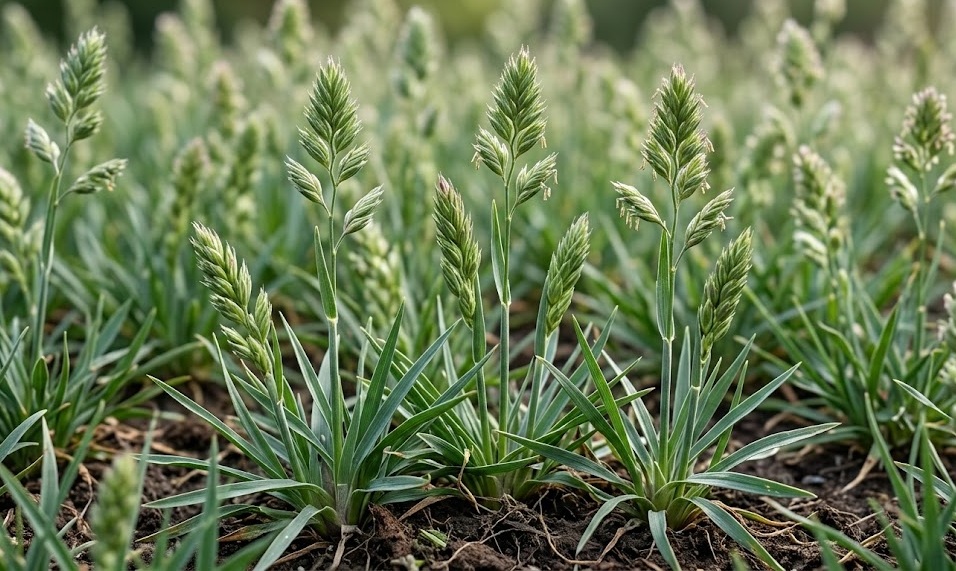

Successful establishment of orchard grass begins with meticulous planning and a deep understanding of the optimal environmental conditions required for germination and early growth. This robust forage grass is highly valued for its ability to establish quickly and provide significant biomass, but it requires specific soil preparation to reach its full potential. You must consider the timing of sowing, the quality of the seedbed, and the most effective propagation methods to ensure a dense and productive stand. A professional approach at this stage sets the foundation for a resilient crop that can withstand grazing and mechanical harvesting for many years.
The selection of high-quality seed is the first critical step in the planting process, as it determines the genetic potential of your entire field. You should choose certified seeds that are free from weed contaminants and have a high germination rate recorded on the tag. It is often beneficial to select varieties that have been specifically bred for your local climate and soil conditions to maximize survival rates. Investing in premium seed might seem more expensive initially, but the long-term benefits in yield and persistence are well worth the cost.
Site selection is equally important, as orchard grass thrives best in well-drained, fertile upland soils rather than low-lying, swampy areas. You should avoid fields with a history of severe perennial weed infestations, as these can be difficult to manage during the grass’s vulnerable establishment phase. Conduct a thorough assessment of the topography and drainage patterns to ensure the site will not suffer from prolonged standing water. Proper site selection reduces the risk of initial failure and simplifies the management tasks you will face in the future.
Soil testing should be performed several months before you intend to plant, allowing enough time to correct any chemical imbalances. Orchard grass prefers a soil pH between 5.8 and 7.0, and correcting acidity with lime is best done well in advance of sowing. You should also look at the phosphorus and potassium levels, as these elements are vital for early root development and seedling vigor. A well-prepared soil environment ensures that once the seeds germinate, they have immediate access to the nutrients they need to grow.
Preparing the perfect seedbed
Creating a fine and firm seedbed is one of the most important technical aspects of planting orchard grass to ensure good seed-to-soil contact. You should begin by tilling the soil to break up any large clods and incorporate previous crop residues into the earth. The goal is to create a surface that is level and uniform, which allows for consistent planting depth across the entire field. A firm seedbed prevents the small seeds from being buried too deep, which is a common cause of poor emergence.
More articles on this topic
The depth of sowing for orchard grass is relatively shallow, typically ranging from six to twelve millimeters depending on the soil type. You should use specialized equipment like a cultipacker seeder or a grain drill equipped with a small seed box to achieve this precision. Planting too deep can prevent the delicate seedlings from reaching the surface before their energy reserves are exhausted. Conversely, planting too shallow on the surface can lead to the seeds drying out before they have a chance to germinate.
Moisture management during the preparation phase can make a significant difference in how quickly the stand becomes established. You should aim to plant when there is sufficient moisture in the soil, but avoid working the ground when it is overly wet to prevent compaction. If the soil is too dry, the seeds may sit dormant for a long time, increasing the risk of bird predation or wind displacement. Timing your preparation to coincide with the expected seasonal rains of spring or late summer is a hallmark of professional planning.
Finally, you should ensure that the seedbed is free from active competition from existing vegetation or germinating weeds. This might involve the use of a non-selective herbicide or multiple light cultivations to exhaust the weed seed bank before sowing the grass. A clean start allows the orchard grass to establish its root system without being shaded out by faster-growing annual weeds. This early advantage is crucial for the development of a long-lasting and productive perennial stand.
Sowing techniques and timing
The timing of sowing is a critical decision that depends heavily on your local climate and the typical weather patterns of your region. Late summer or early autumn is often considered the ideal time for planting in many temperate zones, as it allows the seedlings to establish before winter without heavy weed pressure. You should aim to plant at least six to eight weeks before the first hard frost to give the young plants enough time to develop a strong root system. This timing also takes advantage of the cooler temperatures and more consistent rainfall patterns typical of the autumn season.
More articles on this topic
Spring sowing is another viable option, particularly in areas where winters are exceptionally harsh or where summer drought is a major concern. If you choose to plant in the spring, you should do so as early as the soil can be worked to give the grass a head start on the summer heat. You must be prepared to manage more significant weed competition during the spring, as many annual weeds germinate at the same time as the grass. Early spring planting ensures that the root system is deep enough to survive the first summer dry spell.
The rate at which you sow the seed depends on whether you are planting a pure stand or a mixture with other species. For a pure stand, a common professional recommendation is between ten and fifteen kilograms of seed per hectare to ensure adequate density. You should calibrate your seeding equipment carefully to ensure that the distribution is even across the field. Inaccurate seeding rates can lead to patchy stands that are more susceptible to erosion and weed invasion over time.
When planting a mixture, such as with clover or alfalfa, you should reduce the grass seeding rate to prevent it from crowding out the legumes. These mixtures provide a more balanced forage and can improve the overall productivity of the field through nitrogen fixation. You should ensure that the different seeds in the mix are compatible in terms of planting depth and establishment speed. A well-planned mixture requires more attention to detail during sowing but offers significant nutritional and environmental benefits.
Propagation through division and clumping
While large-scale agricultural production relies almost exclusively on seeds, smaller areas or specialty gardens can utilize the plant’s natural clumping habit for propagation. You can divide established clumps of orchard grass during the early spring or late autumn when the plant is not under heat stress. This method involves digging up a healthy tussock and carefully splitting it into smaller sections, each with a viable root system and several shoots. This is a highly effective way to expand a stand without the costs associated with purchasing new seed.
The division process requires a sharp spade or a specialized knife to cleanly separate the roots while minimizing damage to the plant tissue. You should ensure that each new division is immediately replanted into prepared soil to prevent the roots from drying out in the air. Watering the new transplants immediately after planting is essential to help them settle into their new location and reduce transplant shock. This manual method allows you to select the most vigorous and healthy plants for further propagation.
Vegetative propagation is particularly useful for filling in bare spots in an existing field where mechanical seeding might not be practical. You can take divisions from the edges of healthy clumps and move them into the empty spaces to encourage a more uniform cover. This technique helps to maintain the density of the stand and prevents the soil from being exposed to erosion or weed growth. It is a labor-intensive but rewarding way to manage smaller or high-value plots of orchard grass.
Managing these new divisions requires more attention during the first few weeks than a seeded stand might need. You should keep the soil consistently moist around the transplants until you see signs of new green growth, indicating that the roots have taken hold. Avoiding any heavy traffic or grazing in these areas is crucial to give the young divisions a chance to establish themselves firmly. With proper care, these manual propagations will quickly grow into full-sized, productive clumps that match the rest of the field.
Initial establishment and early care
The first few months after planting are the most critical for the long-term survival and productivity of your orchard grass. You should monitor the field closely for the first signs of emergence, which typically occur within seven to fourteen days under ideal conditions. During this time, the seedlings are extremely delicate and can be easily damaged by drought, pests, or physical disturbance. Ensuring that the soil stays moist and undisturbed during this period is your primary responsibility as a grower.
Once the seedlings reach a height of about five to ten centimeters, you can begin to assess the uniformity of the stand and identify any problem areas. You should look for signs of nutrient deficiencies, such as pale or purple leaves, which might indicate a need for a light application of fertilizer. However, you must be careful not to over-fertilize young plants, as this can lead to excessive top growth at the expense of root development. A balanced approach encourages the plant to build a strong foundation that will support it through the coming years.
Grazing and mowing should be strictly limited during the first growing season to allow the root system to become fully established. You should wait until the grass has reached at least twenty centimeters in height and has a well-developed root anchor before allowing any livestock onto the field. A common test is to pull on a handful of grass; if the roots stay in the ground, the plant is likely ready for light use. Over-grazing young stands is one of the most frequent causes of failed establishment and should be avoided at all costs.
Long-term success is built on the patience and care you provide during these initial stages of the plant’s life. You should continue to manage weeds and monitor for pests even after the grass looks established, as young stands are still more vulnerable than mature ones. By the end of the first full year, your orchard grass should have a deep root system and a dense canopy that is ready for full production. Following these professional steps ensures that your investment in planting and propagation pays off with years of high-quality forage.

Establishing orchard grass requires a very clean seedbed because the seedlings are not very competitive during the first few weeks. I always recommend a firm soil surface—if you walk across it and leave a deep footprint, it’s too soft. Sowing at a depth of 1/4 to 1/2 inch is ideal; any deeper and the small seeds will struggle to reach the surface. I’ve found that late summer seeding is often more successful than spring because there is less weed pressure. However, you must ensure there is enough moisture for germination, as orchard grass doesn’t like to sit in dry soil. Adding a small amount of “starter” phosphorus can really help with root development in those early stages. It’s a great forage grass if you get the establishment right.
The point about the seedbed firmness is crucial for orchard grass. I often use a cultipacker both before and after seeding to ensure that perfect seed-to-soil contact. Have you tried mixing it with a legume like alfalfa or red clover? I find the nitrogen fixation from the clover really boosts the orchard grass yield without needing as much synthetic fertilizer. It also makes for a much more balanced forage for the animals.