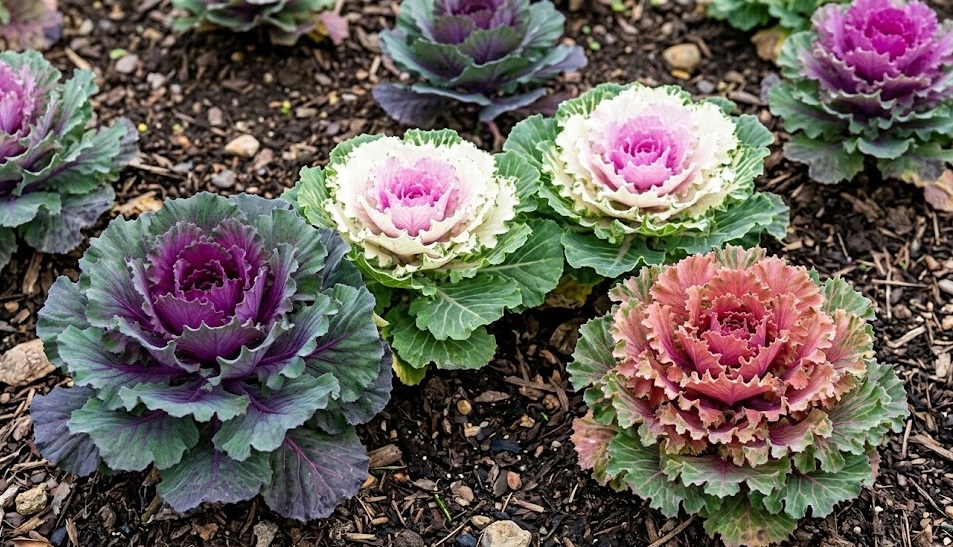

Pruning ornamental cabbage is a task focused more on aesthetic maintenance and hygiene than on structural development. Unlike woody shrubs, these herbaceous plants do not require complex pruning, but regular “cleaning” is essential for a professional appearance. Removing damaged or aging foliage helps maintain the symmetry of the rosette and prevents the onset of disease. This article outlines the correct techniques for grooming your plants to keep them looking their best throughout the season.
Removing dead and damaged leaves
The lower leaves of the ornamental cabbage are the oldest and are often the first to show signs of wear and tear. They may become yellowed, torn by the wind, or damaged by contact with the soil and mulch. Regularly removing these unsightly leaves keeps the plant looking fresh and draws more attention to the vibrant center. You should check the base of each plant once a week and gently prune away any foliage that is no longer contributing to the display.
Using the correct tools is important even for a task as simple as removing a cabbage leaf. A sharp, clean pair of bypass pruners or a dedicated garden knife will allow you to make a clean cut close to the main stem. Avoid pulling or tearing the leaves off by hand, as this can strip the outer layer of the stem and create a large wound. A clean cut heals much faster and is less likely to become an entry point for bacteria or fungal pathogens.
When you remove a leaf, try to cut as close to the stem as possible without nicking the stem itself. Leaving long “stubs” of leaf stalks can lead to localized rot as the remaining tissue dies back. If you notice any signs of mushiness or a bad smell at the site of a cut, it may be an indication of soft rot. In such cases, you should sanitize your tools immediately with rubbing alcohol to prevent spreading the infection to other parts of the plant.
Hygiene is a critical part of the pruning process in a professional garden. You should always collect the removed leaves and put them in your compost bin or green waste container. Leaving dead plant material on the ground around your cabbage creates a habitat for slugs and a source of fungal spores. A clean garden bed is the foundation of a healthy plant, and regular pruning is the best way to maintain that cleanliness.
More articles on this topic
Shaping and maintaining the rosette
The primary goal of grooming ornamental cabbage is to maintain the perfect, symmetrical shape of the rosette. Occasionally, a plant may grow more leaves on one side than the other, especially if the light source is uneven. You can subtly influence the appearance of the plant by selectively removing a few leaves to restore its balance. This is a common technique used in formal gardens where geometric perfection is a key part of the design.
As the season progresses, the central “head” of the cabbage may become very dense, which can trap moisture and debris. You can gently thin out a few of the internal leaves if they are becoming too crowded, although this is rarely necessary for most varieties. The goal is to ensure that light and air can reach as far into the center of the plant as possible. This simple act of thinning can significantly improve the health and longevity of the central colorful foliage.
If the plant begins to “stretch” or become too tall, you can sometimes improve its appearance by mounding more soil around the base. While this isn’t pruning in the traditional sense, it is a form of shaping that hides a leggy stem and makes the plant look more compact. This technique is particularly useful in late autumn when the plants have reached their full size. It provides a more professional, “finished” look to the entire garden bed or container.
Monitoring the growth of the central stalk is also important as the winter progresses. If the center begins to point upward or elongate significantly, it is a sign that the plant is getting ready to bolt. While you cannot stop this natural process, you can sometimes slow it down by keeping the plant cool and avoiding any late-season fertilization. Once a plant has completely lost its shape due to bolting, it is usually time to remove it and plan for your next seasonal display.
More articles on this topic
Rejuvenation and late season cleanup
In mid-winter, after a particularly harsh storm or a deep freeze, your ornamental cabbage may look a bit battered. Rejuvenation involves a more thorough pruning session to remove all the winter-damaged tissue at once. You might need to take off several layers of outer leaves to reveal the protected, healthier foliage underneath. This can dramatically improve the appearance of a plant that looked like it was at the end of its life.
Be careful not to over-prune during the coldest months, as the outer leaves actually provide a bit of insulation for the center of the plant. If you remove too much at once, you might expose the tender inner core to frost damage. It is often better to do a “light” cleaning every few weeks rather than one drastic pruning event. This gradual approach is much less stressful for the plant and allows it to maintain its natural defenses.
As spring approaches and the decorative value of the cabbage begins to fade, your pruning goals will shift. You might choose to leave the plants in place as a temporary green filler while your spring bulbs are emerging. In this case, continue to remove any decaying material to keep the garden looking tidy for the new season. A well-maintained garden is one that always looks cared for, even during the transition between major displays.