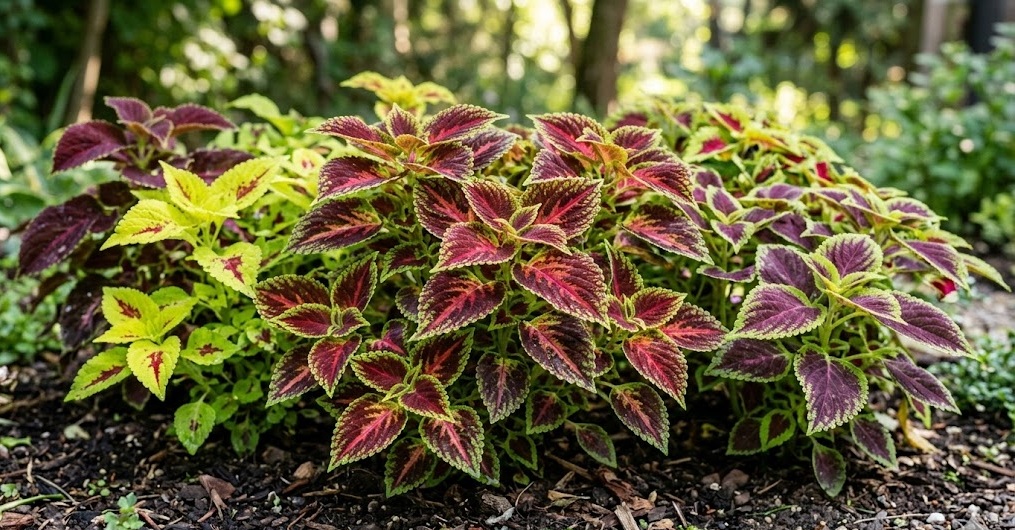

Maintaining the perfect shape and vigor of these fast-growing plants requires a disciplined approach to pruning and pinching. Without regular intervention, many varieties can quickly become leggy, sparse, and less visually appealing as they mature. Professional gardeners use specific cutting techniques to encourage a dense, shrub-like habit and to extend the lifespan of the colorful foliage. This guide explains how to master the art of pruning to ensure your collection remains the envy of every visitor to your garden.
Pinching for bushier growth
Pinching is the most fundamental maintenance task you will perform to keep your plants looking thick and lush. This simple technique involves using your fingernails or a small pair of snips to remove the very tip of a growing stem. When you remove the apical bud, you disrupt the plant’s hormonal balance, specifically the flow of auxins that suppress the growth of side branches. This encourages the dormant buds located at the leaf nodes below the cut to spring into action, resulting in two new stems where there was once only one.
You should start this process when the young plant is only ten to fifteen centimeters tall and has at least two or three sets of true leaves. By starting early, you establish a solid, branched foundation that will support a much larger and more impressive canopy later in the season. Don’t worry about “hurting” the plant, as these species are incredibly vigorous and will usually show new growth within just a few days. Frequent, light pinching is much better for the plant’s overall appearance than one heavy pruning later on.
The best place to make your cut is just above a pair of healthy leaves, leaving about half a centimeter of stem above the node. This ensures that the new branches have a strong point of attachment and that you don’t leave a long, unsightly “dead end” that might rot. You can repeat this process every few weeks throughout the growing season whenever you notice a stem getting ahead of the others. This constant refinement is the secret to those perfectly rounded, mound-like specimens you see in professional garden displays.
If you are growing multiple varieties together, pinching allows you to manage the relative sizes of the different plants in your arrangement. Some cultivars naturally grow much faster than others and can easily overwhelm their neighbors if left to their own devices. By being more aggressive with the faster-growing plants, you can maintain a balanced and harmonious composition where every variety has its chance to shine. It is a simple tool that gives you complete control over the architecture of your garden or container display.
More articles on this topic
Managing the flowering stage
While we love these plants for their leaves, they will eventually try to produce small, spiked flowers, usually in the late summer or early autumn. For a professional foliage grower, these flowers are generally undesirable because they signal the end of the plant’s vigorous growth phase. Once the plant begins to bloom, it diverts its energy away from the leaves and toward seed production, which often causes the foliage to become smaller and less vibrant. The stems can also become woody and the plant may start to look “tired” or spent.
To prevent this decline, you should remove the flower spikes as soon as you see them beginning to form at the tips of the stems. Catching them early, when they are just tiny, fuzzy buds, is much better than waiting until the blue or white flowers have actually opened. Simply pinch off the entire spike down to the first set of full-sized leaves to encourage the plant to return its focus to vegetative growth. You might have to be quite vigilant during the peak of the season, as the plant can be very persistent in its attempts to reproduce.
Some gardeners enjoy the look of the flowers, which can be a delicate lavender or blue, but you must be aware of the trade-off. If you allow the plant to flower and set seed, it will often begin to lose its lower leaves and the overall color intensity will drop significantly. In many cases, a plant that has been allowed to flower extensively is much harder to overwinter or use for cuttings. For the highest quality display, a “no-flower” policy is almost always the best approach for maintaining peak aesthetics.
If you happen to miss a few flowers and they manage to mature, don’t panic; just cut the stem back a bit more deeply to stimulate fresh growth. This “deadheading” process is standard in many parts of the garden but is particularly important for high-performance foliage plants. By being proactive and consistent, you can keep your collection in its “juvenile” and most beautiful state for several extra months. This simple act of intervention is one of the most effective ways to prolong the beauty of your garden.
More articles on this topic
Rejuvenating leggy specimens
Sometimes, despite our best efforts, a plant might become “leggy,” with long, bare stems and only a small cluster of leaves at the very top. This often happens if the plant didn’t get enough light or if it was neglected during a busy period of the summer. The good news is that these plants are remarkably resilient and can often be completely rejuvenated with a “hard prune.” This involves cutting the stems back by half or even two-thirds, leaving only a few nodes near the base of the plant.
When performing a heavy pruning, you should use sharp, sterilized shears to ensure clean cuts that heal quickly. While the plant might look a bit sad and bare for a week or two, it will soon respond with a burst of fresh, vigorous growth from the remaining nodes. This is also an excellent time to provide a light dose of nitrogen-rich fertilizer to support the rapid production of new leaves. You will be amazed at how quickly a straggly, unattractive specimen can transform back into a beautiful, dense bush.
The stems you remove during a rejuvenation prune don’t have to go to waste; they are perfect material for making new cuttings. If the upper parts of the stems are still healthy and have good color, you can follow the standard propagation steps to start a whole new generation of plants. This way, you aren’t just fixing an old plant but also expanding your collection at the same time. It is a highly efficient way to manage your garden and ensure that you always have young, vibrant plants on hand.
Finally, remember that pruning is an ongoing conversation between you and your plants throughout the entire year. You should always be looking for ways to improve the light penetration into the center of the plant by thinning out overcrowded areas. Removing any leaves that show signs of damage or disease also helps maintain the professional look and health of your collection. With your shears in hand and a keen eye for detail, you can sculpt these colorful tropical plants into true masterpieces of the garden.