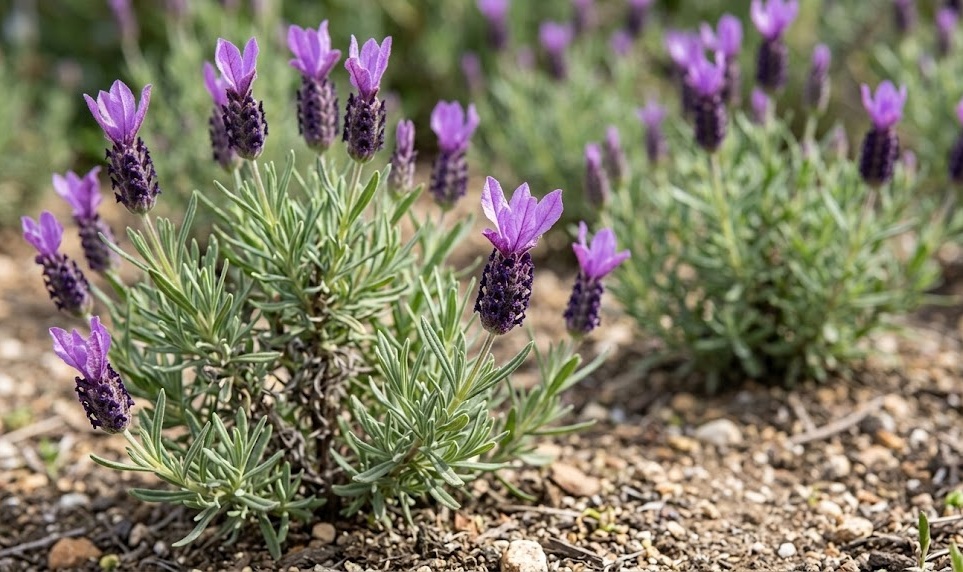

French lavender is a true sun-worshipper that requires the highest intensity of light to thrive and produce its signature blooms. In its native Mediterranean habitat, it is exposed to bright, direct sunlight for the vast majority of the day. You should aim to provide at least six to eight hours of unobstructed sun for your plants to remain healthy. Without this intense light, the shrub will quickly lose its compact shape and its silver-green luster.
The quality of light is just as important as the duration of exposure for this specific variety of lavender. Morning sun is particularly beneficial because it helps dry the dew from the leaves, preventing fungal issues before they start. However, the intense midday and afternoon sun is what really drives the production of the essential oils. You will notice that plants in the sunniest spots always have the strongest and most pleasant fragrance.
If you plant lavender in a spot that receives only partial shade, you will likely be disappointed with the results. The stems will grow long and weak as they reach toward the nearest light source, a phenomenon known as stretching. The number of flowers will also be significantly reduced, and the bracts may not develop their vibrant purple color. For the best aesthetic and biological results, always prioritize the sunniest location in your garden design.
Sunlight also plays a critical role in the plant’s ability to withstand pests and diseases throughout the seasons. The UV rays from the sun act as a natural disinfectant for the foliage and the surface of the soil. A sun-drenched plant has a much stronger immune system and can recover from minor stresses more quickly. When you give your lavender the light it craves, you are doing most of the maintenance work for yourself.
Managing light in different garden settings
In urban gardens or smaller spaces, buildings and fences can cast long shadows that move throughout the day. You should observe your garden at different times to understand exactly how the light falls on your chosen planting spot. Remember that the angle of the sun changes with the seasons, being much lower in the sky during spring and autumn. A spot that is sunny in July might be completely shaded in April, which can affect the plant’s early growth.
More articles on this topic
Reflected light can be a useful tool if your garden is naturally a bit darker than the lavender would prefer. Planting near a white-painted wall or using light-colored gravel as mulch can bounce extra light onto the plant. This technique increases the overall light intensity and can also provide a bit of extra warmth during the cooler months. It is a clever way to maximize the solar energy available in a less-than-perfect garden location.
If you are growing lavender in containers on a balcony, the orientation of the space is the most important factor. South-facing balconies are ideal because they receive the most consistent and intense light throughout the entire day. West-facing spots are also good, though the heat can be very intense in the late afternoon, requiring more frequent watering checks. East-facing locations might work if they are completely unobstructed, but north-facing balconies are generally too dark for French lavender.
When planting in a mixed border, ensure that taller perennials or shrubs do not overshadow your lavender as they grow. You should place the lavender on the southern side of taller neighbors so its light source remains clear. Regular pruning of surrounding plants can also help maintain the light levels needed for the lavender to stay dense. A little bit of careful planning goes a long way in ensuring each plant gets its fair share of the sun.
Recognizing signs of light deficiency
It is easy to tell if your French lavender is struggling with a lack of sufficient light by observing its growth habits. The most obvious sign is a “leggy” appearance where the stems have long gaps between the sets of leaves. The plant will also start to lean significantly toward the direction where the light is most intense. If you see these signs, it is a clear message that the plant needs a more open and sunny location.
More articles on this topic
The color of the foliage will also change if the plant is not receiving enough energy from the sun. Instead of a bright, silvery-gray, the leaves might become a dull, dark green as they try to maximize their chlorophyll. The unique rabbit-ear bracts will often be smaller, paler, and much less numerous than they should be on a healthy plant. In extreme cases of shade, the plant might fail to produce any flowers at all during the entire growing season.
A lack of light also makes the lavender more susceptible to root rot and various leaf-spotting fungi. Without the sun to evaporate excess moisture, the soil stays damp for too long, which is a death sentence for this species. You might notice the lower leaves turning yellow and falling off as the plant struggles to survive in a humid, dark environment. These symptoms are often mistaken for nutrient deficiencies, but the real cause is almost always environmental.
If you realize your lavender is in a spot that is too dark, the best solution is to move it as soon as possible. Transplanting should be done in the early spring or autumn to minimize the shock to the root system. Choose a new location that is guaranteed to have the full sun exposure the plant needs to recover its health. With the right amount of light, even a struggling lavender can often regain its beautiful shape and fragrance within one season.