
Starting a sweet corn crop requires precise timing and a thorough understanding of the plant’s early developmental needs. You cannot rush the process, as this warm-season vegetable is highly sensitive to cold soil and lingering spring frosts. Proper propagation begins with selecting the right variety and preparing the planting site to meet the crop’s high energy demands. By following a professional planting protocol, you establish a strong foundation for a healthy and productive harvest.
Variety selection and seed preparation
Choosing the right hybrid or heirloom variety is the first critical decision you will make in the propagation process. You must consider the length of your local growing season and the specific flavor profile you prefer, such as “super sweet” or “sugar-enhanced” types. Some varieties are specifically bred for cold tolerance, which might be an advantage if you live in a region with shorter summers. Reading the seed packets carefully will give you insights into the expected height and ear size of the mature plants.
Seed quality is paramount, so you should always source your corn seeds from a reputable supplier. Look for seeds that have been stored in a cool, dry environment to ensure the highest possible germination rates. You should avoid using seeds that are older than two years, as the vitality of corn kernels drops significantly over time. If you are unsure about the viability of your seeds, you can perform a simple germination test with a damp paper towel.
Before planting, some growers choose to treat their seeds to protect them from soil-borne pathogens or early-season pests. While many commercial seeds come pre-treated, you can also opt for organic alternatives or untreated seeds if you prefer. Pre-soaking the seeds for a few hours in lukewarm water can sometimes speed up the initial emergence process. However, you must be careful not to leave them in the water for too long, as this can lead to rot before they ever hit the soil.
Understanding the genetic isolation requirements is essential if you plan to plant multiple types of sweet corn. Different varieties can cross-pollinate, which often results in starchy, tough kernels that lack the desired sweetness. You should separate different varieties either by a significant physical distance or by staggering your planting dates. This ensures that the silking periods do not overlap, maintaining the genetic integrity and flavor of each specific crop you grow.
More articles on this topic
Site preparation and soil conditions
Sweet corn thrives in soil that is rich in organic matter and has excellent drainage properties. You should begin preparing your planting site several weeks before you intend to put the seeds into the ground. Incorporating a generous amount of well-rotted compost or aged manure will improve the soil’s ability to hold nutrients. This initial preparation creates a fertile environment that supports the rapid growth corn is known for during its early stages.
Temperature is the most important environmental factor when it comes to the actual planting date. You should wait until the soil temperature has reached at least fifteen degrees Celsius at a depth of ten centimeters. If the soil is too cold, the seeds will likely sit dormant and eventually rot before they can sprout. Many professional growers use a soil thermometer to ensure they are planting into an environment that encourages quick and uniform emergence.
The physical layout of your planting area should be designed to facilitate wind pollination. Instead of planting one or two long rows, you should arrange your sweet corn in a rectangular or square block. This configuration ensures that the pollen falling from the tassels has a much better chance of landing on the silks below. A minimum of four rows planted side-by-side is generally recommended to achieve a full and successful kernel set on every ear.
Sweet corn also requires a location that receives full sun for at least eight to ten hours every day. You should avoid planting in areas that are shaded by large trees or buildings, as this will lead to weak, spindly stalks. Proper sunlight exposure is critical for the photosynthesis required to produce high levels of sugar in the kernels. Ensure the site is also protected from the strongest prevailing winds, which can sometimes knock over young plants before they are established.
More articles on this topic
Sowing techniques and depth
When you are ready to plant, you should aim for a sowing depth of approximately three to five centimeters. In heavier clay soils, a slightly shallower depth is usually better to help the young sprout reach the surface easily. In lighter, sandy soils, planting a bit deeper can help the seeds access moisture that might evaporate quickly from the top layer. Consistency in depth is the key to achieving a uniform stand of corn where all plants grow at the same rate.
Spacing between individual seeds and between the rows is another factor you must control precisely. You should place seeds about twenty to thirty centimeters apart within the row to allow for adequate airflow and leaf expansion. Rows themselves should be spaced about seventy to ninety centimeters apart to give you enough room to move through the patch for maintenance. If you plant too densely, the competition for light and nutrients will result in smaller ears and lower overall yields.
Hand-planting is very common for smaller garden plots and allows for great precision in seed placement. You can use a simple garden line to ensure your rows are straight and your spacing is accurate throughout the block. For larger areas, a mechanical seeder can save a tremendous amount of time and energy while maintaining consistent depth. Regardless of the method, you should always plant a few extra seeds to account for potential losses due to birds or poor germination.
Immediately after sowing, you should firm the soil gently over the seeds to ensure good seed-to-soil contact. This contact is essential for the seed to absorb moisture and begin the biological process of germination. You should then water the area thoroughly but gently, making sure not to wash the seeds out of their designated spots. Keeping the soil surface moist until the first green shoots appear is the final step in a successful planting operation.
Early growth and thinning
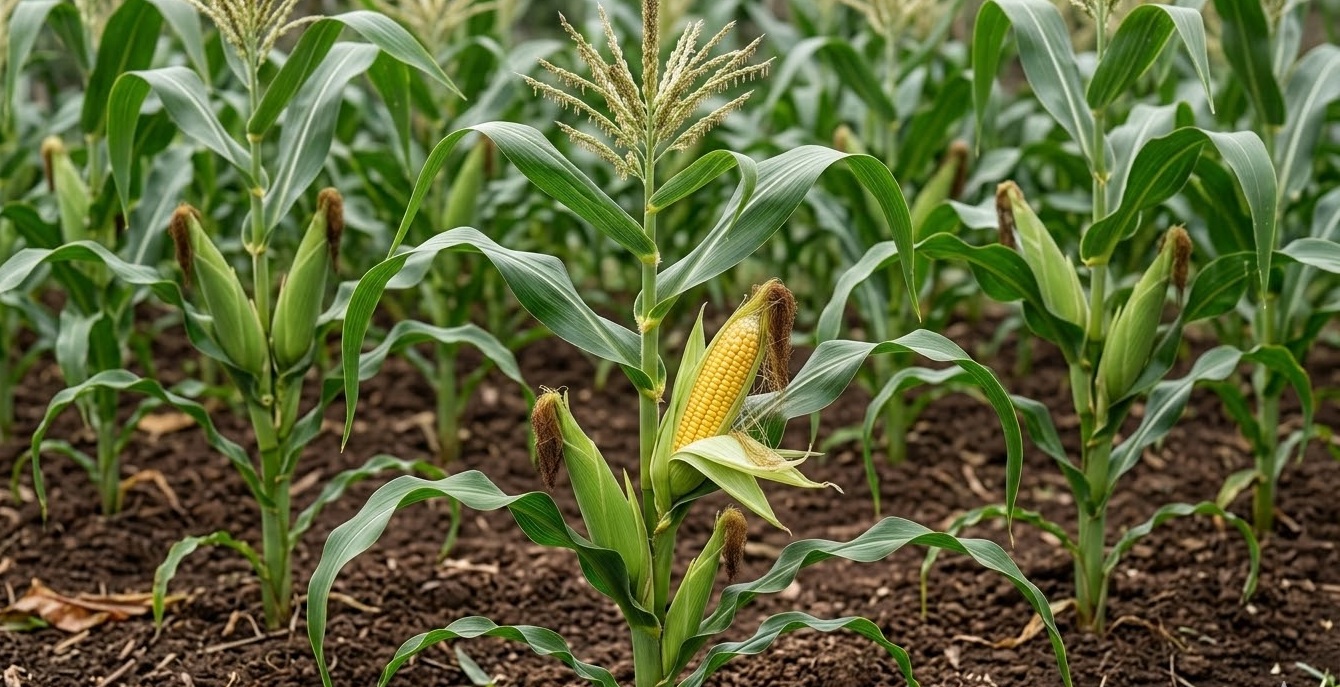
The first green “spikes” of sweet corn should appear within seven to ten days under ideal temperature conditions. You should monitor the emergence carefully to see if there are any significant gaps in the rows where seeds failed to grow. If necessary, you can do a “fill-in” planting right away to ensure your block remains dense enough for pollination. These early days are the most vulnerable time for the young plants, as they are a favorite target for various birds and insects.
Once the seedlings have reached a height of about ten to fifteen centimeters, it is time to evaluate the density. If you planted more than one seed per spot, you might need to thin the plants to your desired spacing. You should remove the weaker or smaller seedlings by cutting them at the soil line rather than pulling them. Pulling can disturb the delicate root systems of the neighboring plants you want to keep, potentially setting back their growth.
Young corn plants are surprisingly resilient but they do not like to compete with aggressive weeds. You should start your weed control efforts as soon as you can see the rows clearly. Using a light hand-hoe or simply pulling weeds by hand near the base of the corn is the safest approach. Be very careful not to disturb the shallow roots of the corn, as this can cause the young plants to wilt or slow their development significantly.
As the plants continue to grow, you might notice small side-shoots, often called “suckers,” appearing at the base of the main stalk. In most cases, you do not need to remove these, as they do not significantly take away from the energy of the main ear. In fact, these extra leaves can contribute more photosynthetic energy to the overall plant system. Focus your energy instead on ensuring the main stalks have enough water and nitrogen to keep their momentum going into the summer.