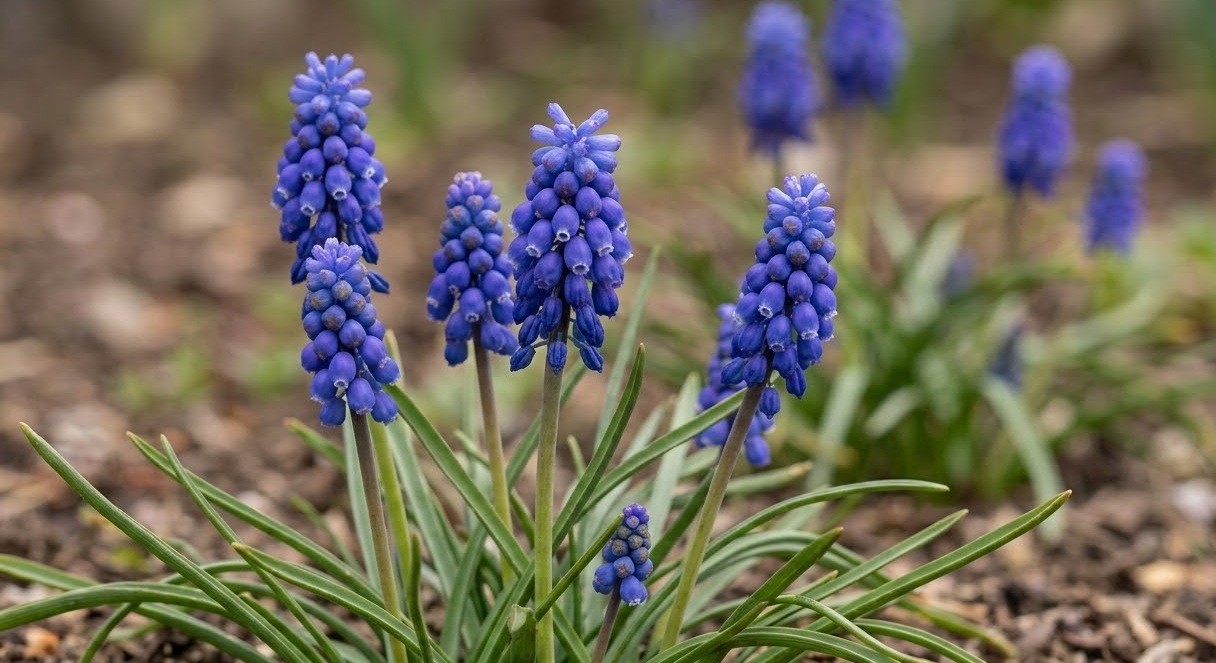

Watering and fertilizing are two of the most critical aspects of maintaining a healthy and vibrant collection of grape hyacinths throughout the year. While these bulbs are often considered “plant and forget” species, professional results require a more nuanced understanding of their nutritional and hydration needs. You must learn to read the signals the plants provide, such as leaf color and flower turgidity, to adjust your care routine accordingly. A balanced approach ensures that the bulbs remain vigorous and capable of producing spectacular blooms season after season.
The primary goal of irrigation is to maintain a consistent level of moisture without ever allowing the soil to become saturated or completely bone-dry. During the active growth phase in the spring, the plants require a steady supply of water to support the rapid expansion of their tissues. If the spring is particularly dry, supplemental watering can make a significant difference in the height and longevity of the flower spikes. You should aim to soak the soil deeply so that the moisture reaches the root zone situated several centimeters below the surface.
Fertilization is not always strictly necessary in fertile garden soils, but it can provide a significant boost to plants growing in nutrient-poor areas. Using a professional-grade, balanced fertilizer can help the bulbs recover the energy spent during the demanding flowering process. The timing of nutrient application is essential, as the plant can only absorb and utilize these minerals during specific windows of its growth cycle. Understanding the chemistry of your soil will help you choose the right product for your specific garden environment.
Consistency is the hallmark of a professional watering and feeding schedule for any bulbous plant. Sudden fluctuations in moisture levels can stress the plant, making it more susceptible to environmental issues and physiological disorders. By establishing a routine based on the actual needs of the plant rather than a rigid calendar, you can optimize its health. This professional level of care transforms a simple garden task into a science-backed method for horticultural excellence.
Developing a watering strategy
The first rule of watering is to observe the natural precipitation patterns and fill in the gaps only when necessary. During a typical wet spring, you may not need to provide any additional water at all, as the bulbs are well-adapted to these conditions. However, if a dry spell occurs just as the flower buds are forming, a deep watering can prevent the stems from becoming stunted. You should always check the soil moisture by inserting a finger or a moisture meter into the ground before reaching for the hose.
More articles on this topic
Watering techniques should focus on delivering the liquid directly to the base of the plant to keep the foliage as dry as possible. Wet leaves can sometimes encourage the development of surface molds or other fungal issues that detract from the plant’s appearance. Using a soaker hose or a watering can with a narrow spout allows for precise application that minimizes waste and maximizes efficiency. Early morning is the best time for irrigation, as it allows any accidental moisture on the leaves to evaporate quickly in the sun.
As the season progresses and the temperatures rise, the plant’s water requirements will gradually decrease. Once the flowers have faded and the leaves begin to yellow, the plant is signaling that it is entering its dormant phase. During this transition, you should slowly reduce the frequency of watering to allow the bulb to harden off properly. Excess moisture during the summer dormancy can be detrimental, as it increases the risk of the bulb rotting in the warm soil.
In sandy or very well-drained soils, you might need to water more frequently than in loamy or clay-heavy environments. Sandy soil loses its moisture content very rapidly, which can lead to the bulbs desiccating during prolonged periods without rain. Conversely, if you have heavy soil that retains water, you must be extremely cautious not to overdo it. Understanding the drainage characteristics of your specific site is the only way to tailor your watering strategy to the actual conditions.
Nutrient requirements and fertilization
To achieve professional-quality blooms, you must provide the specific minerals that support bulb development and floral intensity. Phosphorus is particularly important for bulbous plants, as it promotes strong root systems and healthy flower production. Potassium is another essential nutrient that helps the plant regulate its water usage and improves its overall resistance to environmental stress. A fertilizer with a slightly higher middle and final number in its N-P-K ratio is often ideal for these spring-flowering species.
More articles on this topic
The most effective time to apply fertilizer is in the early spring, just as the first green shoots begin to poke through the soil surface. This provides the plant with a fresh supply of nutrients exactly when its metabolic demands are at their highest. You should use a slow-release granular product that will continue to provide nourishment throughout the entire growing season. Always follow the manufacturer’s instructions regarding application rates to avoid the risk of chemical burns on the delicate young tissues.
A second, lighter application of fertilizer can be beneficial immediately after the flowers have finished blooming. This helps the plant replenish its energy reserves as it works to build up the bulb for the following year. During this post-bloom phase, the plant is focused on storage rather than growth, so the nutrients are directed straight to the underground structures. This “feeding for next year” is a secret technique used by professional gardeners to ensure consistent performance over many years.
Organic options, such as well-rotted compost or bone meal, are excellent alternatives to synthetic fertilizers for long-term soil health. Bone meal is a traditional source of slow-release phosphorus that is particularly well-suited for bulbs and is very easy to apply. Spreading a thin layer of compost over the planting area each autumn mimics the natural nutrient cycling of a forest ecosystem. These organic methods not only feed the plant but also improve the overall structure and biological activity of the soil.
Identifying and correcting nutrient imbalances
Observing the color and shape of the leaves can provide valuable clues about the nutritional status of your grape hyacinths. If the foliage appears pale yellow or stunted despite adequate moisture, it may be a sign of nitrogen deficiency. However, be careful not to overcompensate with high-nitrogen fertilizers, as this can lead to lush leaf growth at the expense of flower production. A professional gardener looks for a balanced appearance where both the leaves and the flowers are well-proportioned.
Purple tints on the leaves, especially during cooler spring weather, can sometimes indicate a temporary difficulty in absorbing phosphorus. This is often related to soil temperature rather than an actual lack of the mineral in the ground. As the soil warms up, the plant’s ability to take up phosphorus usually improves, and the leaves will return to their normal green color. Understanding these physiological responses prevents you from taking unnecessary or potentially harmful corrective actions.
If you notice that the flower spikes are weak or prone to flopping over, it could be a sign that the plant needs more potassium. Potassium strengthens the cell walls and helps the plant maintain its internal pressure, which is vital for the structural integrity of the stems. Adding a small amount of sulfate of potash can help rectify this issue and produce more robust, upright floral displays. Regular soil testing is the most scientific way to confirm these suspicions before applying concentrated mineral supplements.
Excessive fertilization can be just as damaging as a lack of nutrients, leading to a buildup of salts in the soil. This salt buildup can interfere with the plant’s ability to absorb water, essentially causing it to dehydrate even in moist conditions. If you see white crusting on the soil surface or if the tips of the leaves begin to turn brown and “burn,” you should stop all feeding and flush the area with plain water. Maintaining a “less is more” philosophy with fertilizers often leads to healthier, more resilient garden plants.
Watering and feeding in competition
When grape hyacinths are planted among other perennials or near large trees, they must compete for available resources. The roots of large shrubs and trees can be very aggressive, often drying out the surrounding soil much faster than you might expect. In these situations, you must be more proactive with your watering to ensure the smaller bulbs receive their fair share. Professional landscape management involves identifying these competitive zones and adjusting the irrigation accordingly.
The same competitive principles apply to fertilization when multiple species are growing in the same garden bed. Larger, faster-growing plants may quickly deplete the soil of essential minerals, leaving the bulbs undernourished. You might need to use a more targeted application method, such as liquid fertilizer applied directly to the bulb area, to ensure the nutrients reach their intended target. Monitoring the growth of all plants in the bed helps you maintain a fair distribution of resources.
In a naturalized lawn setting, the grass itself is a major competitor for both water and nutrients. Because lawn grasses are very efficient at absorbing surface moisture, the bulbs underneath may suffer during dry spring months. If you want your naturalized bulbs to thrive, you might need to fertilize the entire lawn area with a product that is safe for both the grass and the flowers. Balancing the needs of the turf with the requirements of the bulbs is a delicate but rewarding horticultural challenge.
Finally, the use of mulches can help reduce competition by suppressing weeds and retaining soil moisture for the bulbs. A thin layer of bark or leaf mold acts as a buffer, preventing the sun from baking the soil and slowing down the evaporation process. This mulch also breaks down slowly, providing a steady, natural source of nutrients over time. By managing the environment around the bulbs, you reduce the stress they face and allow them to focus their energy on growth and reproduction.
Professional tips for irrigation and nutrition
One of the most effective ways to manage moisture is to group plants with similar water needs together, a practice known as hydro-zoning. By planting grape hyacinths with other spring bulbs and early perennials, you can create a dedicated zone that receives specific care during the spring. This prevents you from overwatering more drought-tolerant plants nearby while ensuring the bulbs have everything they need. Strategic garden design is the first step toward efficient and effective resource management.
Using a rain gauge in your garden provides objective data that is much more reliable than simply looking at the weather forecast. This allows you to know exactly how much water your plants have received and whether you truly need to intervene with the hose. Professional gardeners often use these simple tools to avoid the common mistake of over-irrigation during the shoulder seasons. Knowledge of your specific microclimate is the key to mastering the art of watering.
When it comes to liquid fertilizers, the application should be done when the soil is already slightly moist to ensure even distribution. Applying concentrated liquid feeds to bone-dry soil can cause localized root damage and prevent the nutrients from being absorbed efficiently. A “weakly, weekly” approach—using a highly diluted solution more frequently—is often more effective than one heavy application. This method provides a steady stream of nutrients that mimics the natural availability of minerals in a healthy ecosystem.
In conclusion, the successful watering and feeding of these bulbs is a dynamic process that requires observation and adaptation. There is no single “correct” way to do it, as every garden has its own unique set of conditions and challenges. By following professional guidelines and staying attentive to the needs of your plants, you can ensure they remain a highlight of your garden for many years. Mastery of these basic horticultural skills is what separates a casual hobbyist from a truly expert gardener.