
The vitality and structural integrity of the great stonecrop are directly linked to the quality and duration of light it receives throughout the growing season. As a succulent, this plant has specific physiological adaptations designed to maximize energy capture in high-light environments while protecting its tissues from solar damage. Understanding these light requirements is essential for any professional gardener aiming to produce specimens with vibrant foliage and strong, upright stems. Placing the plant in the correct light regime is the most significant factor in determining its long-term success in your landscape.
Optimal sun exposure for leaf color
To achieve the best possible performance from your great stonecrop, you should aim to provide it with at least six to eight hours of direct, unfiltered sunlight each day. Sunlight is the primary driver of the plant’s metabolic processes, fueling the production of the thick, fleshy leaves and the massive flower heads. In full sun, the plant will maintain a compact, bushy habit with stems that are strong enough to support themselves. This architectural stability is one of the most prized traits of the species when grown under ideal conditions.
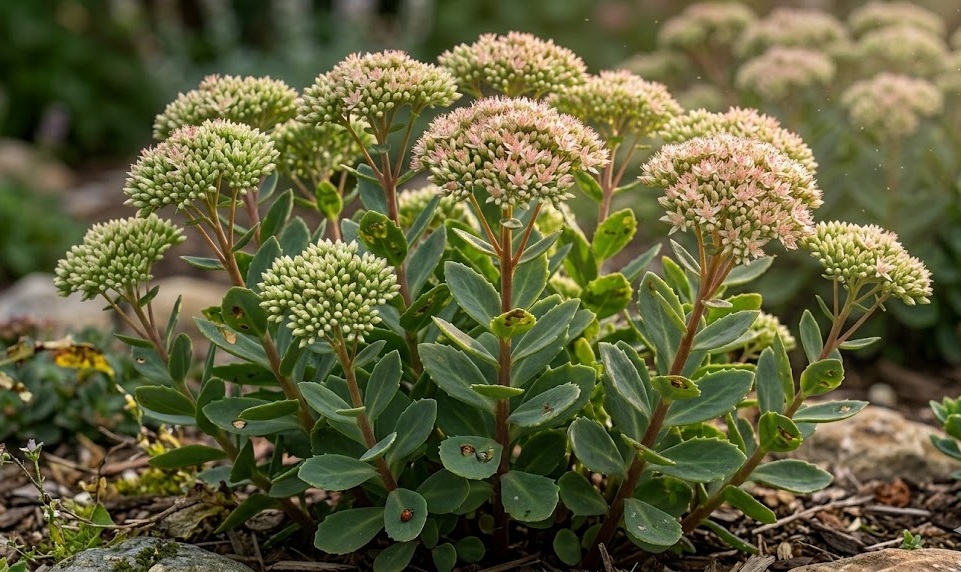
The intensity of light also plays a crucial role in determining the coloration of the foliage and the eventual flowers. Many varieties of great stonecrop develop beautiful bronze, purple, or reddish tints when exposed to high levels of ultraviolet light. These pigments act as a natural “sunscreen,” protecting the internal cells of the plant from being damaged by excessive radiation. If the light levels are too low, the leaves will remain a dull, pale green, and the plant will lose much of its ornamental appeal.
You should also consider the orientation of your garden when deciding where to place your stonecrops. A south-facing or west-facing position is usually ideal, as it receives the strongest and most consistent light throughout the afternoon. If you have a north-facing garden or areas with heavy tree cover, you may find it difficult to keep the plant from becoming leggy. Think of light as the “fuel” that powers the plant; without enough of it, the stonecrop simply cannot perform at its peak potential.
During the peak of summer, the quality of light changes, and the plant must adapt to the longer days and higher temperatures. The great stonecrop is exceptionally well-adapted to this, using its succulent leaves to store the energy gathered during the long days. You will notice that the flowers often begin to change color as the light levels shift in late summer, moving from a pale green to deep, vibrant shades. This color transition is a direct response to the changing light and is one of the highlights of the gardening year.
More articles on this topic
Adapting to partial shade conditions
While the great stonecrop is a sun-loving plant, it can tolerate a certain amount of partial shade, particularly in regions with very hot and intense summer sun. In these climates, a bit of light shade during the hottest part of the afternoon can actually prevent the leaves from becoming scorched or overly stressed. However, the light should still be bright and indirect, rather than the deep shade found under evergreen trees or in narrow alleyways. The plant will always prioritize light, so even in partial shade, it will try to lean toward the brightest part of the sky.
If you must grow your stonecrop in an area with less than optimal light, you need to be prepared for some changes in its growth habit. The most common response to low light is “etiolation,” where the stems stretch out and the leaves become more widely spaced along the stalk. This results in a much taller, thinner plant that is very likely to flop over once the heavy flower heads begin to develop. To combat this, you can be even more restrictive with water and fertilizer to keep the growth as slow and sturdy as possible.
You should also monitor the health of plants grown in partial shade more closely, as they are more susceptible to moisture-related issues. Without the drying power of the direct sun, the foliage stays wet for longer after rain or dew, which can encourage the growth of fungal pathogens. Improving air circulation by giving the plants more space can help mitigate some of the risks associated with lower light levels. It is a constant game of trade-offs when you move a sun-lover into a shadier part of the garden.
Sometimes, the “shade” in your garden is not permanent but changes as the season progresses and trees grow their leaves or neighboring plants get taller. You must be aware of these seasonal light shifts and how they might affect the development of your great stonecrop. If a plant that was in full sun in May is suddenly in deep shade by July, it may struggle to produce a good show of flowers. Professional garden planning involves anticipating these changes and positioning plants where they will have the best light throughout their entire life cycle.
More articles on this topic
Managing light intensity in summer
In the height of summer, managing light intensity is often about balancing the plant’s need for energy with the potential for heat stress. While the great stonecrop loves the sun, extreme heat combined with high light can sometimes cause the edges of the leaves to turn brown or crispy. This is more common in young plants or those that have recently been moved from a nursery environment to a bright garden. If you see signs of light stress, providing a temporary bit of shade during the hottest days can help the plant acclimate.
Another factor to consider is the reflection of light from nearby surfaces, which can significantly increase the total amount of radiation the plant receives. Planting a stonecrop next to a white wall or on a light-colored gravel mulch can create a high-intensity environment that mimics its natural rocky habitat. This reflected light can be beneficial for promoting deep leaf color and preventing the stems from leaning in one direction. It essentially provides the plant with light from multiple angles, leading to more even and balanced growth.
If you find that your stonecrops are leaning heavily toward one side, it is a clear sign that the light source is one-sided and the plant is trying to reach for it. You can try to correct this by periodically rotating container-grown plants or by pruning the “sunny” side to encourage more balanced growth. In a permanent garden bed, the best solution is usually to move the plant to a more open location where the light is more evenly distributed. A well-placed plant should stand straight and proud without any intervention from you.
Finally, remember that the great stonecrop’s relationship with light continues right through to the end of the season. The shortening days of autumn are the signal that triggers the final maturation of the seeds and the hardening of the rootstock for winter. The lower, golden light of late September and October makes the deep bronze and red colors of the foliage truly glow in the landscape. By respecting and managing the light requirements of this succulent, you ensure a spectacular finish to the gardening season every single year.