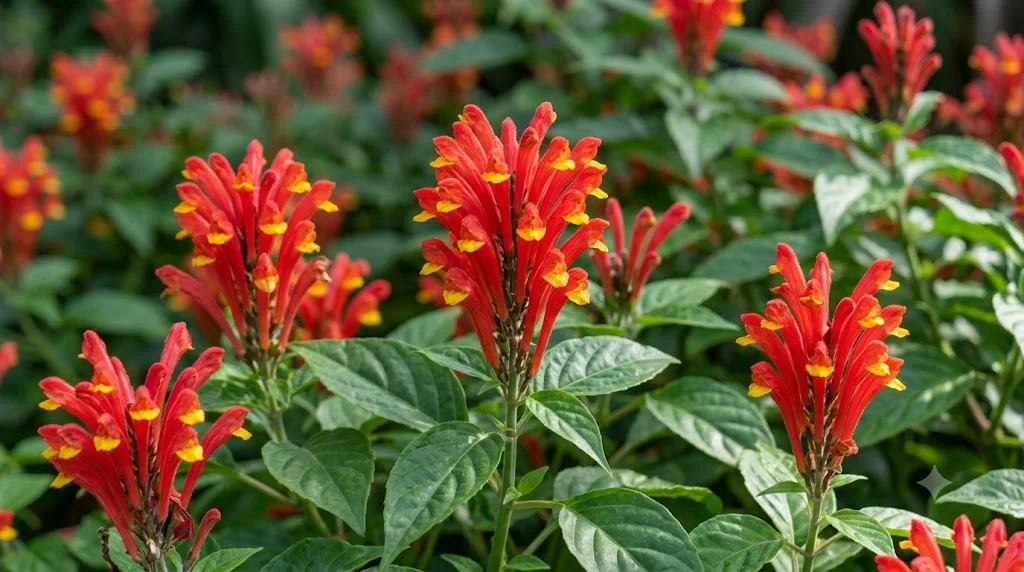

Costa Rican skullcap must be protected from frost and prolonged cold because it originates from a warm climate. In regions with cool winters, container-grown plants should be moved indoors before night temperatures become damaging. Successful overwintering depends on combining warmth with adequate light and restrained watering. The aim is to maintain healthy living tissue rather than force heavy flowering during the darkest months.
Preparing the plant before moving indoors
Begin planning the move while autumn temperatures are still mild. Sudden transfer from a bright outdoor position to a dim heated room can cause considerable leaf drop. Move the plant first into a more sheltered, partially shaded location for several days. This gradual transition reduces environmental shock.
Inspect every leaf and stem for pests before bringing the plant indoors. Spider mites, aphids, whiteflies, and mealybugs can multiply rapidly in warm rooms. Wash the foliage and remove dead leaves, spent flowers, and weak shoots. Treat any infestation before the plant is placed near other houseplants.
Light pruning can reduce the size of a large specimen and remove damaged growth. Avoid cutting the plant back too severely immediately before winter unless space is extremely limited. A moderate canopy retains enough leaves to support the root system. More substantial shaping can be carried out when stronger growth resumes in spring.
Check the container and drainage holes before relocation. Roots emerging densely from the base may indicate severe congestion, but full repotting is usually better postponed until spring. Remove loose debris from the soil surface and clean the outside of the pot. Empty any water held in decorative containers or saucers.
More articles on this topic
Creating suitable indoor winter conditions
Place the plant in the brightest available position that does not expose it to freezing glass or cold drafts. An east- or south-facing window is often useful during winter because sunlight is less intense. The foliage should not touch a cold windowpane at night. Supplemental grow lighting can help maintain compact growth in very dark homes.
Keep temperatures preferably above 15 degrees Celsius. The plant can tolerate slightly cooler nights, but prolonged chilling may cause leaf loss and root stress. Avoid locations near frequently opened exterior doors. Warmth should remain steady rather than fluctuating sharply between day and night.
Heating systems often reduce indoor humidity to uncomfortable levels for tropical foliage. A humidifier can improve conditions without keeping the soil excessively wet. Grouping plants together may also create a slightly more humid microclimate. Good air circulation is still necessary to prevent fungal problems.
Do not place the plant directly above a radiator or beside a hot air outlet. Concentrated heat dries the leaves and potting medium unevenly. The root ball may remain wet while the foliage loses water rapidly, creating confusing symptoms. A bright table or plant stand away from direct heat is usually more suitable.
More articles on this topic
Adjusting winter watering and feeding
Water use decreases as light levels and growth rates fall. Check the upper layer of the potting medium and water only when it has dried slightly. Continue to water thoroughly enough to moisten the root ball, then allow complete drainage. Repeated small additions can leave the lower soil constantly wet.
Never allow the container to stand in water during winter. Cool, saturated roots are especially susceptible to rot. If the medium remains wet for more than a week, the pot may be too large, the mixture too dense, or the location too cool. Correcting these conditions is safer than waiting for severe symptoms.
Fertilizer should be reduced sharply when the plant is not producing active growth. Feeding a resting plant leads to salt accumulation because the roots absorb nutrients slowly. A very weak dose may be used occasionally when strong supplemental light supports continued growth. Full feeding should resume only when spring development becomes obvious.
Leaf drop after the move indoors does not always mean the plant is dying. Some leaves may be shed as the plant adjusts to lower light and drier air. Remove fallen material and maintain stable conditions rather than reacting with extra water. New buds along healthy stems indicate that the plant remains viable.
Returning the plant to active growth
As days lengthen in late winter or spring, watch for swelling buds and new shoots. Increase watering gradually as the plant begins to use moisture more quickly. Do not suddenly saturate soil that has remained relatively dry during winter. Root activity needs time to increase.
Spring is the best period for major pruning and repotting. Remove weak, bare, crossing, or excessively long stems to rebuild a balanced framework. Refresh the potting medium if it has compacted or if roots are densely congested. A slightly larger container is sufficient for most plants.
Resume fertilizer at reduced strength after visible growth has begun. Increase the feeding frequency only when the plant is developing strongly in good light. Strong fertilizer applied before roots become active can burn them. New foliage should look firm, evenly green, and well spaced.
Outdoor acclimatization must be gradual. Begin with a sheltered, shaded position on mild days and bring the plant inside if nights remain cold. Increase exposure to morning sun over one or two weeks. Sudden placement in strong sunlight can scorch leaves that developed indoors.