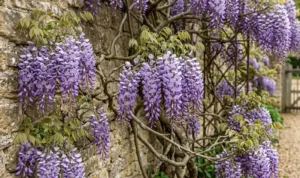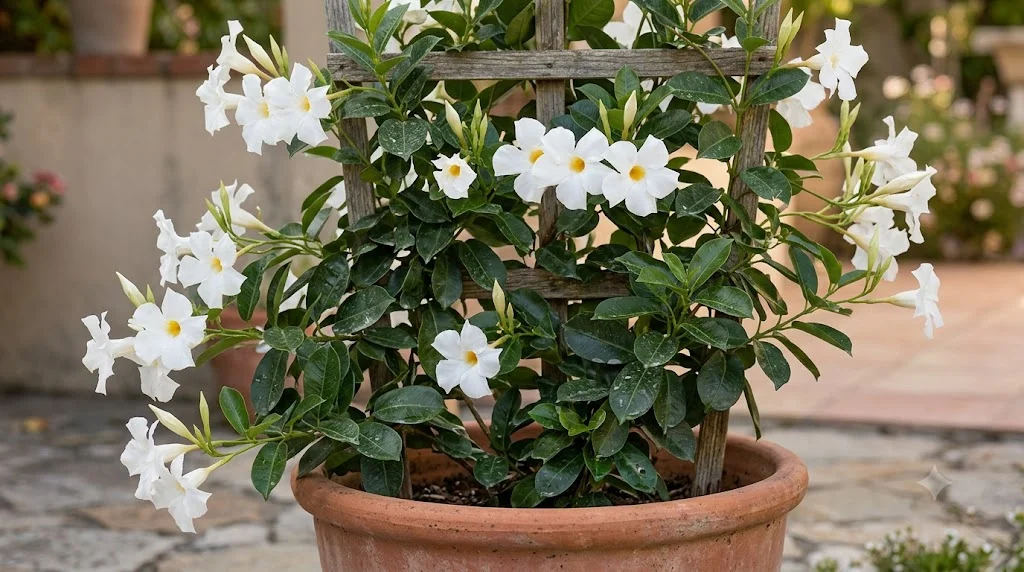

Chilean jasmine is a vigorous, twining climber valued for its elegant white flowers, rich evening fragrance, and long seasonal display. Although it comes from regions with relatively mild conditions, it can be grown successfully in many temperate gardens when its need for warmth, drainage, support, and winter protection is understood. The plant responds best to steady care rather than dramatic interventions, making observation one of the gardener’s most useful tools. With the right position and a sensible seasonal routine, Chilean jasmine can become a remarkably graceful feature on a terrace, balcony, pergola, or sheltered wall.
Understanding the plant’s growth habit
Chilean jasmine produces long, flexible stems that naturally search for nearby structures to climb. It does not cling to walls by itself, so its shoots need to be tied loosely to wires, trelliswork, bamboo canes, or another secure framework. Young stems are especially easy to train because they remain supple and can be guided without cracking. Establishing the basic shape early makes later maintenance considerably easier.
The plant may grow several metres during a favourable season, particularly when temperatures remain warm and moisture is readily available. Its growth rate depends on root volume, light intensity, nutrition, and the length of the frost-free period. Container-grown specimens are usually smaller than plants grown in open ground, but they can still produce an impressive screen. Regularly checking the direction of new shoots prevents the plant from becoming tangled or top-heavy.
Its leaves are typically fresh green and arranged along slender stems that create a light, informal appearance. The foliage provides an attractive background for the white, trumpet-shaped flowers rather than forming a dense, heavy mass. This makes the climber suitable for locations where a softer visual effect is preferred. It can also be combined with sturdier shrubs or structural climbers, provided competition for water and nutrients is controlled.
Flowering generally develops on the current season’s growth, so healthy shoot production is closely connected to the quality of the display. A plant that is struggling to extend its stems will usually flower less generously. Excessively soft, leafy growth can also reduce flowering when caused by too much nitrogen or insufficient light. Balanced cultivation therefore aims for firm, moderately vigorous shoots rather than uncontrolled foliage.
More articles on this topic
Choosing the right growing position
A sheltered location is one of the most important requirements for Chilean jasmine. Cold winds can scorch leaves, dry young shoots, and reduce the temperature around the root system. A south-facing or west-facing wall often provides a favourable microclimate because it stores warmth during the day and releases it slowly after sunset. Protection from strong wind also helps preserve delicate flowers.
The ideal site should receive abundant light without subjecting the plant to severe heat reflected from paving or glass. In cooler regions, full sun is usually beneficial and encourages strong flowering. In hot inland gardens, a little shade during the most intense part of the afternoon can prevent leaf stress and rapid drying. The best position combines warmth with steady root moisture and moving air.
Air circulation should not be confused with exposure to harsh draughts. Gentle airflow allows wet foliage to dry and reduces the risk of fungal problems. A tightly enclosed corner with no air movement may become excessively humid, particularly when several plants are crowded together. Leaving a modest gap between the foliage and a wall improves ventilation and makes inspection easier.
Before planting, consider how large the climber may become and whether its support can remain in place for several years. Temporary canes may be adequate during establishment, but mature stems require a stronger framework. Wall-mounted wires should be positioned far enough from the surface to allow shoots to pass behind and around them. A well-planned support protects the stems and keeps the plant looking orderly.
More articles on this topic
Soil and container requirements
Chilean jasmine prefers a fertile but well-drained growing medium. Heavy soil that remains saturated after rain can deprive the roots of oxygen and encourage decay. Very sandy soil drains quickly but may fail to retain enough moisture during summer. Incorporating mature compost or well-rotted organic matter improves both moisture retention and soil structure.
A slightly acidic to neutral soil reaction is generally suitable. Extremely alkaline conditions may interfere with the uptake of iron and other trace elements, leading to pale leaves with greener veins. Where garden soil is strongly calcareous, container cultivation can provide greater control over the root environment. A high-quality peat-free compost formulated for flowering patio plants is usually appropriate.
Containers should be deep and stable because the upper growth can become large and catch the wind. Several drainage holes are essential, and they must remain open throughout the growing season. Placing a piece of mesh over the holes prevents compost from escaping without creating a water-retaining layer. A broad-based pot is less likely to overturn than a narrow decorative planter.
Repotting is normally required when roots circle densely around the inside of the container or when the compost dries unusually quickly. Moving the plant into a pot only slightly larger than the previous one encourages efficient use of moisture. An oversized container may remain wet for too long around a small root system. Mature specimens that are difficult to repot can be refreshed by replacing part of the upper compost each spring.
Temperature and seasonal development
Chilean jasmine enjoys warm growing conditions but is not a tropical plant that requires constant high temperatures. During spring, growth begins more reliably once the root zone has warmed and night temperatures are consistently mild. Sudden exposure to cold conditions after indoor storage can delay development. Gradual acclimatisation produces stronger leaves and reduces shock.
Summer warmth supports active climbing and flower formation, provided the roots are not allowed to dry out. Very high temperatures can temporarily slow growth if the plant is exposed to intense sun and hot winds. Under these conditions, shading the container and watering carefully may be more useful than increasing fertiliser. A stressed root system cannot make effective use of additional nutrients.
Cooler nights toward the end of summer may enhance the fragrance experienced around the plant, especially after warm days. Flowering can continue well into autumn when the site remains sheltered from early frost. As daylight shortens, shoot growth naturally slows and the plant begins preparing for dormancy. Feeding should be reduced during this transition.
The plant’s tolerance of winter cold varies according to maturity, drainage, exposure, and the duration of freezing conditions. Brief light frost may damage leaves without killing an established root system, but prolonged freezing is much more dangerous. Container-grown plants are particularly vulnerable because cold penetrates the root ball from every side. Winter management must therefore be adapted to the local climate rather than based on a single temperature figure.
Routine care during the growing season
Regular inspection is the foundation of successful care. New shoots should be guided before they wrap around one another or extend into unsuitable areas. Loose ties made from soft material prevent damage as the stems expand. Ties should be checked several times during the season and loosened when necessary.
Removing faded flowers is not always essential, but it can keep plants in prominent positions looking neat. More importantly, yellow leaves, damaged stems, and fallen debris should be cleared promptly. Decaying material around the base can shelter pests and maintain excessive humidity. Clean cultivation makes early signs of trouble easier to notice.
The root area should be kept evenly moist without remaining permanently wet. Mulching garden-grown plants with composted bark or other organic material can reduce evaporation and moderate soil temperature. The mulch should not be piled directly against the main stems because constant moisture around the crown may encourage rot. A small clear area around the stem base is preferable.
Container plants benefit from occasional turning if light reaches them mainly from one direction. This promotes more balanced growth, although trained plants attached to a permanent support may not be movable. In that case, individual shoots can be directed into brighter spaces. Thoughtful training distributes leaves and flowers across the framework instead of allowing growth to concentrate at the top.
Supporting abundant flowering
Flower production depends on a combination of light, warmth, water, nutrients, and healthy new growth. Correcting only one factor may not improve flowering if several others are limiting. A plant in deep shade cannot compensate with extra fertiliser, and a drought-stressed plant cannot use abundant nutrients efficiently. Assessing the entire growing environment gives better results than relying on a single treatment.
Too much nitrogen encourages long, lush shoots that may carry relatively few flowers. This is common when plants receive frequent applications of general-purpose lawn feed or highly concentrated liquid fertiliser. A balanced flowering-plant feed with adequate potassium is more suitable once active growth is established. Feeding should always follow watering when the compost is dry.
Flowers are more likely to develop on well-ripened shoots exposed to good light. Constantly cutting back every new extension can remove potential flowering growth. Training stems sideways or diagonally may help distribute flowering shoots more evenly across a support. This also prevents the plant from racing vertically toward the top of a wall.
Environmental stress may cause buds to drop before opening. Sudden drought, waterlogging, cold nights, root disturbance, and abrupt changes in position are common triggers. Once buds are visible, care should be kept as consistent as possible. Stable conditions allow the plant to complete flowering without repeatedly redirecting energy toward recovery.
Long-term maintenance and garden use
As Chilean jasmine matures, its framework becomes more woody and requires periodic assessment. Weak, damaged, or poorly positioned stems can be removed to maintain a clear structure. Healthy main stems may remain productive for several years when they are protected from severe winter damage. Renewal pruning can be used gradually rather than removing the entire framework at once.
The plant works particularly well near seating areas, entrances, and frequently used paths where its fragrance can be appreciated. Evening warmth often intensifies the scent, making a sheltered patio an excellent location. It should not be planted where sharp pruning tools or regular traffic will repeatedly damage its stems. Enough space should be left for both the climber and the people using the area.
In containers, Chilean jasmine can be treated as a movable seasonal feature. It may spend summer outdoors and winter in a protected, frost-free place. Strong supports should remain attached to the pot so that the root ball does not need to be disturbed each year. Choosing a support narrow enough to pass through doors simplifies seasonal movement.
Successful long-term cultivation depends on adapting care as the plant grows. A young specimen needs careful establishment, while a mature plant requires stronger support, more water, and thoughtful pruning. Seasonal records of flowering time, frost damage, feeding, and repotting can help refine the routine. Over time, the plant becomes easier to manage because its responses to the local conditions become familiar.