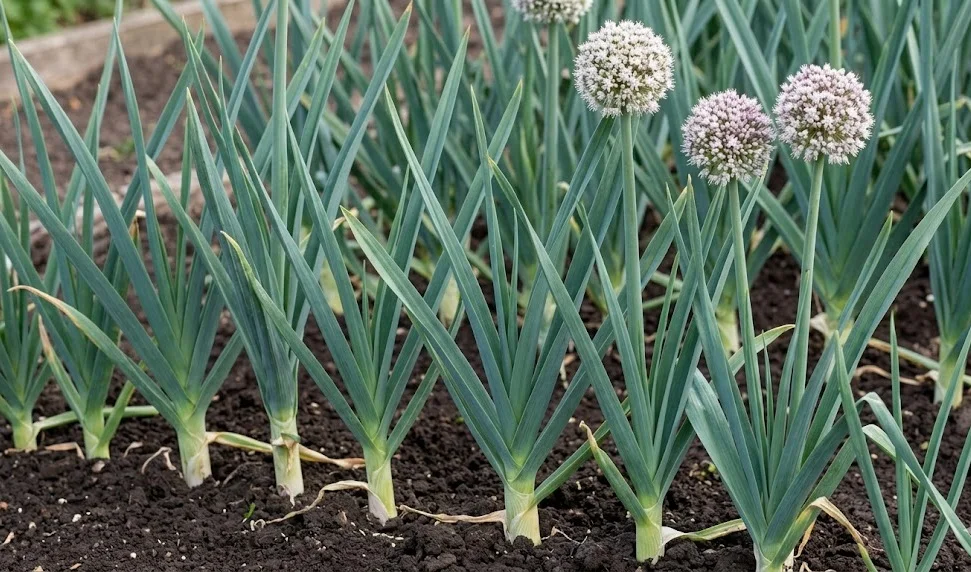

Achieving the best possible results with leeks requires a sophisticated approach to managing both water and nutrient delivery. These plants are known for their high water content and their ability to absorb large amounts of minerals from the soil. A professional irrigation and fertilization program ensures that growth remains steady throughout the entire season. Without a consistent supply of these essential elements, the stalks may become tough, fibrous, or stunted in their development.
Watering is not just about keeping the soil wet; it is about maintaining a specific moisture level that supports cellular expansion. These vegetables have a relatively shallow root system compared to their overall height, making them sensitive to dry spells. If the soil is allowed to dry out completely, the plant enters a survival mode that halts growth and can lead to premature bolting. Monitoring the moisture level at a depth of several inches is a key task for any serious grower.
Fertilization works in tandem with watering to provide the chemical building blocks for plant tissue. Because these are long-season crops, they require a sustained release of nutrients rather than a single heavy application. Nitrogen is the primary driver of leaf production, but a balance of other minerals is needed for structural strength and disease resistance. A well-fed plant is much better equipped to handle environmental stresses and pest pressures.
The interaction between water and nutrients is a complex biological process that occurs within the soil matrix. Water acts as the carrier that brings dissolved minerals to the roots for absorption. If the soil is too dry, the plant cannot take up the nutrients even if they are present in abundance. Conversely, excessive watering can leach valuable minerals away from the root zone, leading to deficiencies. Mastering this balance is the hallmark of professional horticultural management.
Irrigation frequency and volume
Developing a watering schedule depends heavily on the local climate, soil type, and the current stage of plant growth. During the early stages after transplanting, the young plants need frequent, light watering to help their roots establish. As the root system expands, the focus shifts to deeper, less frequent irrigation that encourages the roots to grow downward. This strategy creates a more resilient plant that can better withstand temporary periods of heat or drought.
More articles on this topic
In sandy soils, water drains away quickly, necessitating more frequent applications to keep the moisture levels stable. Heavy clay soils, on the other hand, retain water for much longer but can become compacted and oxygen-deprived if overwatered. Professional growers often use a simple finger test or a moisture meter to determine exactly when the next irrigation is needed. Adjusting the volume of water based on the soil’s retention capacity is essential for preventing both drought stress and root rot.
The time of day when watering occurs can also have a significant impact on the health of the crop. Watering early in the morning allows the foliage to dry out before evening, which reduces the risk of fungal infections. Avoid watering during the hottest part of the day, as much of the moisture will be lost to evaporation before it can reach the roots. A professional approach involves planning irrigation cycles to maximize efficiency and minimize environmental waste.
During the peak of summer, the water demands of the crop are at their highest due to rapid transpiration from the large leaves. It is during this time that consistent moisture is most critical for the development of tender, succulent stalks. If natural rainfall is insufficient, supplemental irrigation must be provided to keep the growth on track. A dedicated gardener treats watering as a precise agricultural intervention rather than a casual chore.
Drip irrigation and technology
Modern agricultural practices often favor drip irrigation systems for their precision and water-saving benefits. These systems deliver water directly to the base of each plant through a network of tubes and emitters. This method minimizes water waste by preventing evaporation and runoff, ensuring that every drop is utilized by the crop. It also keeps the foliage dry, which is a major advantage in preventing common leaf diseases.
Automating the irrigation process with timers and sensors can take the guesswork out of watering and ensure consistency. Soil moisture sensors can be placed at various depths to provide real-time data on the water status of the bed. This data-driven approach allows for precise adjustments to the irrigation schedule based on the actual needs of the plants. For a professional-scale operation, investing in irrigation technology can lead to higher yields and better resource management.
Maintaining a drip system requires regular checks to ensure that emitters are not clogged by mineral deposits or soil. Filters should be cleaned periodically, and the lines should be flushed to remove any buildup of sediment. Observing the plants for signs of uneven watering can help identify hidden problems in the system before they cause significant damage. A well-maintained irrigation system is an invaluable asset for any serious agriculturalist.
Mulching over the top of drip lines can further enhance water efficiency by reducing surface evaporation even more. This combination of technology and traditional gardening techniques creates an ideal environment for moisture-loving plants. The mulch also protects the irrigation equipment from degradation by sunlight and mechanical damage during weeding. Using modern tools thoughtfully is a key part of a professional approach to horticulture.
Organic nutrient management
Building soil fertility through organic means is a sustainable way to provide long-term nutrition for the crop. Well-rotted compost and aged manure are excellent sources of balanced nutrients and beneficial microorganisms. These materials improve the soil structure, increasing its ability to hold both water and minerals over time. Applying a thick layer of organic matter to the surface of the soil before planting is a standard professional practice.
Cover crops, or green manures, can be grown in the off-season to naturally replenish nitrogen levels in the garden. Legumes like clover or vetch fix atmospheric nitrogen and release it into the soil as they decompose. This natural cycle reduces the need for synthetic fertilizers and promotes a healthy, living soil ecosystem. Integrating cover crops into the rotation plan is a sign of a professional who understands the broader ecology of the farm or garden.
Liquid organic fertilizers, such as seaweed extract or fish emulsion, provide a quick-acting nutrient boost during the growing season. These can be applied as a foliar spray or a root drench to address immediate nutritional needs. They are particularly useful during the transition from the vegetative growth stage to the stalk-thickening phase. A professional grower uses these tools strategically to maintain the vigor and health of the crop.
Slow-release organic pellets can also be used to provide a steady supply of nutrients over several months. These products break down gradually, releasing minerals in sync with the plants’ requirements. This approach prevents the “flush and starve” cycle that can occur with some high-solubility synthetic fertilizers. Focusing on organic nutrients supports a more resilient and flavorful harvest while protecting the environment.
Synthetic fertilization protocols
In some agricultural settings, synthetic fertilizers are used to provide precise amounts of specific elements. These products are often labeled with their N-P-K ratio, representing the percentages of nitrogen, phosphorus, and potassium. A professional approach to synthetic fertilization starts with a comprehensive soil test to identify any existing deficiencies. This ensures that only the necessary nutrients are added, preventing waste and environmental contamination.
Split-application of nitrogen is a common technique used to maximize the efficiency of synthetic fertilizers. Instead of applying all the nitrogen at once, it is broken into several smaller doses throughout the growing season. This matches the plants’ increasing demand for nitrogen as they grow larger and prevents the loss of nutrients through leaching. Careful measurement and application are essential for achieving the best results with these concentrated products.
Balanced fertilizers that include micronutrients like boron, magnesium, and zinc are often preferred for long-season vegetables. These trace elements are required in very small amounts but are critical for various metabolic processes within the plant. A deficiency in even one micronutrient can limit the overall growth and quality of the harvest. Professional growers monitor the foliage for subtle signs of deficiency, such as interveinal chlorosis or stunted growth.
Fertigation, the process of delivering water-soluble fertilizers through the irrigation system, offers the highest level of precision. This method allows the grower to adjust the nutrient mix on a daily or weekly basis according to the current weather and growth stage. It ensures that the plants receive exactly what they need in a form that is immediately available to the roots. Mastery of fertigation techniques is a hallmark of modern, high-intensity agricultural production.
Monitoring and adjusting inputs
The most successful gardeners are those who constantly observe their plants and adjust their care accordingly. Changes in leaf color, growth rate, and overall plant posture can all signal a need for more or less water and fertilizer. A professional maintains a detailed log of all inputs and the subsequent reactions of the crop. This record-keeping allows for the continuous refinement of the management plan over multiple seasons.
Over-fertilization can be just as damaging as under-fertilization, leading to excessive leaf growth that is attractive to pests. It can also cause a buildup of salts in the soil, which can burn the delicate root tips and interfere with water absorption. If you notice a white crust on the soil surface or if the leaf tips begin to turn brown, it may be a sign of salt accumulation. Flushing the soil with clean water can help mitigate these issues in the short term.
Watering needs will fluctuate significantly depending on the humidity and wind speed in the garden. On hot, windy days, the rate of transpiration increases dramatically, requiring more frequent irrigation to keep the plants hydrated. Conversely, during cool or cloudy periods, the watering frequency should be reduced to prevent the soil from becoming waterlogged. A professional grower stays ahead of the weather forecast to anticipate these changes in demand.
The goal of a well-managed watering and fertilization program is to produce a crop that is uniform in size and superior in quality. Consistency is the most important factor in achieving this goal throughout the long months of the growing season. By paying close attention to the needs of the plants and the condition of the soil, any gardener can achieve professional-level results. Dedication to these fundamental aspects of care is what separates a casual hobbyist from a true agricultural expert.