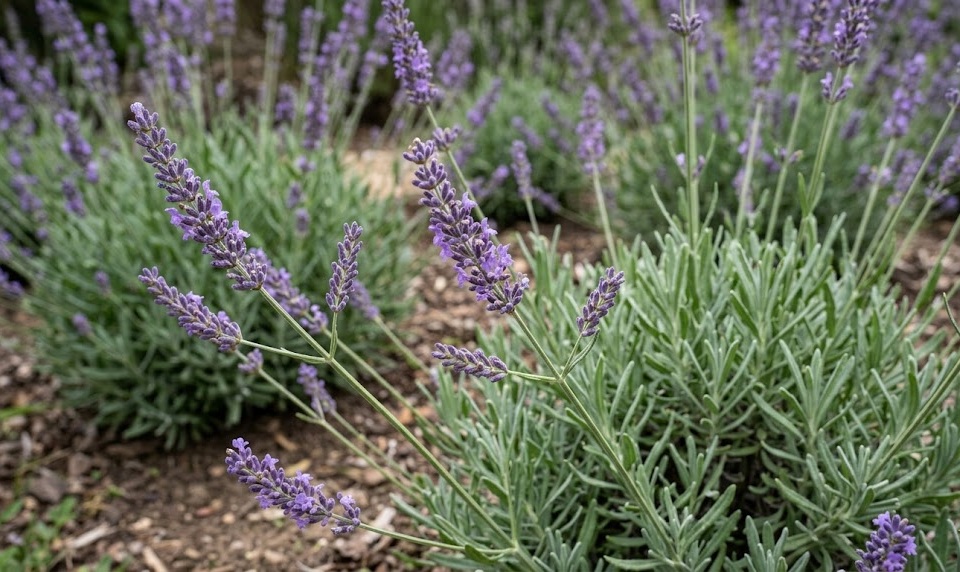

Water management and nutritional balance are the two most dynamic aspects of caring for english lavender, requiring a shift in mindset from traditional garden practices. Because this hybrid is specifically adapted to arid environments with lean soils, the most common mistakes involve providing too much of a good thing. Overwatering and over-fertilization are far more likely to cause the decline of a lavender plant than neglect. Achieving professional results means learning to read the subtle signs of the plant’s needs and responding with restraint and precision.
The fundamental rule for watering lavender is to allow the soil to dry out significantly between applications. Lavender roots are designed to seek out moisture deep in the earth, and keeping the surface soil constantly damp prevents this natural development. During the first growing season, a weekly deep soak is usually sufficient, provided the weather is not exceptionally hot or windy. Once established, the plant becomes remarkably drought-tolerant, often requiring supplemental water only during prolonged periods of extreme heat and dryness.
Fertilization should be approached with an even lighter hand, as lavender thrives in soils that many other plants would find inhospitable. High levels of nitrogen can lead to rapid, leggy growth that lacks the structural strength to support the heavy flower spikes. This soft growth is also more susceptible to pests and frost damage during the winter months. A small amount of organic compost or a very low-concentration balanced fertilizer in early spring is all that is typically needed to maintain health without sacrificing the quality of the essential oils.
Environmental factors like humidity and soil type play a significant role in determining the ideal watering and feeding schedule for each specific garden. Sandy soils drain very quickly and may require more frequent watering than loam-based soils, while clay soils hold moisture much longer and require extreme caution. Similarly, a garden in a dry, windy location will lose moisture much faster through evaporation than a sheltered, humid one. By observing how the lavender reacts to its specific microclimate, a gardener can develop a customized plan that ensures the longevity of the plant.
Developing a strategic watering schedule
A successful watering strategy for english lavender is built on the principle of “infrequent but deep” applications. This method encourages the roots to grow downward into the cooler, moister layers of the soil, which protects the plant during the hottest parts of the summer. When you do water, it should be done slowly and thoroughly so that the moisture reaches a depth of at least twelve inches. Avoid light, frequent sprinkling, which only dampens the surface and leads to a shallow, weak root system that is easily stressed by the sun.
More articles on this topic
The timing of watering is just as important as the quantity, with the early morning being the most effective time for the plant. Morning watering allows the foliage and the crown of the plant to dry quickly as the sun rises, which is a key factor in preventing fungal infections. Watering in the evening can leave the plant damp throughout the night, creating an ideal environment for mold and mildew to take hold. If you must water during the day, try to apply the water directly to the soil to avoid burning the leaves with the magnified heat of the sun.
As the lavender matures, its need for supplemental water decreases significantly, especially in regions with moderate rainfall. For plants that have been in the ground for more than two years, natural precipitation is often enough to sustain them through most of the growing season. It is only during true drought conditions, when the soil becomes bone-dry several inches down, that an established lavender needs help. Using a simple soil moisture meter or even a long wooden dowel can help you check the moisture levels deep in the root zone before deciding to water.
Container-grown lavender is the exception to the rule and requires more frequent monitoring than those planted in the ground. Because pots have a limited volume of soil and are exposed to the air on all sides, they dry out much faster and can reach critical levels of dehydration in just a day or two of hot weather. However, the same principle of letting the soil dry between waterings still applies, and the pot must have excellent drainage holes to prevent water from sitting at the bottom. Checking the weight of the pot is a quick way to tell if it needs water, as a dry pot will feel significantly lighter than a wet one.
Recognizing the dangers of overwatering
Overwatering is the primary cause of death for english lavender, often manifesting as a slow decline that many gardeners mistake for a lack of water. The first signs of root rot include yellowing of the lower leaves and a general lack of vigor in the new growth. If the soil remains soggy for too long, the roots begin to die back, and the plant can no longer take up the moisture and nutrients it needs to survive. Ironically, a plant with severe root rot will often look wilted, leading the gardener to add even more water and accelerate the problem.
More articles on this topic
The physical sensation of the soil can tell you a lot about whether your watering habits are appropriate for the lavender’s health. If you dig down a few inches and the soil feels cool and slightly damp, the plant has plenty of moisture and should not be watered. Only when the soil feels dry and crumbly at that depth is it time to consider a deep soak. In heavy clay soils, it is especially important to be patient, as these soils can look dry on the surface while remaining saturated around the roots.
Fungal diseases of the crown are another common result of excessive moisture, particularly when water is allowed to sit against the main stems. This can lead to a dark, soft area at the base of the plant that eventually girdles the stem and kills the branches above it. To prevent this, always aim your watering at the soil around the drip line of the plant rather than at the center of the shrub. Keeping the area immediately around the crown clear of organic debris and mulch also helps ensure that this sensitive area stays dry and healthy.
In some cases, the environmental humidity can be just as damaging as excessive soil moisture for lavender. In regions with high summer humidity, the plant may struggle to transpire effectively, leading to a buildup of moisture within the foliage. While you cannot control the weather, you can mitigate the effects by ensuring maximum spacing and air circulation as discussed in other chapters. Avoiding the use of overhead irrigation is absolutely essential in humid climates to prevent the leaves from staying wet for extended periods.
Nutritional needs and organic amendments
English lavender is a “low-feeder,” meaning it has evolved to thrive in mineral-rich but nutrient-poor environments. In most garden settings, the soil already contains enough nitrogen, phosphorus, and potassium to support healthy growth without the need for synthetic fertilizers. In fact, many professional growers avoid fertilizers entirely, relying instead on the natural breakdown of soil minerals to feed their plants. This results in a slower-growing but much hardier plant with a higher concentration of the fragrant oils that make lavender so desirable.
If you feel your soil is truly depleted, the best approach is to use a light application of well-rotted organic compost in the early spring. Spread a thin layer around the base of the plant, being careful not to let it touch the main stems, and let the rain wash the nutrients into the soil. This provides a gentle, slow-release source of nutrition that supports the plant’s natural rhythm without causing a surge of weak growth. Compost also helps improve the soil structure and supports a healthy population of beneficial microbes that protect the roots.
Bone meal or a small amount of rock phosphate can be beneficial when planting new lavender to help encourage strong root development. These slow-acting phosphorus sources are perfect for the long-term health of a perennial shrub that will be in the same spot for many years. Avoid using high-nitrogen lawn fertilizers anywhere near your lavender, as the runoff can be enough to trigger unwanted foliage growth and reduce flowering. If the plant looks healthy and is blooming well, it is best to assume that no additional nutrition is required.
In areas with very sandy soil, which can leach nutrients quickly, a seaweed-based liquid fertilizer can be used sparingly during the early summer. Seaweed contains a wide range of trace minerals and growth hormones that can help the lavender resist heat stress and improve its overall resilience. Use it at half the recommended strength once or twice a year to provide a subtle boost without overwhelming the plant’s natural systems. Always remember that with lavender, a little bit of nutrition goes a long way.
Managing soil ph and mineral availability
The availability of nutrients in the soil is directly linked to the pH level, and lavender has a very specific preference for neutral to slightly alkaline conditions. If the soil is too acidic, many essential minerals become chemically locked away and cannot be absorbed by the plant’s roots. This can lead to deficiency symptoms even if the nutrients are physically present in the soil in large quantities. Regular testing with a simple home kit or a professional laboratory analysis is the only way to know for sure what is happening in your soil’s chemistry.
If your soil test indicates an acidic pH below 6.5, you can gradually raise it by adding agricultural lime or crushed oyster shells to the area. These materials react slowly with the soil, so it is best to apply them in the autumn so they can work over the winter months before the spring growth begins. It is much safer to make small, incremental adjustments over several years than to attempt a major shift in pH all at once. Lavender is quite tolerant of high pH levels, but it will quickly struggle if the environment becomes too sour or acidic.
The mineral content of the soil, particularly the presence of calcium and magnesium, contributes to the structural strength of the lavender stems and leaves. In limestone-rich areas, lavender often grows with a naturally compact and sturdy habit that is highly resistant to wind and snow. If your soil is lacking these minerals, using dolomitic lime instead of standard lime can provide both the pH adjustment and a boost of magnesium. These minerals also play a role in the production of the silver-grey protective coating on the leaves.
Over-fertilizing can sometimes lead to a buildup of salts in the soil, which can interfere with the plant’s ability to take up water. This is a particular risk in container-grown lavender or in gardens where synthetic fertilizers are used frequently. If you notice a white crust on the soil surface or if the leaf tips begin to look burnt, it may be necessary to flush the soil with plenty of fresh water to remove the excess salts. Transitioning to a purely organic or mineral-based feeding routine is the best long-term solution for preventing salt-related issues.
Balancing inputs for peak fragrance and health
The ultimate goal of watering and fertilization is to produce a lavender plant that is not only healthy but also rich in the essential oils that provide its signature scent. Professional research has shown that lavender grown under slight environmental stress often produces a more intense and complex fragrance than those grown in “perfect” conditions. By withholding excessive water and nutrients, you are encouraging the plant to concentrate its energy on the production of secondary metabolites like linalool and camphor. This results in flowers that are much more potent for use in oils, sachets, or culinary applications.
Observing the plant throughout the day can give you insights into how it is balancing its internal resources against the environment. A well-balanced lavender will have a silvery sheen and a firm, upright habit even during the heat of a summer afternoon. If the plant looks dark green and soft, it may be receiving too much nitrogen or water, making it vulnerable to the stresses of the season. Adjusting your inputs based on these visual cues is a more effective strategy than following a rigid calendar-based schedule.
As the plant enters the latter half of the summer, all fertilization should stop to allow the growth to harden off before the winter. Any soft, nitrogen-fueled growth that appears in late August or September will likely be killed by the first frost, providing an entry point for disease. Similarly, watering should be reduced as the days get shorter and the temperatures cool, signaling to the plant that it is time for dormancy. This transition phase is vital for ensuring that the lavender has the internal resources to survive the cold months ahead.
Ultimately, mastering the watering and feeding of english lavender is about learning the art of “benign neglect.” Once you have provided the right foundation of well-draining soil and plenty of sunlight, the less you do, the better the plant will generally perform. By stepping back and letting the plant find its own balance with the environment, you will be rewarded with a resilient, fragrant, and beautiful shrub. The most successful lavender gardens are those where the gardener works in harmony with the plant’s natural adaptations.