
Light is one of the most fundamental elements for the health and growth of any plant, and Aloe vera is no exception. As a succulent native to arid and semi-tropical regions, it has adapted to thrive in conditions with plenty of sunshine. Providing the right amount and intensity of light is crucial for maintaining the plant’s vibrant green color, compact growth habit, and overall vigor. Insufficient light can lead to a host of problems, including weak, spindly growth and a pale, washed-out appearance. Conversely, too much direct, intense sunlight can also be detrimental, causing the leaves to become scorched and stressed.
Understanding the specific light needs of Aloe vera involves more than just placing it in a sunny spot. It requires a nuanced approach that takes into account the difference between direct and indirect light, the duration of light exposure, and the plant’s ability to acclimate to varying light conditions. For those growing Aloe vera indoors, finding the perfect location near a window that provides the right balance of brightness without being too harsh can be a key factor in its success. The direction the window faces plays a significant role in the intensity and duration of the light it receives throughout the day.
The physical appearance of the Aloe vera plant can be a great indicator of whether it is receiving the appropriate amount of light. The color and orientation of the leaves can provide valuable clues. A healthy, happy Aloe vera will have upright, firm, green leaves. If the leaves are turning yellow, brown, or a reddish color, it could be a sign of too much direct sun. If they are becoming pale and stretching out, it is a clear indication that the plant is not getting enough light.
By learning to interpret these signs and understanding the principles of light for succulents, you can provide your Aloe vera with the optimal environment to flourish. Whether you are growing it on a windowsill, in a sunroom, or outdoors in a suitable climate, meeting its light requirements is a cornerstone of good care. This will not only ensure the plant’s survival but will also promote the robust growth that makes Aloe vera such a popular and rewarding plant to cultivate.
The ideal light conditions
Aloe vera thrives in bright, but indirect, sunlight. This means that it prefers a location where it can receive a lot of light, but is protected from the harsh, direct rays of the sun, especially during the hottest part of the day. For indoor cultivation, a spot near a south- or west-facing window is often ideal, as these locations typically receive the most light. However, it is important to place the plant a short distance away from the window or to use a sheer curtain to diffuse the light and prevent the leaves from getting sunburned.
More articles on this topic
The ideal duration of light for an Aloe vera is at least six hours of bright, indirect light per day. This will encourage healthy, compact growth. If the plant does not receive enough light, it will start to stretch towards the available light source, a phenomenon known as etiolation. This results in a weak, leggy plant with elongated stems and widely spaced leaves. While the plant can survive in lower light conditions, it will not thrive and may be more susceptible to other problems like overwatering and pests.
If you are growing your Aloe vera outdoors, a location that receives morning sun and afternoon shade is perfect. The morning sun is generally less intense than the afternoon sun, so it is less likely to scorch the leaves. If you live in a very hot and sunny climate, you may need to provide even more shade, perhaps under the filtered light of a tree or a patio cover. The key is to find a balance that provides enough light for photosynthesis without causing stress to the plant.
It is also important to rotate your plant regularly, especially if it is growing indoors. This will ensure that all sides of the plant receive an equal amount of light, which will promote even growth and prevent the plant from leaning to one side. A quarter turn every week or two is a good practice to adopt. This simple step can make a big difference in the overall shape and appearance of your Aloe vera.
Signs of incorrect lighting
Your Aloe vera plant will communicate its lighting needs to you through its appearance. Learning to read these signs is essential for providing the best care. One of the most common signs of insufficient light is etiolation. As mentioned, this is when the plant becomes stretched and spindly, with pale green or yellowish leaves. The leaves may also be smaller than usual and the overall growth will be weak. If you see these signs, it is a clear indication that you need to move your plant to a brighter location.
More articles on this topic
On the other end of the spectrum, too much direct sunlight can also cause problems. The leaves of an Aloe vera that is getting too much sun will often turn a yellow, brown, or even reddish-orange color. This is a stress response from the plant as it produces pigments to protect itself from the intense light. While this is not necessarily harmful to the plant in the short term, it is a sign that it is not happy. The leaves may also develop brown, scorched spots where the tissue has been damaged by the sun.
Another sign of excessive light is that the leaves may start to curl inwards or point downwards. This is the plant’s way of reducing the surface area of the leaves that is exposed to the sun, in an effort to conserve water and prevent further damage. If you notice your Aloe vera’s leaves changing color or posture, it is a good idea to move it to a location with a little less direct sun or to provide some form of shading.
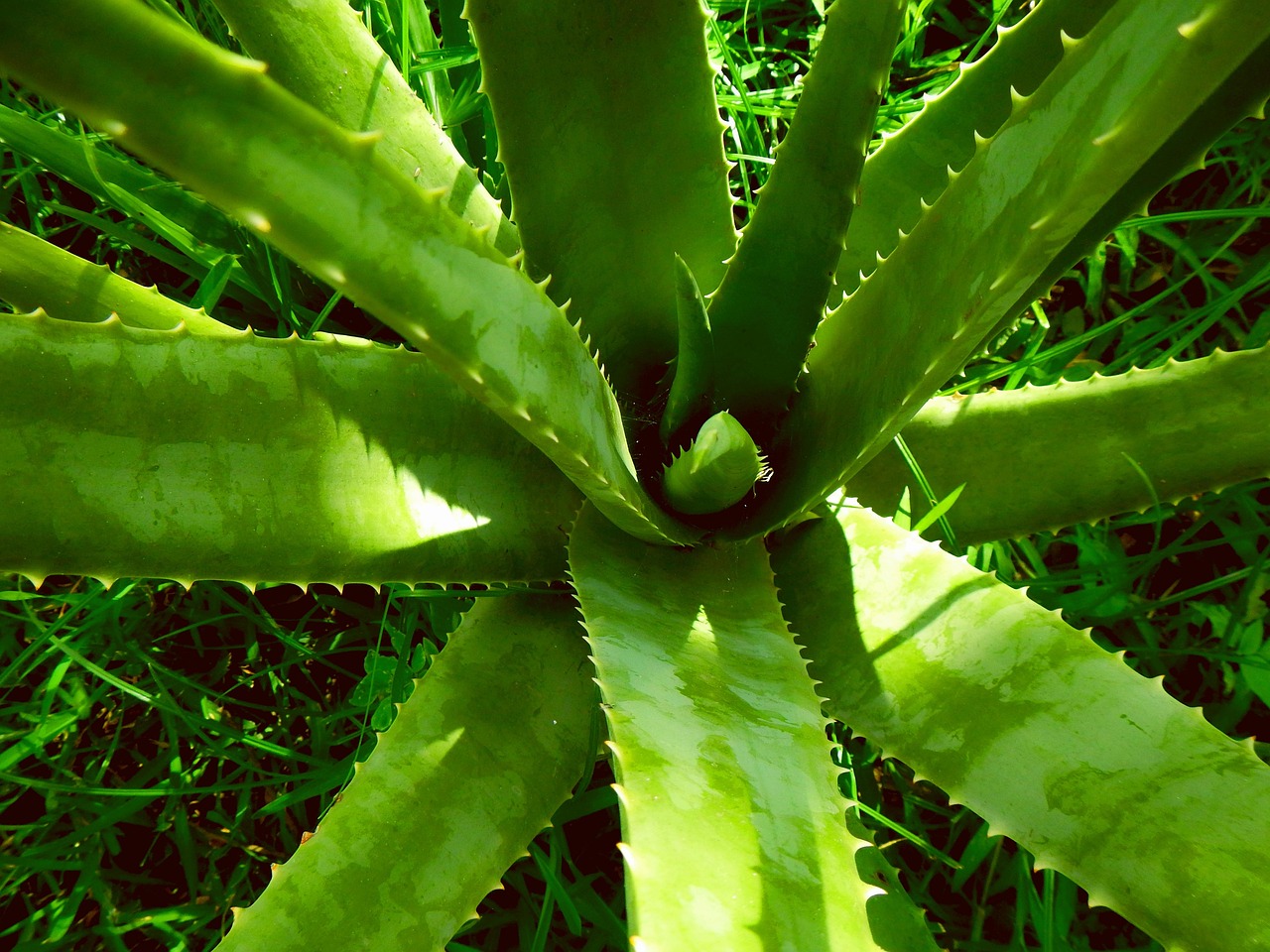
A healthy Aloe vera receiving the right amount of light will have thick, upright leaves that are a vibrant green color. The growth will be compact, with the leaves forming a tight rosette. There will be no signs of stretching, discoloration, or sunburn. By observing your plant and making adjustments as needed, you can find the sweet spot for lighting that will keep your Aloe vera looking its best.
Using artificial light
In situations where it is not possible to provide enough natural light, such as in a north-facing room or during the dark winter months, artificial lighting can be a great solution for your Aloe vera. Grow lights are specifically designed to provide the spectrum of light that plants need for photosynthesis. They can be used to supplement natural light or as the sole source of light for your plant. This allows you to grow a healthy Aloe vera even in the most light-deprived spaces.
There are several different types of grow lights available, including fluorescent, LED, and high-intensity discharge (HID) lamps. For a single houseplant like an Aloe vera, a simple fluorescent or LED grow light is usually sufficient and is the most energy-efficient option. Full-spectrum bulbs are a good choice as they mimic the natural light of the sun. You can find grow lights in various forms, from single bulbs that fit into a standard lamp fixture to larger panel systems.
When using a grow light, it is important to position it at the correct distance from the plant. If the light is too close, it can burn the leaves. If it is too far away, it will not be effective. The ideal distance will depend on the type and intensity of the light, so it is important to follow the manufacturer’s recommendations. As a general rule, fluorescent lights can be placed closer to the plant than LED lights.
Your Aloe vera will need about 12 to 16 hours of artificial light per day to thrive. It is also important to give the plant a period of darkness each day, as this is when it respires, which is an essential part of its metabolic process. You can use a timer to automatically turn the grow light on and off each day, which makes it easy to provide a consistent light schedule for your plant.