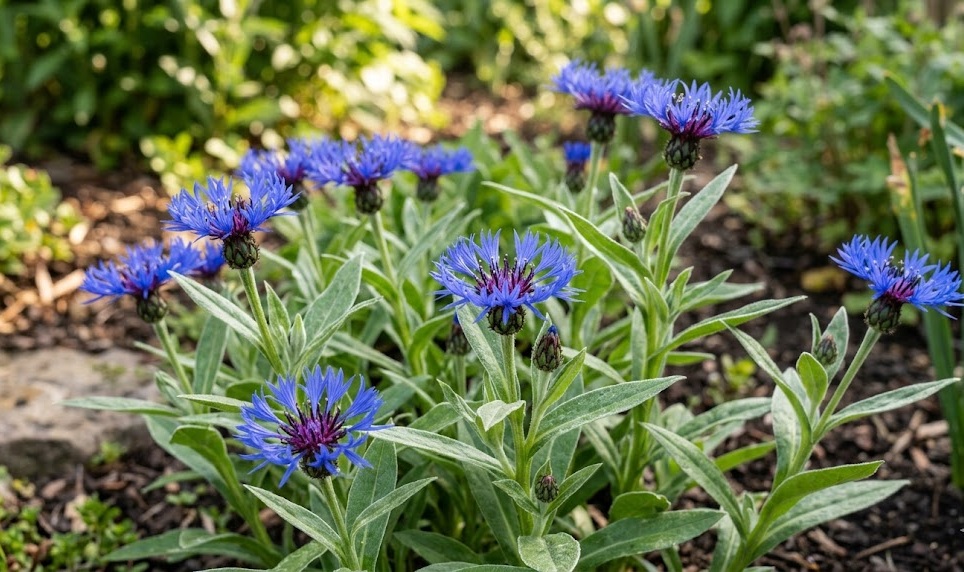

The amount and quality of light a mountain cornflower receives are the primary drivers of its growth habit, foliage health, and flowering potential. As a species that originated in the high meadows and open woodlands of Europe, it has evolved to thrive in environments with abundant solar energy. For the professional gardener, managing these light requirements involves more than just finding a sunny spot in the landscape. This guide explores the nuances of light exposure and how to optimize it for the best possible display in your garden.
Full sun is the gold standard for this species, defined as at least six to eight hours of direct, unfiltered sunlight each day. Under these conditions, the plant develops a sturdy, compact form with strong stems that are less likely to require staking. The intensity of the light also triggers the production of the vibrant blue pigments that make the flowers so distinctive. Without enough sun, the plant often becomes “leggy” as it stretches toward the light, resulting in a floppy and less attractive appearance.
While sunlight is essential, the mountain cornflower does possess a surprising degree of tolerance for partial shade, particularly in regions with very hot summers. In these areas, a bit of afternoon shade can protect the foliage from scorching and help the flowers last a few days longer. However, there is a fine line between beneficial shade and excessive darkness that will inhibit the plant’s ability to thrive. Monitoring the light patterns in your garden throughout the day and across the seasons is a key part of expert site selection.
Light quality also refers to the spectrum of light reaching the plant, which can be influenced by nearby structures or overhanging trees. Filtered light, such as that found under a high-canopy tree, can be suitable if it is bright and consistent enough. Reflective light from white walls or water features can also boost the total energy available to the plant in slightly shadier corners. Understanding these subtle interactions allows you to place the cornflower in a wider variety of garden situations with confidence.
Ideal solar exposure for maximum blooming
The most spectacular floral displays are always found on plants that are situated in open, unshaded positions where they can capture the full arc of the sun. This intense light exposure provides the energy needed for the plant to produce a high volume of flower buds over a several-week period. In a professional border, placing the mountain cornflower in the foreground of a south-facing bed ensures it receives the maximum possible radiation. This placement also allows the blue flowers to be illuminated by the sun, making them appear even more vivid to the observer.
More articles on this topic
Consistent light throughout the day is generally better than a short burst of very intense sun followed by deep shade. A balanced exposure allows the plant to maintain a steady rate of photosynthesis and prevents the stress of rapid temperature fluctuations. If your garden is patchy in its light distribution, try to prioritize the morning and midday sun, which is more efficient for growth. The cooler morning light is particularly beneficial for keeping the foliage hydrated while still providing the necessary energy for the plant’s metabolic processes.
Seasonal changes in the sun’s path should also be considered when planning your garden layout for the long term. A spot that is in full sun during the height of summer may be completely shaded by a neighboring building or tree in the early spring. Since the mountain cornflower does much of its growing and blooming in the spring and early summer, it needs light during this specific window. Observing your garden during the transitional months of March and April will give you a much more accurate picture of the plant’s actual light availability.
In very high-altitude or northern gardens, the intensity of the sun is naturally lower, and the plant will require even more exposure to perform well. Conversely, in the intense light of lower latitudes, some protection from the midday sun might actually be a benefit rather than a drawback. Adapting your placement strategies to your specific geographical location is a hallmark of a knowledgeable and professional gardener. No two gardens are exactly alike in their light profiles, and successful cultivation requires a personalized approach to every site.
Managing the challenges of partial shade
When grown in partial shade, the mountain cornflower may require a few adjustments to its maintenance routine to stay healthy. Because the soil in shaded areas evaporates moisture more slowly, you must be extra careful not to over-water the plants in these spots. The lack of direct sun also means that the foliage stays wet longer after a rain, increasing the risk of powdery mildew and other fungal diseases. Space the plants further apart in shadier locations to compensate for the lower air movement and slower drying times.
More articles on this topic
If your plants are becoming overly tall and falling over in the shade, you can use the “Chelsea chop” to manage their height and improve their structure. By cutting the stems back by half in late spring, you encourage a bushier habit that is more self-supporting even in less-than-ideal light. While this may slightly delay the blooming time, the resulting display will be much more tidy and controlled. This technique is a valuable tool for any gardener looking to push the boundaries of where a sun-loving plant can be grown.
Using light-colored mulches or surrounding the plants with light-reflecting stones can help increase the ambient light levels in a shadier corner. These simple tricks can make a significant difference in the vigor of a plant that is just on the edge of its light tolerance. Additionally, pruning back overhanging tree branches or thinning out dense shrubs can let more light reach the ground level. A small amount of selective pruning in the surrounding landscape can transform a marginal site into a thriving home for your cornflowers.
It is important to manage your expectations when growing sun-loving perennials in areas with limited light exposure. The plants may produce fewer flowers, and the overall color of the petals might be slightly less intense than those grown in full sun. However, the mountain cornflower’s ability to adapt still makes it a valuable choice for the more difficult parts of a garden where few other things will grow. Choosing the right variety, such as those with naturally shorter stems, can also help mitigate the effects of lower light levels.
The impact of light on plant physiology
Light is not just a source of energy for the plant; it also serves as a critical signal that regulates many aspects of its internal clock. The length of the day, known as the photoperiod, tells the mountain cornflower when to start growing in the spring and when to begin preparing for dormancy in the autumn. Interruptions to these natural light cycles, such as from bright streetlights or garden security lights, can occasionally confuse the plant’s internal systems. While usually not a major issue, it is something to be aware of in urban or highly illuminated garden environments.
Photosynthesis, the process by which the plant converts light into sugar, is most efficient at specific light intensities and temperatures. When the light is too low, the plant cannot produce enough energy to support both growth and reproduction, often leading to a sacrifice in flower production. Conversely, extremely high light levels can lead to “photo-inhibition,” where the plant’s internal machinery is temporarily overwhelmed and shuts down to protect itself. Finding the “sweet spot” of light exposure is the goal of every professional horticulturist looking for the perfect bloom.
The color of the foliage is also a direct reflection of the light environment in which the plant is growing. In high-light situations, the leaves may develop a slightly thicker cuticle or a more silver-blue hue to protect themselves from UV radiation. In the shade, the leaves often become broader and darker green as the plant tries to maximize its surface area for capturing every available photon. Observing these physiological changes can tell you a lot about whether your plant is happy with its current light levels or if it is struggling to adapt.
Ultimately, light is the most important factor in the garden that we often have the least direct control over. While we can add water or fertilizer, we cannot easily change the movement of the sun across the sky or the presence of a neighbor’s large tree. This makes the initial site selection for the mountain cornflower a critical decision that will impact the plant for its entire life. A deep understanding of light dynamics is what allows a professional to create a garden that is both beautiful and biologically sound.