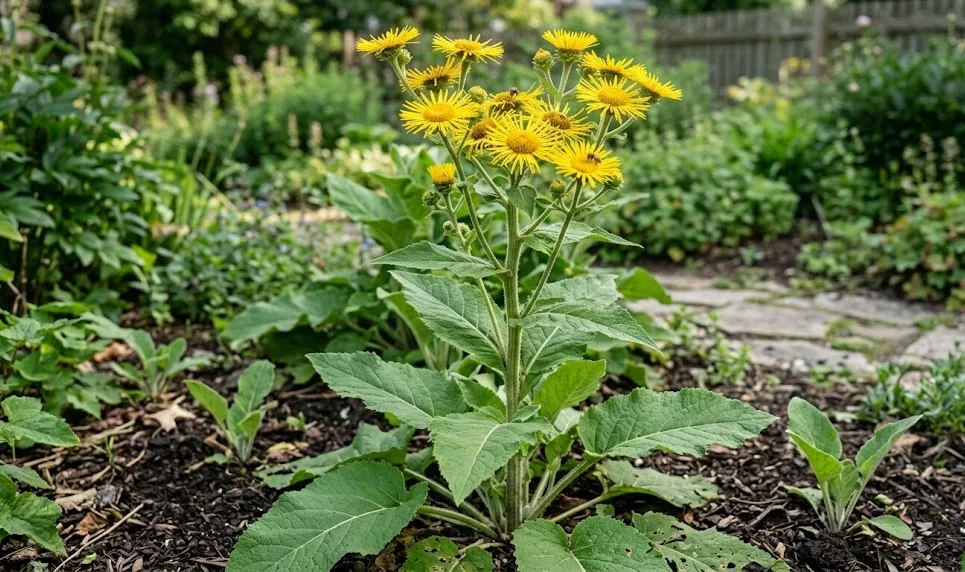

The light intensity and duration play a fundamental role in the development of elecampane’s phytochemical profile. This plant is traditionally considered a full-sun lover, requiring at least six to eight hours of direct light daily. Adequate sunlight ensures that the plant has the energy needed to produce its massive leaves and tall flowering stalks. Without enough light, the stems may become weak and prone to flopping over under their own weight.
Photosynthetic efficiency is at its peak when the plant is situated in an open, unshaded location. The large, broad leaves act as solar panels, capturing energy to be stored in the thick, fleshy roots. You should avoid planting it under the canopy of large trees or on the north side of tall buildings. High light levels also help to keep the foliage dry, which naturally reduces the risk of fungal diseases.
While full sun is ideal, elecampane does possess a surprising degree of tolerance for partial shade. In very hot climates, a bit of afternoon shade can actually prevent the leaves from scorching during the peak of summer. However, you should expect the growth to be somewhat slower and the flowering to be less prolific in these conditions. The overall height of the plant might also be reduced if the light levels are consistently low.
The quality of light also influences the timing of the bloom and the concentration of inulin in the roots. Plants grown in bright, sunny conditions tend to flower earlier and produce more seeds than those in the shade. You will notice that the yellow flowers follow the movement of the sun throughout the day, a behavior known as heliotropism. Providing the right light environment is one of the easiest ways to ensure a successful and productive harvest.