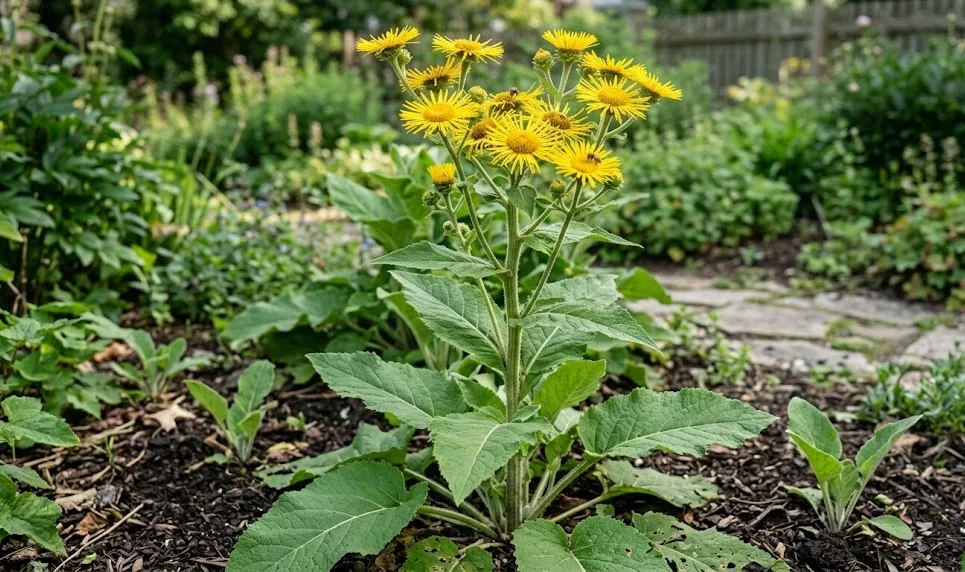

Maintaining elecampane requires a deep understanding of its perennial nature and substantial root system. This plant thrives when it has enough space to expand its large, velvet-textured leaves toward the sun. Consistent observation throughout the growing season helps in identifying any early signs of stress or nutrient deficiency. Proper care ensures that the medicinal properties of the roots remain potent for future harvesting.
Providing the right foundation starts with the soil quality and the surrounding environment. This tall herb demands a nutrient-rich, heavy soil that can retain moisture without becoming waterlogged. You should ensure that the area is clear of aggressive weeds that might compete for resources during the early stages of growth. A well-prepared bed allows the plant to establish a strong structural base within its first year.
As the plant matures, its physical size becomes a primary consideration for any gardener. It can easily reach heights of over two meters, requiring significant vertical and horizontal space. You may need to provide physical support if the site is particularly prone to high winds. Keeping the area around the base tidy will prevent the buildup of organic debris that could harbor unwanted pathogens.
Monitoring the growth cycles is essential for maximizing the longevity of the plant. In the first year, the focus is entirely on leaf production and the development of the thick rhizome. By the second year, the striking yellow composite flowers will appear, signaling a shift in the plant’s energy allocation. You should observe how the plant reacts to temperature fluctuations during these distinct phases of its life.
Seasonal transitions dictate the specific tasks required to keep the plant in peak condition. During the peak of summer, maintaining humidity around the foliage can prevent the leaves from drooping. As autumn approaches, the plant naturally begins to divert its energy back into the root system. This is the time when the concentration of essential oils and inulin increases significantly within the plant.
More articles on this topic
Controlling the spread of the plant is another vital aspect of long-term care. Elecampane can be quite assertive in its growth and may overshadow smaller neighbors if left unchecked. You can manage this by occasionally thinning out the peripheral growth to keep the main clump manageable. This practice also improves airflow through the center of the plant, which is crucial for health.
Understanding the interaction between the plant and its local ecosystem is a mark of an expert gardener. Beneficial insects are often attracted to the bright flowers, providing a natural boost to your garden’s biodiversity. You should encourage these visitors as they play a role in the overall health of the agricultural environment. Healthy plants are always better equipped to handle minor environmental stressors without showing significant damage.
Finally, the end of the season brings the opportunity to evaluate the success of your care routine. The size and firmness of the roots are the ultimate indicators of how well the plant has been managed. You should record your observations to refine your approach for the following growing season. Successful cultivation results in a powerful medicinal resource and a stunning visual addition to the landscape.