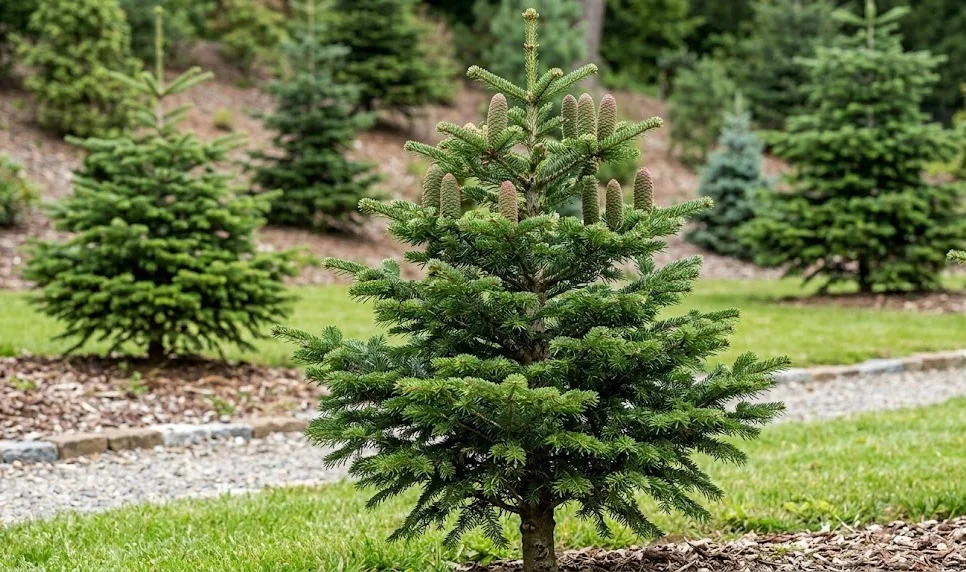

Understanding the light requirements of the nordmann fir is essential for ensuring its long-term health and maintaining its classic, dense conical shape. You must recognize that while this tree is more shade-tolerant than many other conifers, it still has a fundamental need for solar energy to drive its growth. The amount and quality of light the tree receives will directly influence everything from the length of its needles to the strength of its central leader. Finding the “sweet spot” of light exposure is one of the most important aspects of successful site selection and garden design.
Photosynthesis is the engine that powers the tree’s development, and light is the primary fuel for this complex biological process. You should understand that even though the fir can survive in partial shade, its growth rate will be significantly slower than a tree grown in more optimal light. In deep shade, the tree may become thin and leggy as it stretches its branches toward the nearest light source, losing the lush density that makes it so attractive. Managing the light environment is about balancing the tree’s energy needs with its natural preference for a cooler, more protected habitat.
In its native environment, the nordmann fir often grows in the understory of larger forests when it is young, gradually reaching the full sun as it matures. You should try to mimic this natural progression in your own planting strategy whenever it is possible to do so. Young saplings are particularly sensitive to the intense, direct sun of a summer afternoon, which can lead to needle scorch and moisture stress. Providing a bit of dappled shade during their early years can help them establish a strong root system before they are expected to handle the full intensity of the sun.
As the tree grows taller and its canopy expands, its relationship with light becomes more complex and its needs may shift. You should monitor how the light patterns in your garden change throughout the day and across the different seasons of the year. A spot that is perfectly shaded in the summer might be exposed to harsh, direct light in the winter when nearby deciduous trees have lost their leaves. By understanding these seasonal dynamics, you can better predict how your tree will respond and whether it will require any supplemental care or protection.
Photosynthesis and the impact of shade
The nordmann fir is remarkably efficient at capturing light, thanks to the large surface area and deep green color of its many needles. You should notice that the tree’s dark foliage is an adaptation that allows it to perform photosynthesis even in the lower light conditions found in mountain valleys. However, there is a limit to this tolerance, and if the light levels drop too low, the tree will eventually start to shed its lower branches to conserve energy. Maintaining a minimum level of light penetration to the entire canopy is vital for keeping the tree full and healthy from top to bottom.
More articles on this topic
If you are planting your fir in a shaded area, you should expect a more open and airy growth habit compared to a tree in full sun. You must decide whether this more natural, slightly less formal look fits with your aesthetic goals for the garden or landscape. In partial shade, the tree will still produce its characteristic soft needles, but the annual growth increments will be shorter and the overall maturation will take longer. For many gardeners, this slower growth is actually a benefit, as it means the tree will stay within its allotted space for a longer period of time.
One of the risks of too much shade is that the tree may stay damp for longer periods after a rain, which can encourage the growth of fungal pathogens. You should ensure that even in a shaded spot, there is enough air movement to dry the needles and prevent the development of needle cast or other blights. A tree in the shade is also more likely to be targeted by certain pests that prefer cooler, more protected environments. Balancing light and air circulation is the key to maintaining a healthy specimen in a less-than-sunny location.
When assessing the light at a potential planting site, you should consider the “quality” of the light as much as the quantity. Dappled light, such as that filtered through the leaves of a tall deciduous tree, is often the most ideal environment for a young nordmann fir. This provides enough energy for growth while protecting the delicate new shoots from the drying effects of direct solar radiation. As you plan your garden, think of the light as a dynamic resource that you can manage through careful pruning and placement of other plants.
Sunlight intensity and heat management
While the fir needs light, the intensity of the sun can be a major source of stress, especially during the hottest parts of the year. You should be aware that the nordmann fir is a cool-climate species and can struggle in environments where the summer sun is exceptionally fierce. In more southern or lower-altitude regions, a site with morning sun and afternoon shade is often the best choice for this tree. This allows the tree to perform its most intense photosynthesis during the cooler morning hours before the heat of the day sets in.
More articles on this topic
Reflected light and heat can be just as damaging as direct sunlight, and you should avoid planting your fir too close to light-colored walls or large areas of pavement. You should notice that these surfaces can act like mirrors, concentrating the sun’s energy onto the tree and causing the needles to scorch and turn brown. This reflected heat also dries out the soil much more quickly, putting even more pressure on the tree’s root system. Choosing a site with a natural, organic ground cover like grass or mulch will help keep the local environment much cooler.
If you notice that the needles on the sunny side of your tree are turning yellow or brown while the shaded side stays green, the tree is likely suffering from sun scorch. You can help the tree recover by increasing the moisture in the soil and perhaps providing some temporary shade during the peak of the summer. Long-term, you may need to plant a faster-growing shrub nearby to provide the necessary protection for your fir. Monitoring these visual cues is the best way to understand if your tree is getting the right amount of light for its specific location.
In the winter, the relationship between light and the tree changes as the sun sits lower in the sky and the temperatures drop. You should be particularly careful about “winter sunscald,” where the bright sun warms the bark on a cold day, leading to the cellular damage we discussed in the overwintering article. This is most common on trees that are exposed to full sun throughout the winter day without any protection. Using tree wraps or strategic placement can mitigate this risk and ensure the tree’s vascular system remains intact through the coldest months.
Positioning for optimal growth
When you are deciding where to plant your fir, you should take a long-term view of how the light at the site will evolve over the next twenty or thirty years. You must remember that as your fir grows taller, it will eventually rise above the shade of smaller shrubs and fences. Conversely, a nearby small tree may eventually grow large enough to cast a deep shadow over your fir, significantly changing its light environment. Planning for these future shifts in light and shadow is a hallmark of professional garden design and forestry management.
For the best aesthetic results, you should aim to provide the tree with relatively even light from all sides to encourage a perfectly symmetrical shape. If a tree receives significantly more light from one direction, it will naturally grow more vigorously on that side, leading to a lopsided or leaning appearance over time. If you have a tree that is already growing unevenly due to light issues, you may need to perform careful corrective pruning to restore its balance. However, it is always easier to prevent these issues through proper initial placement and ongoing monitoring.
Young saplings that have been grown in a greenhouse or a very protected nursery bed need to be transitioned to the full sun very carefully. You should avoid moving a tree directly from deep shade into full, intense sunlight, as this sudden change can cause massive needle drop and severe stress. Instead, try to gradually increase the tree’s exposure over a period of a week or two to allow it to build up its natural solar defenses. This “acclimatization” period is a vital step in ensuring a successful transplant and a healthy start for your new tree.
Finally, consider the role that the nordmann fir will play in the light environment of the rest of your garden as it grows. You should be aware that a mature fir will cast a very dense, year-round shadow that can make it difficult for other plants to grow underneath it. Choosing shade-tolerant companion plants for the area under the tree’s canopy will ensure that your entire garden looks lush and complete. By thinking of the light as a shared resource for all your plants, you can create a harmonious and beautiful landscape that thrives for many years.