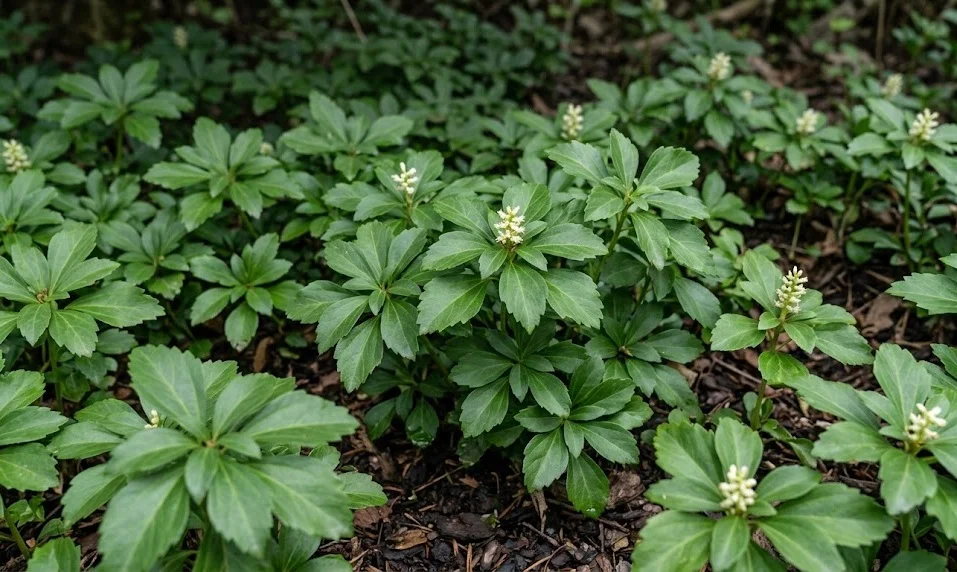

Caring for Japanese spurge requires a balance between providing a stable environment and intervening only when necessary to maintain its lush appearance. This evergreen groundcover is highly valued by gardeners for its ability to thrive in challenging areas where grass often struggles to grow. Successful maintenance involves understanding the plant’s natural rhythm and adjusting your gardening habits to suit its slow but steady growth. When managed correctly, this plant creates a dense, carpet-like effect that provides year-round visual interest in the landscape.
Maintaining the aesthetic appeal of your garden beds starts with consistent monitoring of the plant’s overall health and vigor. You should regularly check for yellowing leaves or signs of thinning, which can indicate that the environment needs adjustment. It is often helpful to remove fallen leaves from taller trees that might smother the spurge during the autumn months. Keeping the foliage clean allows the plant to photosynthesize efficiently even during the shorter days of winter.
Soil health is a cornerstone of long-term success when you are working with this particular species of groundcover. These plants generally prefer soil that is rich in organic matter and slightly acidic, reflecting their forest-floor origins. If you notice the growth slowing down significantly, it might be time to test the pH levels of your garden soil. Amending the area with leaf mold or compost can provide the structural integrity the roots need to spread and anchor the plant firmly.
To keep the groundcover looking its best, it is important to manage the density of the planting over several years. While the plant is not overly aggressive, it can become quite thick, which sometimes restricts airflow and leads to moisture-related issues. Periodically thinning out older sections can encourage the growth of fresh, vibrant green shoots from the base. This practice ensures that the entire bed remains youthful and resilient against common environmental stressors.
Selecting the ideal environment
Finding the right spot for your Japanese spurge is the most critical step in ensuring it remains healthy for decades. These plants are naturally adapted to the filtered light found under the canopy of large deciduous trees. If the area is too bright, the foliage will likely bleach and turn an unattractive yellowish-brown color. Conversely, deep shade is perfectly fine, making it an excellent choice for north-facing slopes or narrow alleyways between buildings.
More articles on this topic
The texture of the soil in your chosen location will play a massive role in how well the plant establishes itself. It thrives in well-drained but moist environments, so avoiding heavy clay that holds water for too long is vital. If your garden has heavy soil, consider incorporating grit or sand to improve the drainage capacity of the site. A loose, friable soil structure allows the delicate rhizomes to move through the earth with minimal resistance.
Competing with the roots of established trees can be a challenge for many groundcovers, but this species handles it quite well. However, you should still provide some extra care during the first two years to help it win the battle for nutrients. Once established, the dense root system of the spurge will actually help to retain moisture in the soil for the trees above. This symbiotic relationship is one reason why it is such a popular choice for woodland-style gardens.
Air circulation is an often overlooked factor that contributes to the success of this evergreen plant. While it creates a dense mat, placing it in a location where air can move freely will prevent many common fungal problems. Avoid planting it in completely enclosed, stagnant pockets of the garden where humidity can build up excessively. A gentle breeze helps to dry the leaves after rain, keeping the foliage crisp and healthy throughout the seasons.
Nutrient management and soil quality
Providing the right nutrients is less about high-intensity feeding and more about maintaining a consistent supply of organic material. These plants are not heavy feeders, but they do appreciate a boost of nutrients during the peak growing season in spring. Applying a balanced, slow-release fertilizer can help the plant produce the rich green color that makes it so attractive. Always ensure the soil is moist before applying any fertilizer to prevent burning the sensitive root systems.
More articles on this topic
The addition of organic mulch is perhaps the most beneficial thing you can do for the soil quality around your spurge. Mulch helps to mimic the natural forest floor, breaking down over time to provide a steady stream of nutrients. It also serves the dual purpose of suppressed weed growth, which is essential until the groundcover is thick enough to do the job itself. Using shredded bark or well-rotted leaf mold will yield the best results for this specific plant.
If you observe that the leaves are turning pale or the growth is stunted, it might be an indication of a nitrogen deficiency. In such cases, a light application of a nitrogen-rich organic amendment can quickly restore the plant’s vitality. However, you must be careful not to over-fertilize, as this can lead to leggy growth that is more susceptible to disease. The goal is to encourage compact, sturdy growth that forms a resilient carpet over the ground.
Soil pH levels should ideally remain on the slightly acidic side to maximize nutrient uptake for the plant. If your soil is naturally alkaline, you may find that the spurge struggles to stay green even with regular watering. In these situations, adding sulfur or using fertilizers designed for acid-loving plants can help balance the chemistry. Monitoring the soil every few years will allow you to make the necessary tweaks to keep the environment optimal.
Managing moisture levels
Watering is a task that requires more attention during the establishment phase than once the plant has matured. Newly planted spurge needs to be kept consistently moist to encourage the roots to dive deep into the soil. Once the plants have formed a solid mat, they become surprisingly drought-tolerant and can survive dry spells with minimal intervention. However, during extreme summer heat, a deep soaking once a week will prevent the foliage from wilting.
The method of delivery for water can influence the health of the leaves and the likelihood of disease. Whenever possible, use a soaker hose or drip irrigation system to deliver water directly to the base of the plants. Overhead watering can leave moisture on the leaves for extended periods, which invites fungal pathogens to take hold. If you must use a sprinkler, try to do so early in the morning so the sun can dry the foliage quickly.
Drainage remains the most important aspect of moisture management for this particular groundcover. Even though it likes moist soil, it will quickly rot if the roots are forced to sit in standing water for several days. If you notice water pooling in the area after a heavy rain, you might need to adjust the grading or add drainage channels. Healthy roots need access to oxygen just as much as they need access to water and nutrients.
In the autumn, you should gradually reduce the frequency of watering as the plant prepares for its dormant period. The cooler temperatures and higher natural rainfall usually provide enough moisture for the plant’s needs during this time. However, if the winter is particularly dry and the ground is not frozen, an occasional watering can prevent the evergreen leaves from desiccating. Keeping the plant hydrated before the ground freezes is a key part of winter survival.
Encouraging a dense growth habit
Achieving a thick, lush carpet of green is the primary goal for most gardeners who choose to plant this species. This density is best achieved by starting with a proper planting distance and then encouraging the rhizomes to spread. While the plant spreads naturally, you can help the process by keeping the soil loose and free of large stones. A soft soil texture makes it easier for the underground stems to navigate and pop up in new locations.
Regularly removing weeds is essential during the first few years because the spurge cannot compete with aggressive grasses or broadleaf weeds. Once the canopy of the Japanese spurge closes, it will naturally shade out most weed seeds, making it a low-maintenance option. Until then, hand-pulling weeds is the safest way to ensure you don’t damage the shallow root system of the groundcover. Avoid using chemical herbicides near the plants, as they can be quite sensitive to such treatments.
If you find that some areas of the bed are remaining sparse, you can manually direct the growth by pinning down long stems. By placing a small amount of soil or a landscape staple over a stem, you can encourage it to form roots at the nodes. This technique, known as layering, is an easy way to fill in gaps without having to purchase new plants. It is a slow process, but it results in a very natural and integrated look for the garden bed.
The overall health of the plant is directly reflected in the thickness and color of its leaves. A healthy plant will have glossy, dark green foliage that feels firm to the touch and covers the ground completely. If the growth appears thin, it might be time to evaluate whether the plant is getting too much light or not enough water. Addressing these environmental factors is usually enough to trigger a flush of new, dense growth in the following season.
Seasonal maintenance routines
Spring is the most active time for the Japanese spurge, as this is when the new light-green shoots begin to appear. It is the perfect window to clean up any debris that has accumulated over the winter and apply a fresh layer of mulch. If you need to do any major renovation or thinning, doing it now will give the plants the entire growing season to recover. You will also see small, white flower spikes appearing, which add a subtle charm to the garden.
During the height of summer, the main focus shifts from active gardening to maintaining a stress-free environment for the plants. Monitoring for heat stress and ensuring the soil doesn’t dry out completely are the primary tasks for these months. It is generally best to avoid any heavy pruning or transplanting when the temperatures are at their highest. Providing a little extra shade if a nearby tree has been removed can save the plants from sunscald.
Autumn is a season of preparation where the gardener helps the plant transition into the colder months. This is a great time to ensure that the mulch layer is thick enough to protect the roots from the coming frosts. Removing fallen leaves from the top of the spurge is important to prevent them from rotting and damaging the evergreen foliage. You should also check for any late-season pests that might be trying to find a home in the dense mat.
Winter maintenance is minimal, but you should still keep an eye on the plants during periods of heavy snow. While the spurge is quite hardy, a very heavy snow load can sometimes crush the stems if it sits for too long. If you experience a “green winter” with no snow but very cold winds, the plants might appreciate some temporary protection. Evergreen plants continue to lose moisture through their leaves in winter, so protection from wind is often more important than protection from cold.
Long-term garden integration
Integrating Japanese spurge into a larger landscape design requires a bit of foresight regarding its eventual spread. It works beautifully as a transition plant between formal garden areas and more wild, wooded sections of the property. Because it maintains its color all year, it provides a sense of structure even when other perennials have died back to the ground. Using it to line a shaded path creates a clean, professional look that is very inviting.
Pairing this groundcover with other shade-loving plants can create a visually stunning multi-layered garden. Hostas, ferns, and bleeding hearts all look wonderful emerging from a base of dark green spurge. The contrast in leaf textures and shades of green adds depth and complexity to the garden beds without requiring a lot of extra work. Since these plants share similar cultural requirements, they make excellent companions in a woodland setting.
One of the greatest benefits of this plant is its longevity and its ability to remain attractive for many decades. Unlike some groundcovers that become woody or die out in the center, this species tends to stay lush if it is cared for properly. This makes it a cost-effective choice for large-scale landscaping projects where you want a reliable result. It is a plant that truly rewards the patient gardener with a consistent and beautiful performance year after year.
Finally, consider the environmental benefits of having a thick groundcover like this in your garden. It helps to prevent soil erosion on slopes and keeps the ground cool, which benefits the microorganisms living in the soil. By reducing the need for mowing and chemical weed control, you are creating a more sustainable and eco-friendly outdoor space. The Japanese spurge is not just a decorative element; it is a hard-working member of your garden’s ecosystem.