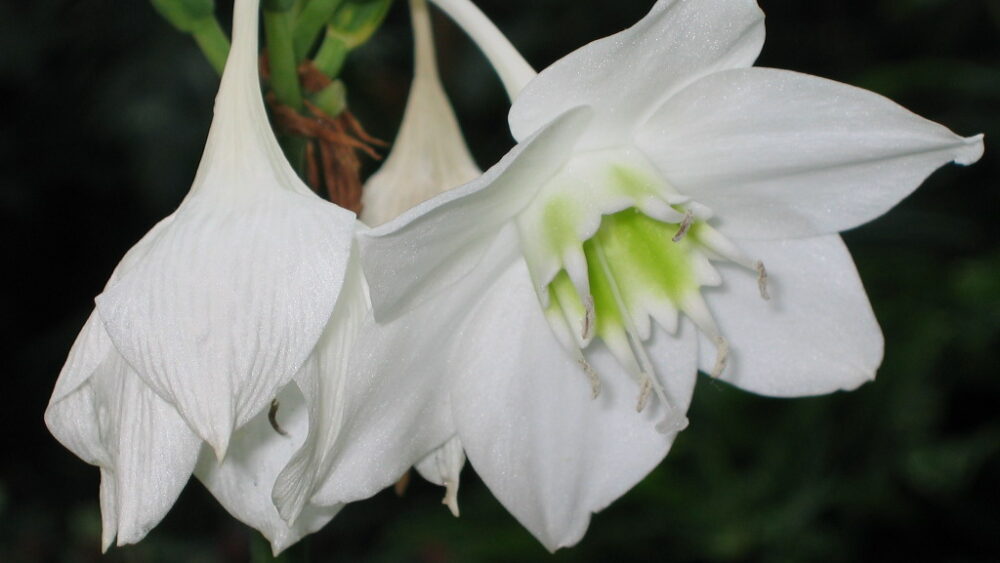

Pruning and cutting back an Amazon lily is a straightforward and minimal task, as this plant does not require the kind of regular, shaping trims that many other houseplants do. Its natural growth habit is to produce a clump of beautiful, arching leaves directly from the bulbs, and this form is best left largely untouched. The primary purpose of any cutting is for maintenance and sanitation, a process often referred to as grooming. This involves the selective removal of yellowing or dead leaves and spent flower stalks, which helps to keep the plant looking tidy, directs its energy towards healthy growth, and prevents the potential development of disease on decaying tissue.
The most frequent pruning task you will encounter is the removal of the flower stalk after the blooms have faded. Once the beautiful white flowers have withered, the plant may attempt to put energy into producing seeds. To prevent this energy expenditure and encourage the bulb to focus on replenishing its reserves for future blooms, it is essential to remove the entire stalk. This simple cut is a crucial step in the plant’s post-flowering care regimen and helps to promote a quicker return to a vegetative growth or flowering cycle.
Occasionally, an older leaf will naturally reach the end of its life cycle, turning yellow and then brown. This is a normal part of the plant’s process of shedding old growth to make way for new. Removing these declining leaves not only improves the plant’s overall appearance but also eliminates a potential site for fungal diseases to take hold. It is best to wait until the leaf is mostly yellow, as the plant is often in the process of reabsorbing valuable nutrients and energy from the dying leaf back into the bulb.
When making any cuts on your Amazon lily, it is vital to use a tool that is both sharp and sterile. A clean, sharp cut causes less damage to the plant tissue than a ragged tear, allowing the wound to heal more quickly and reducing the risk of infection. Wiping the blades of your scissors or pruning shears with rubbing alcohol before and after use is a simple but effective sanitation practice. This prevents the accidental transfer of any potential pathogens from one plant to another or even from one part of the plant to another.
Removing spent flower stalks
The most important and regular pruning task for an Amazon lily is the removal of the flower stalk, or scape, once its blooming period is over. After the last fragrant flower has wilted and faded, the stalk no longer serves a purpose for the plant’s aesthetic appeal or health. In fact, leaving it in place can be slightly detrimental, as the plant might divert a significant amount of energy into an attempt to develop seed pods. By removing the stalk promptly, you redirect all of that valuable energy back into the bulb, where it can be stored and used to fuel future leaf growth and the next round of flowers.
More articles on this topic
The process of removing the stalk is simple. Wait until all the flowers on the scape have completely finished. Using a pair of clean, sharp pruning shears, scissors, or a knife, follow the stalk all the way down to where it emerges from the base of the plant, nestled amongst the leaf stems. Make a clean cut as close to the base as you can without damaging any of the surrounding leaves or emerging new growth. This ensures a tidy appearance and removes the entire non-productive part of the plant.
There is no benefit to waiting for the flower stalk to turn yellow or brown on its own. Unlike with dying leaves, the plant does not reabsorb a significant amount of nutrients from the flower stalk. Therefore, it can be removed as soon as the last flower has declined. This swift action helps to keep the plant looking neat and signals a clear end to the flowering cycle, allowing the plant to transition smoothly into its next phase, which is typically a period of vegetative growth to replenish the bulb.
This single act of post-bloom grooming is one of the most effective things you can do to encourage your Amazon lily to be a repeat bloomer. The energy saved by not producing seeds is substantial. By consistently removing the spent stalks, you are actively managing the plant’s energy resources, investing them in the structures—the bulb and the leaves—that will be responsible for producing the next spectacular floral display. It is a simple task with a very significant and rewarding payoff.
Pruning yellow or damaged leaves
It is a natural and unavoidable part of an Amazon lily’s life cycle for older, outer leaves to eventually turn yellow, then brown, and die back. This is not necessarily a sign of a problem but rather the plant’s way of shedding old growth to make way for new. When you see a leaf beginning to yellow, it is often best to exercise a little patience. During this process, the plant is actively retracting mobile nutrients, such as nitrogen, from the senescing leaf and pulling them back into the bulb for storage and future use. Removing the leaf too early, when it is only partially yellow, can interrupt this efficient recycling process.
More articles on this topic
The best time to prune a dying leaf is when it has turned mostly yellow or brown and has become limp. At this point, the plant has likely completed the process of reabsorbing nutrients. You can follow the stem of the affected leaf down to the base of the plant. In many cases, a gentle tug will be enough to remove the leaf cleanly from the bulb. If it does not come away easily, do not force it, as this can damage the bulb. Instead, use your sterile, sharp cutting tool to snip the leaf stem off as close to the soil line as possible.
In addition to naturally dying leaves, you should also remove any leaves that have been physically damaged, for instance, if they have been torn or creased. While a small amount of damage is not harmful, a severely damaged leaf can be an entry point for diseases. Pruning these leaves helps to maintain the plant’s health and keeps its appearance neat and tidy. The same principle applies to leaves that show significant signs of disease, such as extensive leaf spot, as their removal helps to reduce the amount of pathogen present and can help prevent the spread of the infection.
It is important to maintain a sense of perspective when pruning leaves. The goal is not to achieve a state of absolute perfection, as a living plant will always have minor blemishes. The focus should be on removing leaves that are clearly dead, dying, or diseased. The broad, green leaves are the plant’s solar panels and its engine for growth. Therefore, you should always aim to preserve as much healthy green foliage as possible, only removing what is necessary for the plant’s sanitation and aesthetic appeal.