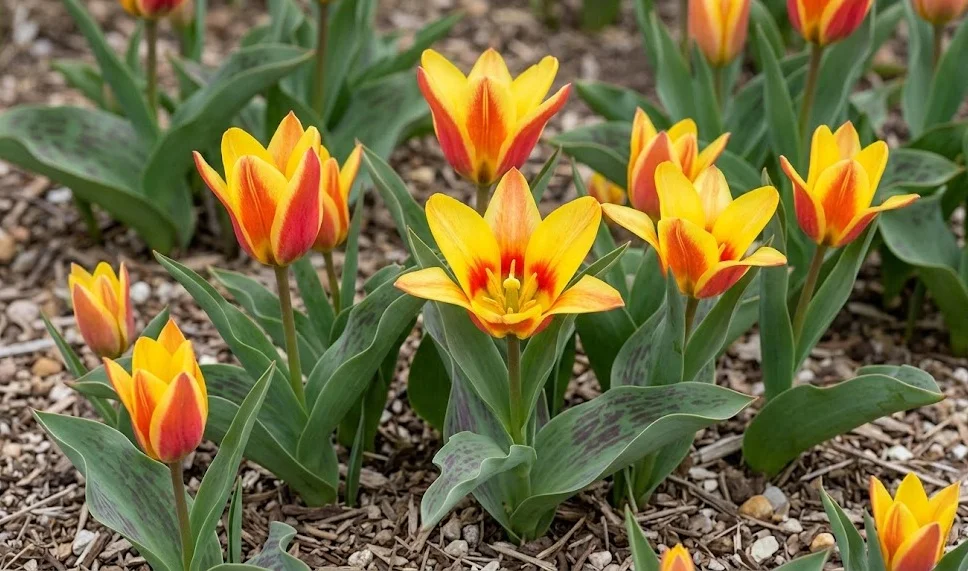

Successful overwintering is a defining characteristic of the kaufmann tulip, as it requires a period of sustained cold to trigger its spring flowering. This species is native to high-altitude regions with harsh winters, making it naturally well-equipped to handle freezing temperatures. You must ensure that the bulbs are protected from excessive moisture and physical disturbance during their long dormant phase. By understanding the physiological needs of the bulb during the winter, you can guarantee a vibrant and healthy display when the ground finally thaws.
The primary challenge of overwintering these tulips is not the cold itself, but rather the combination of wet soil and fluctuating temperatures. You should ensure that the planting site has excellent drainage to prevent the bulbs from sitting in cold, stagnant water, which can lead to rot. If your region experiences frequent freeze-thaw cycles, the expanding and contracting soil can occasionally “heave” bulbs toward the surface. Maintaining a stable subterranean environment is the key to protecting the delicate tissues inside the tulip bulb.
In addition to site selection, the depth at which the bulbs are planted plays a critical role in their winter survival. You should aim for a depth that provides enough insulation from the air temperature while still allowing the shoots to emerge easily in the spring. A layer of organic mulch can be used as a “blanket” to further stabilize the soil temperature throughout the winter months. This professional touch helps prevent the bulbs from being fooled by a brief mid-winter warm spell that could trigger premature growth.
For those growing kaufmann tulips in containers, the overwintering process requires a bit more intentionality and care. Containers are much more exposed to the elements than the ground and can freeze solid much faster, potentially damaging the bulbs. You must provide extra insulation or move the pots to a sheltered location where they will remain cold but not subjected to extreme temperature swings. Proper winter management ensures that your containerized tulips are just as successful as those planted in the garden.
Cold hardiness and physiological needs
The kaufmann tulip is exceptionally cold-hardy, typically rated for climates as cold as USDA Zone 3. This means the bulbs can survive soil temperatures well below freezing without suffering any permanent damage. In fact, the bulbs undergo essential biochemical changes during the winter that are necessary for the development of the flower bud. Without a minimum number of “chill hours,” the tulips may produce only foliage or failed flowers in the spring.
More articles on this topic
You should understand that while the bulbs are dormant in terms of visible growth, they are still metabolically active at a very low level. They are slowly converting stored starches into sugars, which act as a natural antifreeze for the plant’s cells. This process is most efficient when the soil temperature remains consistently between zero and five degrees Celsius for several weeks. Providing this natural chilling period is the most important service you can offer your kaufmann tulips during the winter.
Snow cover is actually a gardener’s best friend when it comes to overwintering bulbs in very cold climates. A thick layer of snow acts as a powerful insulator, keeping the soil temperature much warmer and more stable than the air above. You should avoid clearing snow off your tulip beds unless it is absolutely necessary for access or safety. In years with little snow, you may need to compensate by adding a thicker layer of straw or evergreen boughs to provide similar insulation.
If you live in a region with very mild winters, you may find it difficult to provide the necessary chill hours for kaufmann tulips. In these cases, some gardeners choose to “pre-chill” their bulbs in a refrigerator for six to ten weeks before planting them in the late winter. However, for most temperate gardens, the natural winter weather will provide more than enough cold for these rugged Central Asian natives. Trusting the plant’s natural adaptation to the cold is usually the most successful approach for the professional gardener.
Protecting bulbs from winter moisture
As previously discussed, cold and wet are a deadly combination for any tulip bulb, and kaufmann varieties are no exception. You must ensure that the winter drainage at your planting site is as efficient as it is during the spring and summer. Heavy winter rains or melting snow can turn poorly drained soil into a bog, which quickly cuts off the oxygen supply to the dormant bulb. This anaerobic environment is the primary cause of winter bulb loss in many home gardens.
More articles on this topic
You can improve winter drainage by incorporating extra grit or crushed stone into the soil at the time of planting. This creates macroscopic channels that allow water to move quickly past the bulbs and down into the subsoil. If you are planting in an area with a high water table, consider using raised beds to keep the bulbs above the saturation zone. A professional drainage strategy is the best way to ensure that your tulip collection survives even the wettest winter months.
Mulching can be a double-edged sword when it comes to winter moisture management, depending on the materials used. You should avoid using heavy, moisture-trapping mulches like un-shredded leaves or thick layers of grass clippings over your tulip beds. Instead, choose airy materials like straw, pine needles, or bark nuggets that allow the soil to breathe while still providing insulation. Removing the mulch as soon as the ground begins to thaw in the spring prevents it from trapping too much humidity around the emerging shoots.
If you notice standing water over your tulip beds after a heavy rain or snowmelt, you should take immediate steps to divert the water away. Digging a small drainage trench or using a temporary siphon can help remove the excess moisture before it causes permanent damage. Being proactive during the winter may feel like a chore, but it is often what saves a prized tulip colony from total failure. A watchful eye on the weather and the soil is a mark of a dedicated professional.
Soil heaving and physical stability
Soil heaving is a physical phenomenon that occurs when the water in the soil freezes and expands, pushing upward on anything buried within it. You may find that your tulip bulbs have been moved toward the surface or even partially exposed after a particularly cold and dry winter. This exposure leaves the bulbs vulnerable to desiccation and hungry wildlife, which can quickly lead to their demise. Maintaining a stable soil structure is the best way to prevent this from happening in your garden.
Planting the bulbs at the correct depth is your first and best defense against the effects of soil heaving. Bulbs planted at fifteen centimeters are much less likely to be affected by the movement of the upper soil layers than those planted closer to the surface. You should also ensure that the soil is firm and well-settled after planting to eliminate large air pockets where ice can easily form. A well-constructed planting bed provides the physical stability the bulbs need to stay in place.
The addition of organic matter to the soil can also help mitigate heaving by improving the soil’s elasticity and moisture-holding capacity. Soils that are very high in silt or fine sand are the most prone to heaving, while those with a healthy amount of organic fiber tend to be more stable. You should aim for a balanced soil texture that can absorb the expansion of freezing water without displacing the bulbs. This underground engineering is a vital part of professional tulip care.
If you do discover heaved bulbs in the late winter, you should gently push them back into the soil and cover them with extra mulch or fresh earth. Avoid stepping on the frozen ground around the bulbs, as this can cause even more damage to the soil structure and the emerging roots. Simply providing a protective covering is usually enough to see the bulb through until the spring thaw. Vigilance during the transition periods of early winter and late winter is key to maintaining a successful tulip display.
Managing container-grown tulips in winter
Overwintering kaufmann tulips in pots and containers presents a unique set of challenges because the entire root zone is above ground. You must remember that a container can experience temperature swings that are much more extreme than the ground soil. To protect your potted tulips, you can wrap the containers in bubble wrap, burlap, or specialized insulating jackets. Grouping the pots together in a sheltered corner also helps them retain a bit more collective warmth during the coldest nights.
The location of your winter containers is just as important as the insulation you provide for them. You should avoid placing them on elevated surfaces like tables or benches where cold air can circulate underneath them. Instead, set them directly on the ground or on a thick piece of wood to benefit from the earth’s natural thermal mass. A spot that is protected from the prevailing winter winds will also significantly reduce the rate of heat loss from the containers.
Moisture management is even more critical for containerized tulips, as they can dry out completely during a long, dry freeze. You should check the moisture level of the potting medium every few weeks and provide a small amount of water if it feels bone-dry. However, you must be extremely careful not to overwater, as a frozen pot with too much water can easily crack or crush the bulbs inside. Finding the “just right” level of winter moisture is a skill that comes with experience and observation.
As spring approaches, you should gradually move your containers into a sunnier location to encourage the bulbs to break dormancy. Be prepared to move them back into a sheltered area if a sudden, severe frost is predicted after the green shoots have appeared. This flexibility is one of the great advantages of growing tulips in containers, allowing you to fine-tune their environment for the best possible results. Professional container gardening is all about managing the fine details of the plant’s environment.