
Providing the correct amount of water and nutrients is the cornerstone of professional guzmania bromeliad care and long-term health. These plants have adapted a specialized way of collecting moisture through a central reservoir formed by their overlapping leaves. Understanding how to manage this central tank while also attending to the root zone is vital for preventing common issues like rot. By mastering these two distinct watering techniques, you can ensure your tropical specimen remains vibrant and resilient throughout its life cycle.
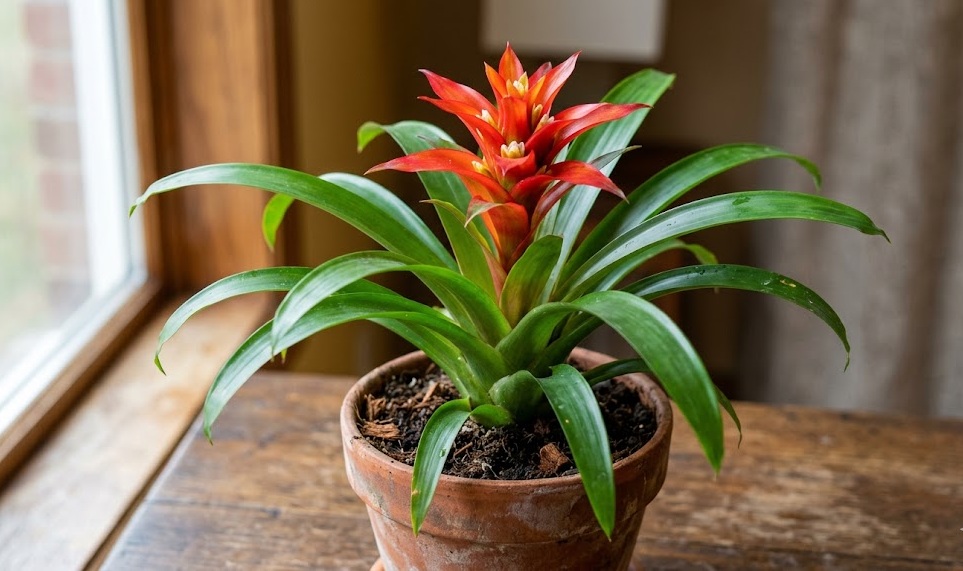
The central tank, often referred to as the cup, should always contain a small amount of fresh, clean water for the plant to absorb. In nature, these cups collect rainwater and organic debris, providing a steady supply of hydration and minor nutrients. You should aim to keep the tank about one-quarter full and flush it out entirely every few weeks to prevent stagnation. Using room-temperature water is essential, as cold water can shock the plant and lead to unsightly leaf spotting.
While the tank is the primary source of hydration, the potting medium also needs occasional attention to keep the roots from drying out completely. You should water the substrate only when the top inch of the mix feels dry to the touch, ensuring any excess drains away immediately. Overwatering the soil is a frequent mistake that can lead to root rot, which is often difficult to reverse once it begins. A balanced approach that focuses on both the cup and the roots will provide the best results for your plant.
Water quality is a professional detail that can make a significant difference in the appearance of the foliage over time. Many municipal water sources contain high levels of chlorine or minerals that can leave white, crusty deposits on the leaves. If possible, use collected rainwater, distilled water, or filtered water to maintain the natural beauty of the plant. This practice prevents the buildup of salts that can eventually interfere with the plant’s ability to absorb moisture and nutrients.
Selecting the right nutrients for epiphytic growth
Fertilizing a guzmania requires a delicate touch because these plants are not heavy feeders in their natural rainforest habitat. They have evolved to survive on the minimal nutrients washed into their central cups from the surrounding forest canopy. Using a standard strength houseplant fertilizer can easily burn the sensitive leaves and damage the small root system. Instead, you should choose a balanced, water-soluble fertilizer and dilute it to at least one-quarter of the recommended strength.
More articles on this topic
The most effective way to fertilize is by misting a very weak nutrient solution directly onto the foliage and into the central tank. This method mimics the way the plant receives nutrients in nature and allows for efficient absorption through the leaf surface. During the active growing season of spring and summer, you can apply this diluted fertilizer once every month. Avoid fertilizing during the winter months when the plant’s metabolic rate slows down and its nutrient requirements are minimal.
If you prefer to fertilize the soil, ensure the potting mix is already moist before applying any nutrient solution to prevent root burn. This ensures that the fertilizer is distributed evenly and does not come into direct contact with dry, sensitive root tissues. Only a small amount of solution is needed, as the roots are primarily used for stability rather than extensive nutrient uptake. Consistent, low-level feeding is much safer and more effective than occasional heavy applications of fertilizer.
Monitoring the plant for signs of over-fertilization is an important part of a professional maintenance routine. If you notice brown tips on the leaves or a white crust forming on the surface of the potting mix, you may be providing too many nutrients. In this case, you should flush the substrate and the central tank with plenty of pure water to remove the excess salts. Adjusting your feeding schedule based on the plant’s reaction will help you find the perfect balance for your specific environment.
Seasonal adjustments to moisture and feeding schedules
As the seasons change, the water and nutrient requirements of your guzmania will fluctuate based on light and temperature levels. In the bright and warm days of summer, the plant will use water more quickly through evaporation and transpiration. You may need to check the central tank more frequently and mist the leaves daily to maintain the necessary humidity. During this period of active growth, the plant can benefit from a more regular, though still very light, feeding schedule.
More articles on this topic
When autumn arrives and the days begin to shorten, it is time to start reducing the frequency of both watering and fertilizing. The cooler temperatures mean that the water in the cup will not evaporate as fast, increasing the risk of bacterial growth if not managed carefully. You should stop fertilizing entirely by late autumn to allow the plant to enter its natural resting phase during the winter. This reduction in resources helps the plant prepare for the lower light levels and prevents weak, leggy growth.
Winter care is centered on maintenance and protection rather than encouraging new growth or flowering. You should keep the central tank only slightly moist and be very careful not to let any water sit on the leaves in cool conditions. The potting medium will stay damp for much longer, so you should only water the soil when it is almost completely dry. Maintaining a stable environment is more important during the winter than providing additional nutrients or excessive moisture.
By the time spring returns, you can gradually increase the watering and reintroduce a light fertilization routine to stimulate new activity. The increasing light levels will trigger the plant to start producing new leaves or developing its central flower stalk. Observing these natural cues allows you to synchronize your care with the plant’s internal biological clock for the best possible health. A well-timed transition between the seasons ensures the plant remains vigorous and ready for its next blooming cycle.
Managing humidity and misting for optimal health
Humidity is a key component of the overall watering strategy because guzmania bromeliads thrive in air that is moist and tropical. In many homes, the air is naturally too dry, especially during the winter when heating systems are running constantly. You can compensate for this by misting the foliage with a fine spray of room-temperature water several times a week. This practice not only provides moisture but also helps keep the leaves clean and free of dust.
Creating a humidity tray is another professional technique that can provide a more consistent microclimate for your plant. Simply fill a shallow tray with pebbles and add enough water to reach just below the top of the stones. Place the pot on top of the pebbles, ensuring that the bottom of the container does not touch the water directly. As the water evaporates, it creates a zone of higher humidity immediately around the foliage where the plant needs it most.
Grouping your bromeliads with other moisture-loving plants can also help maintain a higher local humidity level through collective transpiration. Plants like ferns, calatheas, and other epiphytes work well together to create a lush, humid environment in a corner of your home. This natural approach reduces the need for constant manual intervention and creates a more stable atmosphere for all the plants involved. Just be sure to maintain adequate air circulation to prevent the growth of mold or mildew in the humid zone.
It is important to avoid misting the plant in the late evening or at night when temperatures are lower and evaporation is minimal. Water that sits on the foliage overnight can encourage fungal diseases and provide a breeding ground for certain pests. Always aim to mist your plants in the morning so that the leaves have plenty of time to dry before the sun goes down. This simple timing adjustment is a hallmark of professional plant care that prevents many common indoor gardening problems.
Troubleshooting common watering and nutrient issues
One of the most frequent problems growers face is the development of root rot due to excessive moisture in the potting medium. If you notice that the leaves are turning yellow and the base of the plant feels soft or mushy, you should inspect the roots immediately. Healthy roots should be firm and light in color, while rotted roots will be dark, slimy, and have an unpleasant odor. If the damage is not too extensive, you can try repotting the plant into fresh, dry substrate and reducing your watering frequency.
On the other end of the spectrum, underwatering can cause the leaves to become curled, brittle, and develop dry, brown tips. This often happens if the central tank is allowed to dry out completely for an extended period or if the humidity is extremely low. You should slowly rehydrate the plant by filling the cup and misting the foliage, but avoid soaking the soil to the point of saturation. Consistency is the goal, so try to establish a regular schedule that prevents these extremes from occurring in the first place.
Nutrient deficiencies can manifest as unusual leaf colors or a lack of vigor even when other environmental factors are correct. For example, a lack of nitrogen might cause the entire plant to look pale and grow very slowly over time. Conversely, if you see purple or reddish tints on leaves that should be green, the plant might be struggling with a lack of phosphorus. A balanced, highly diluted fertilizer should resolve most minor deficiencies if applied consistently during the growing season.
Understanding the subtle signals your plant sends is the best way to maintain a professional level of care throughout the year. Every guzmania will respond slightly differently to its environment, so being observant is your most valuable tool as a gardener. By paying close attention to the texture of the leaves and the condition of the central tank, you can catch issues early. This proactive approach ensures that your bromeliad remains a stunning and healthy feature of your indoor garden.