
Mastering the irrigation and nutritional needs of a gloxinia is essential for achieving the professional-quality blooms that the plant is famous for. These tropical plants have a specific physiology that requires a consistent yet careful approach to moisture and nutrient delivery. Both over-application and neglect can lead to rapid decline, making precision the most important factor in their care. A well-executed watering and feeding schedule will result in a robust plant with deep green foliage and a long-lasting floral display.
Fundamentals of proper irrigation
The primary rule of watering is to maintain consistent moisture throughout the active growing season without allowing the soil to become saturated. The tuber acts as a storage organ, but the fine feeder roots are highly sensitive to both drying out and lack of oxygen. It is best to wait until the surface of the soil feels slightly dry to the touch before adding more water. This cycle of wetting and slight drying encourages a healthy and expansive root system.
When watering, it is crucial to avoid getting any moisture on the leaves or the center of the plant. The velvety hairs on the foliage trap water, which can lead to unsightly brown spots or fungal infections like botrytis. Many professionals prefer to water from the bottom by placing the pot in a saucer of water for about twenty minutes. This allows the soil to wick up the moisture through capillary action, keeping the foliage perfectly dry.
The quality of the water used can also affect the health of the plant over the long term. These plants are sensitive to the chlorine and minerals often found in tap water, which can build up in the soil. Using rainwater or distilled water at room temperature is the preferred choice for serious growers. Cold water should never be used, as it can shock the roots and cause leaf spotting or growth inhibition.
As the plant enters its flowering peak, its demand for water will naturally increase due to the higher metabolic activity. During this time, the soil may need to be checked daily to ensure the plant never experiences moisture stress. A wilted plant will quickly drop its buds, ruining weeks of careful preparation. Providing a steady supply of hydration is the most effective way to ensure a full and beautiful flowering period.
More articles on this topic
Methods and timing for watering
The best time of day to water is in the early morning, allowing any accidental splashes on the foliage to dry before evening. This timing aligns with the plant’s natural rhythm as it prepares for the day’s photosynthetic activity. Watering in the evening can leave the soil too wet overnight, which increases the risk of root rot and other pathogens. A professional routine is built on consistency and timing.
Using a long-necked watering can allows for precise delivery of water directly to the soil surface if bottom watering is not used. The aim is to saturate the entire root ball evenly without creating stagnant pools of water. If water drains out into the saucer, it should be emptied immediately after the plant has finished drinking. Leaving a pot sitting in water for extended periods is a primary cause of tuber failure.
Environmental factors like temperature and humidity will dictate how frequently the plant needs to be watered. In a warm, dry room, the soil will dry out much faster than in a cool, humid conservatory. A grower must learn to read the weight of the pot and the texture of the soil rather than following a strict calendar. This intuitive understanding of the plant’s needs is what separates an expert from a hobbyist.
During the transition into dormancy, the watering frequency must be gradually reduced. As the leaves begin to yellow and the plant stops producing new growth, the tuber needs less hydration. Forcing water onto a plant that is trying to rest will almost certainly lead to rot. Observing the plant’s natural signals is the only way to successfully manage this critical change in the care routine.
More articles on this topic
Understanding macronutrient requirements
To produce its massive, energy-intensive flowers, the plant requires a steady supply of essential macronutrients. Nitrogen is needed for healthy leaf development, while phosphorus and potassium are critical for root health and flower production. A professional grower uses a balanced approach to ensure that the plant has everything it needs for each stage of its life cycle. Without proper fertilization, the plant will eventually exhaust the nutrients in its small pot.
During the early stages of growth, a fertilizer with a slightly higher nitrogen content can help build a strong leafy base. However, as the plant approaches the flowering phase, the focus should shift toward higher phosphorus and potassium levels. This change in nutrition signals to the plant to prioritize bud formation over vegetative growth. Specialized “bloom booster” formulas are often used by experts to maximize the floral display.
Micronutrients like iron, magnesium, and calcium are also important, though they are needed in much smaller quantities. A high-quality, water-soluble fertilizer usually contains a complete profile of these trace elements. Deficiencies in these areas can manifest as yellowing between the veins of the leaves or poor stem strength. Maintaining a full spectrum of nutrition ensures that the plant remains vigorous and resilient against stress.
It is important to remember that fertilizers are salts, and an excess can be just as damaging as a deficiency. Over-fertilization can burn the delicate root tips and lead to an accumulation of toxic levels in the soil. A “low and slow” approach is always safer, using a diluted solution more frequently rather than a strong one occasionally. This consistent, gentle feeding mimics the natural availability of nutrients in the wild.
Designing a fertilization schedule
A professional fertilization schedule usually begins once the first leaves have fully emerged from the tuber. Applying a half-strength liquid fertilizer every two weeks is a standard practice that provides a steady stream of nutrients. This frequency ensures that the plant always has access to the building blocks it needs for growth. Consistent feeding leads to more uniform development and a more predictable flowering time.
The application of fertilizer should always be done on soil that is already slightly moist. Applying concentrated nutrients to bone-dry soil can cause immediate root damage through osmotic shock. Always water the plant with plain water first, then follow up with the nutrient solution. This simple step protects the integrity of the root system while ensuring efficient nutrient uptake.
As the plant reaches its peak blooming period, the frequency of fertilization can be maintained to support the ongoing energy needs. However, once the flowering has finished and the plant begins to show signs of entering dormancy, all feeding should stop. Adding nutrients to a plant that is preparing to rest is a waste of resources and can interfere with the natural dormancy process. The tuber will store the energy it has already gathered for the next season.
Throughout the growing season, it is beneficial to flush the soil with plain water every few weeks. This practice helps wash away any accumulated salts from the fertilizer and prevents pH imbalances. A clean substrate allows the roots to function at their highest efficiency. Regular flushing is a key component of a professional maintenance program for long-term plant health.
Identifying signs of nutrient imbalance
A professional gardener must be able to read the visual signals the plant provides regarding its nutritional status. If the lower leaves begin to turn pale yellow while the veins stay green, it may indicate a nitrogen or magnesium deficiency. Conversely, if the leaf edges appear burnt or brown, it could be a sign of potassium deficiency or excessive salt buildup. Early intervention can prevent these issues from affecting the overall health of the specimen.
Stunted growth and a lack of flowers are often the result of insufficient phosphorus in the soil. If a plant appears healthy and green but refuses to bloom, it may be receiving too much nitrogen at the expense of other nutrients. Adjusting the fertilizer ratio can often trigger the desired flowering response within a few weeks. Monitoring the plant’s progress allows for these precise adjustments in care.
Excessive fertilization can also cause the leaves to become unusually dark green, thick, and brittle. In extreme cases, the growing tip may become distorted or die back entirely. If over-feeding is suspected, the best course of action is to flush the soil thoroughly with large amounts of room-temperature water. This “reset” helps clear the substrate and allows the plant to recover from the nutrient toxicity.
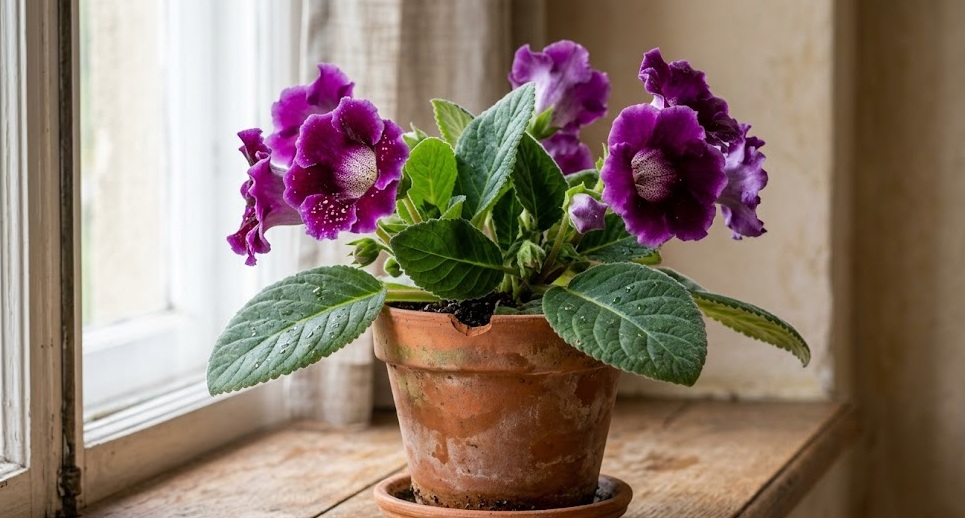
The overall appearance of the plant is the best indicator of a successful watering and fertilization program. A well-nourished gloxinia will have a compact growth habit, vibrant leaves, and an abundance of large, healthy flowers. By paying close attention to these details, any gardener can achieve professional-level results. The balance of water and food is the foundation of excellence in tropical plant care.