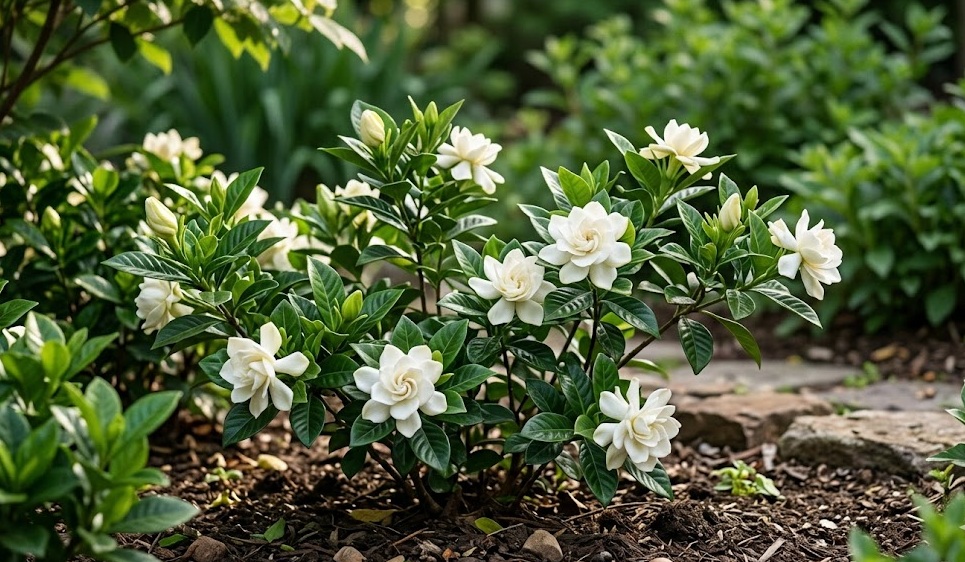

Successfully establishing a gardenia begins with a precise understanding of the conditions required for its roots to take hold and thrive in a new environment. These plants are known for being somewhat temperamental during the transplanting process, making the initial planting phase a critical moment in their lifecycle. Whether you are starting with a nursery-bought specimen or trying to create new plants from cuttings, the focus must always be on minimizing stress and maximizing nutrient availability. By following a structured approach to planting and propagation, you can ensure that your gardenias have the best possible start in their new home.
Selecting the perfect location for planting
The success of your gardenia depends heavily on the specific spot you choose for its permanent or semi-permanent home in the garden. You should look for a location that offers protection from harsh afternoon sunlight while still providing plenty of bright, filtered light throughout the day. Areas near the foundation of a house or under the canopy of a tall tree often provide the right balance of shelter and illumination. Avoid low-lying areas where cold air might settle during the night, as gardenias are highly sensitive to frost and sudden temperature drops.
Soil quality is the next most important factor to consider when evaluating a potential planting site for your gardenia. These plants require a soil that is naturally acidic, with a pH level ideally sitting between 5.0 and 6.0 to allow for proper iron absorption. If your native soil is heavy clay or highly alkaline, you will need to amend it significantly with organic matter like compost, peat moss, or leaf mold. Ensuring that the site has excellent drainage is also essential, as the roots will quickly rot if they are forced to sit in waterlogged earth.
Consider the proximity of other plants and structures that might compete for resources or affect the local microclimate. You should give your gardenia enough space to reach its full mature size without being crowded by more aggressive neighbors that might steal nutrients and water. Planting near a walkway or patio is a popular choice because it allows you to enjoy the incredible fragrance of the flowers whenever they are in bloom. However, ensure that the site is not too close to concrete or limestone paths, as these materials can leach lime into the soil and raise the pH level over time.
Finally, think about the wind patterns in your garden and how they might affect a plant with such large and delicate foliage. Gardenias prefer a site that is sheltered from strong, drying winds that can cause the leaves to lose moisture faster than the roots can replace it. A natural windbreak, such as a fence or a dense evergreen hedge, can provide the necessary protection while also helping to maintain a higher level of local humidity. By taking the time to find the right environment before you dig, you set the stage for a healthy and long-lived plant.
More articles on this topic
Proper techniques for transplanting
When it comes time to actually put your gardenia in the ground, the way you handle the root ball will determine how quickly the plant recovers. You should begin by digging a hole that is at least twice as wide as the current root system but no deeper than the height of the root ball. This wide area of loosened soil allows the young roots to spread out easily and establish a firm anchor in their new environment. Before placing the plant in the hole, you can gently loosen any circling roots to encourage them to grow outward rather than continuing to grow in a tight spiral.
Positioning the plant at the correct depth is one of the most critical aspects of the planting process for gardenias. You must ensure that the top of the root ball is level with or slightly above the surrounding soil surface to prevent the stem from being buried too deeply. Planting a gardenia too low can lead to crown rot and suffocation of the upper roots, which are responsible for a significant portion of oxygen exchange. If your soil is particularly heavy, planting on a slight mound can further improve drainage around the base of the plant.
Once the plant is in position, you should backfill the hole with a mixture of the native soil and organic amendments, tamping it down gently to remove large air pockets. Avoid packing the soil too tightly, as this can compress the delicate roots and make it difficult for water and air to move through the medium. After the hole is filled, create a small basin of soil around the edge of the planting area to help direct water toward the root zone during the initial establishment period. Thoroughly watering the plant immediately after planting will help settle the soil and ensure that the roots are in direct contact with the moisture they need.
The final step in a successful planting is the application of a thick layer of organic mulch around the base of the plant. Mulch helps to regulate soil temperature, retain moisture, and suppress weeds that would otherwise compete with the gardenia for nutrients. You should use an acidic mulch, such as pine needles or shredded bark, and keep it a few inches away from the main stem to prevent moisture from sitting against the bark. This protective layer acts as a buffer against environmental changes, allowing the plant to focus its energy on building a strong and healthy root system.
More articles on this topic
Propagation through stem cuttings
Creating new gardenias from cuttings is a satisfying way to expand your collection or share these beautiful plants with friends and family. The best time to take cuttings is during the late spring or early summer when the plant is in a state of active growth and the stems are semi-ripe. You should look for healthy stems that are firm at the base but still flexible at the tip, avoiding any that are excessively woody or very soft. Using a sharp, sterilized pair of pruning shears is essential to ensure a clean cut that will heal quickly and resist infection.
Each cutting should be approximately 10 to 15 centimeters long and should include at least two or three sets of leaves at the top. You should remove the lower leaves from the bottom half of the cutting to expose the nodes where the new roots will eventually emerge. To improve your chances of success, you can dip the cut end into a rooting hormone powder or liquid before placing it into the growing medium. This hormone provides the chemical signal the plant needs to transition from stem growth to root development.
The rooting medium should be a light and airy mixture, such as a combination of perlite and peat moss or a specialized seed-starting blend. You should insert the cuttings into the medium and press it firmly around the base to ensure good contact and stability. To maintain the high humidity required for rooting, you can cover the container with a plastic bag or place it inside a small propagator. Keep the cuttings in a warm spot with bright, indirect light, and be careful to avoid direct sun, which can quickly overheat the small environment and kill the delicate tissue.
Over the next several weeks, you should monitor the moisture levels in the medium and mist the cuttings regularly to keep the leaves from wilting. You can check for root development by very gently tugging on the cuttings; if you feel resistance, it means that new roots are beginning to anchor the plant. Once the roots are several centimeters long, you can begin to acclimate the young plants to lower humidity by gradually opening the plastic cover. Finally, transplant the successful cuttings into individual pots with acidic soil and continue to care for them as miniature versions of the parent plant.
Alternative methods of propagation
While stem cuttings are the most common method, gardenias can also be propagated through a technique known as air layering. This method is often more reliable for difficult-to-root varieties because the new plant remains attached to the parent and continues to receive nutrients while the roots are forming. You begin by selecting a healthy, flexible branch and making a small upward cut or removing a ring of bark about midway along its length. Apply rooting hormone to the wounded area and wrap it in a ball of moist sphagnum moss, securing the whole thing with plastic wrap and ties.
Over time, you will be able to see roots growing through the moss inside the plastic wrap, indicating that the layer is successful. This process can take several months, so you must ensure that the moss remains moist by injecting water with a syringe if it starts to dry out. Once a substantial root system has developed, you can cut the branch below the rooted area and pot the new plant into its own container. This method produces a larger and more established plant much faster than starting from a small cutting.
Propagation from seed is also possible, though it is a much slower process and the resulting plants may not be identical to the parent. You should harvest the seed pods, also known as hips, once they have turned completely orange or red and are starting to soften. Extract the small seeds and clean them thoroughly before sowing them in a tray of moist, acidic potting mix. Keep the tray in a warm, bright location and maintain consistent moisture until the seedlings emerge, which can take anywhere from a few weeks to several months.
Regardless of the method you choose, the key to successful gardenia propagation is patience and attention to detail. Every new plant you create is an opportunity to learn more about the biology and growth habits of this fascinating species. By experimenting with different techniques, you can find the one that works best for your specific environment and the resources you have available. Growing a gardenia from a tiny cutting or seed into a large, flowering bush is one of the most fulfilling experiences a gardener can have.
When propagating gardenias from cuttings, I’ve found that using semi-hardwood material in the mid-summer yields the highest success rate. It’s crucial to use a rooting hormone and maintain a very high humidity environment, often necessitating a plastic dome or a misting system. I’ve also had some success with air layering for larger specimens that I want to replicate without the risk of losing a small cutting. The soil for new plantings should be exceptionally well-draining; a mix of peat moss, perlite, and aged compost works wonders. Many people forget that gardenias are very sensitive to being planted too deep. The top of the root ball should be slightly above the soil line to ensure proper oxygenation to the roots.
Dr. Jenkins, your point about planting depth is absolutely vital and often the reason why new gardenias fail within the first year. I’ve also noticed that using a “starter” fertilizer high in phosphorus can help the roots establish more quickly during that critical transition period. When I take my cuttings, I prefer to take them early in the morning when the parent plant is fully hydrated. I’ve found that keeping the cuttings at a consistent temperature of 75°F significantly speeds up the callous formation. It usually takes about 6 to 8 weeks before I see any substantial root development. Patience is definitely a virtue when it comes to propagating these beautiful but picky plants.
I tried growing gardenias from seeds last year, and it was quite the challenge but ultimately very rewarding. The seeds need to be very fresh, as their viability drops off incredibly fast once they are removed from the seed pod. I soaked mine for 24 hours in warm water before sowing them in a sterile seed-starting mix. It took nearly a month for the first sprouts to appear, and even then, the growth was agonizingly slow. If you’re looking for a faster result, I definitely recommend sticking with cuttings as the article suggests. However, for those who enjoy the process, there’s something special about seeing a tiny seedling turn into a fragrant shrub.