
Establishing a successful stand of white clover begins with meticulous planning and a clear understanding of the species’ biological requirements. This versatile legume is widely used for both agricultural fodder and as a sustainable alternative to traditional lawn grasses. The process of planting involves more than just spreading seeds; it requires careful site preparation and timing. A professional approach to the initial stages of growth will ensure a dense and long-lasting cover.
The selection of the planting site is the first critical decision that will influence the future success of the crop. While this species is adaptable, it performs best in soils that retain moisture but offer adequate drainage for root respiration. Conducting a thorough analysis of the soil’s nutrient profile and pH level is a mandatory step for any professional project. Correcting deficiencies before the seeds are in the ground is much easier than trying to fix them later.
Environmental factors such as sunlight and wind exposure must also be evaluated during the planning phase. White clover thrives in areas that receive substantial light, although it can tolerate moderate shade in some contexts. The presence of existing vegetation should be managed to reduce competition for light and nutrients during the germination phase. Preparing the seedbed properly ensures that there is good seed-to-soil contact, which is essential for uniform emergence.
Timing the planting session is vital for taking advantage of natural moisture cycles and favorable temperatures. Most experts recommend sowing in the early spring or late summer when the soil is warm and rainfall is more predictable. Avoiding periods of extreme heat or cold gives the young seedlings the best chance to establish their primary root systems. By aligning the planting schedule with local climate patterns, the risk of establishment failure is significantly reduced.
Direct seeding methodologies
Achieving a high germination rate depends heavily on the precision of the seeding technique used by the grower. Broadcasters and specialized seed drills are common tools used to distribute the small, hard seeds evenly across the target area. The depth of planting is a critical factor, as seeds buried too deep will fail to reach the surface. Ideally, the seeds should be placed no deeper than six millimeters to allow the emerging shoots to access light quickly.
More articles on this topic
Using high-quality, certified seed is an investment that pays off through better purity and higher germination percentages. Many professional seeds are pre-inoculated with the specific Rhizobium bacteria needed for efficient nitrogen fixation. If the seeds are not pre-treated, the grower must apply the inoculant manually just before the sowing process begins. This symbiotic relationship is the engine that drives the growth and productivity of the entire clover stand.
After the seeds have been distributed, the ground should be firmed to ensure they are locked into the soil matrix. A light roller or cultipacker is often used to press the seeds into the surface without compacting the soil too tightly. This step prevents the seeds from being washed away by rain or eaten by birds and insects. Maintaining surface moisture during the first two weeks is the most important task for the grower following seeding.
Monitoring the emergence of the seedlings allows for early detection of any issues with the seeding process. Uniformity in the greening of the field indicates that the distribution was successful and the conditions are optimal. If bare patches appear, they should be investigated for soil issues or pest activity that might be hindering growth. Proactive management during this stage ensures that the resulting stand is thick and capable of suppressing weeds.
Vegetative propagation and stolon growth
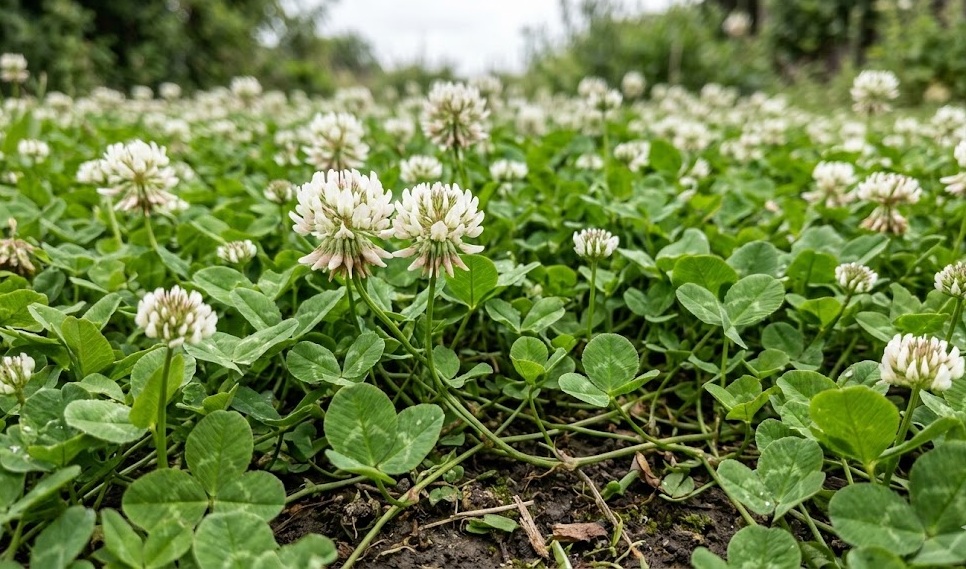
Beyond seeds, this species is exceptionally well-suited for vegetative propagation through its creeping horizontal stems. These stolons grow along the soil surface and develop new roots at each node when they come into contact with moisture. This natural mechanism allows the plant to expand rapidly and fill in any gaps that may occur in the stand. Growers can take advantage of this habit by encouraging lateral growth through proper mowing and moisture management.
More articles on this topic
In some specialized applications, plugs or sprigs of established clover can be used to initiate a new stand. This method is often more expensive than seeding but provides a much faster establishment in sensitive or high-value areas. Each plug contains a developed root system and several active stolons ready to colonize the surrounding soil. Care must be taken to keep these vegetative fragments hydrated until they have successfully anchored themselves.
Understanding the physiology of stolon development is essential for managing the density of the propagation. Factors such as light intensity and nitrogen levels in the soil directly influence how quickly these stems elongate and branch. Excessive nitrogen can sometimes favor vertical leaf growth at the expense of horizontal stolon expansion. A professional grower balances these factors to create a resilient and interconnected mat of plant tissue.
Encouraging the rooting of stolons can be achieved by maintaining a slightly loose and moist soil surface. If the ground is too hard, the delicate roots at the nodes will struggle to penetrate the surface and establish themselves. Light top-dressing with organic matter or fine soil can sometimes assist in anchoring the runners in challenging conditions. This vegetative spread is the primary way the clover maintains its presence over many years without the need for frequent reseeding.
Monitoring early establishment and care
The first few months after planting represent a vulnerable period where the young plants are establishing their dominance. Regular scouting is necessary to identify any emerging threats such as aggressive weeds or early-season pests. If competition from other plants is too high, the young clover may become leggy and fail to develop a strong stolon network. Minimal mechanical intervention might be needed to tip the balance in favor of the newly sown crop.
Moisture management remains the top priority during the establishment phase to prevent the delicate roots from drying out. Irrigation should be frequent but light until the root system has reached deeper soil layers. Once the plants have developed several true leaves and started to produce stolons, the watering frequency can be reduced. This transition encourages the roots to grow deeper, making the stand more resilient to future drought events.
Fertilization should be handled with extreme care during the early stages of the clover’s life cycle. Avoid using high-nitrogen fertilizers that can discourage the development of the nitrogen-fixing root nodules. Instead, focus on ensuring that there is enough phosphorus available to support rapid root and stolon development. A well-nourished young plant is better equipped to handle environmental stresses and mechanical damage.
As the canopy begins to close, the grower should observe the overall health and color of the foliage. A vibrant green color indicates that the nitrogen-fixation process has successfully started and the plants are thriving. Any signs of yellowing or stunted growth should be addressed immediately through soil testing or adjusted care routines. Successful establishment is the result of constant observation and a commitment to professional horticultural standards.