
Mastering the interplay between light and leaf color is the ultimate secret to growing world-class foliage specimens. These plants are incredibly sensitive to the intensity and duration of the sunlight they receive, which directly affects the pigments in their leaves. While many people think of them as shade plants, the reality is much more nuanced and varies significantly between different cultivars. This article provides a professional perspective on how to position your plants to achieve the most breathtaking colors and the healthiest growth habits possible.
Direct versus indirect sunlight
The traditional view that all of these plants must be grown in deep shade is a common misconception that often leads to dull colors and leggy stems. You will find that most modern varieties actually prefer bright, indirect light or a few hours of gentle morning sun to look their best. Too much deep shade often results in the plant losing its vibrant reds and purples, reverting to a more mundane green as it struggles to photosynthesize. Finding that “sweet spot” of bright but filtered light is the hallmark of an experienced gardener.
Direct midday sun can be a challenge, especially in regions with high UV levels or extreme summer heat. The large, thin leaves of many varieties are prone to scorching, which appears as bleached or brown patches that never recover. However, some newer “sun-tolerant” series have been specifically bred to withstand full exposure without losing their integrity. You should always check the specific requirements of your variety, as the difference in sun tolerance can be quite dramatic from one plant to another.
Morning sun is generally the most beneficial because it provides the energy needed for growth without the intense heat of the afternoon. You will notice that plants receiving early light often have thicker stems and a more compact, bushy habit compared to those in permanent shade. The cool temperatures of the morning allow the plant to absorb the light efficiently while the humidity is still relatively high. If you are unsure where to place a new plant, an east-facing location is usually the safest and most effective starting point.
In an indoor setting, light becomes a much more precious commodity that you must manage with precision. A window that receives bright, filtered light for most of the day is ideal, but you must be careful about the heat buildup behind the glass. You might need to use a sheer curtain to soften the light during the peak hours of the day to prevent leaf burn. Rotating your pots every few days will ensure that all sides of the plant receive equal light, preventing it from leaning awkwardly toward the window.
More articles on this topic
Light intensity and leaf coloration
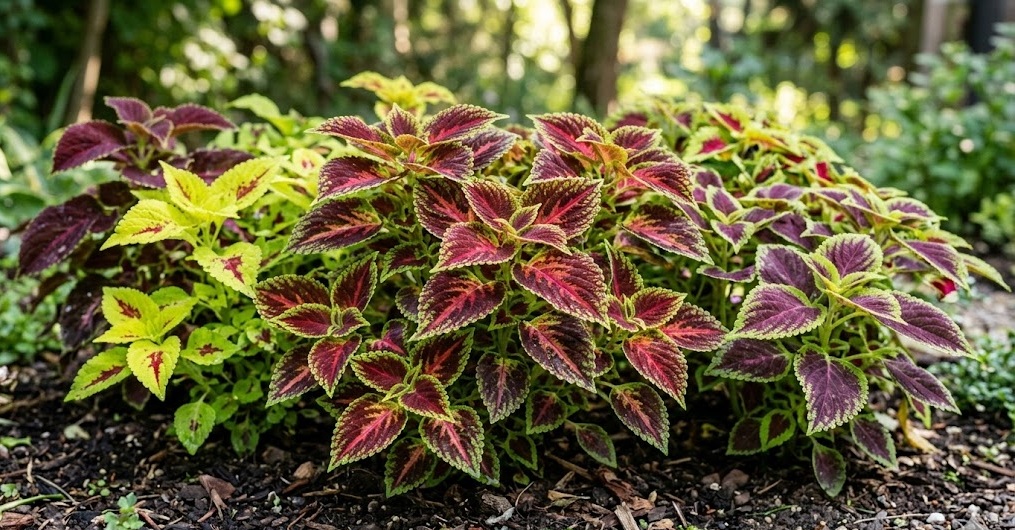
The most fascinating aspect of these plants is how their color palette shifts in response to the light levels they are exposed to. You will see that the same variety can look completely different when grown in a sunny spot versus a shaded corner of the garden. High light levels typically trigger the production of anthocyanins, the pigments responsible for the brilliant reds, purples, and pinks. Conversely, in lower light, the plant will produce more chlorophyll, causing the green areas to expand and the brighter colors to fade.
Some varieties with complex, multi-colored patterns require a very specific light balance to show off their full potential. If the light is too low, the intricate margins and centers might merge into a single, less interesting shade. If the light is too high, the colors might become “washed out” or the leaves might develop a yellowish cast that looks unhealthy. Experimenting with different locations is the best way to find the exact intensity that makes each individual cultivar’s unique pattern pop.
Dark-leaved varieties, such as those that are deep burgundy or almost black, are generally the most sun-tolerant members of the family. These dark pigments act as a natural sunscreen, protecting the delicate cellular structures from high-intensity radiation. You can often use these varieties in more exposed areas of your garden to provide a dramatic contrast to lighter-colored plants. However, even these tough specimens will benefit from some protection during the most extreme heatwaves of the summer.
Light-colored varieties, especially those with a lot of white or cream in their leaves, are the most sensitive to sun damage. Because they lack protective pigments in the variegated areas, these parts of the leaf can burn very easily under direct sun. These “bright” plants are best suited for dappled shade or the north side of a building where the light is consistent but never harsh. Professional designers often use these light-loving shade plants to brighten up dark corners of the landscape where other flowers might fail to thrive.
More articles on this topic
Managing low light conditions
If you must grow your plants in an area with limited natural light, you will need to adapt your care routine to compensate for the slower growth. In low light, the plant’s demand for water and fertilizer will be significantly reduced, so you must be extra careful not to over-care for them. You will also notice that the plant becomes more “stretched out,” with longer distances between the leaf nodes as it searches for light. Regular pinching of the growing tips can help maintain a somewhat bushier shape even in less-than-ideal lighting.
Using reflective surfaces can be a clever way to increase the amount of light reaching your plants in a shaded spot. Placing your collection near a light-colored wall or using white mulch can bounce additional light back up into the canopy. Indoors, placing a mirror behind the plant can help capture more of the ambient light from the room and direct it toward the foliage. These small adjustments can provide just enough extra energy to keep the colors vibrant and the growth steady throughout the season.
Artificial lighting is a game-changer for those who want to grow these plants in rooms with no windows or during the dark winter months. Modern LED grow lights are highly efficient and can provide the exact spectrum of light that plants need for both growth and color development. You should position the lights about thirty to fifty centimeters above the plants and keep them on for twelve to fourteen hours a day. This consistent light source allows you to grow exhibition-quality specimens in any corner of your home, regardless of the outdoor weather.
Ultimately, the best way to manage light is to observe your plants closely every day and react to the signals they send you. If a plant is looking pale and thin, it is crying out for more light; if it is developing brown spots and drooping, it might be getting too much. Being willing to move your pots or adjust your garden plan is the mark of a professional who prioritizes plant health above all else. With a little bit of trial and error, you will soon develop an intuition for the perfect light for every variety in your collection.