
The process of establishing a healthy eggplant crop begins long before the first seedling touches the soil of your garden bed. Propagation is a delicate art that requires precise control over heat, moisture, and light to transform a tiny seed into a vigorous plant. Because eggplants have a long growing season and a low tolerance for cold, starting them indoors is usually the most reliable method for success. By mastering the fundamental principles of planting, you can ensure that your crops have the strongest possible start to their life cycle.
Seed starting and germination requirements
Successful propagation begins with high-quality seeds and a sterile growing medium that provides excellent drainage and aeration. Eggplant seeds are notoriously slow to germinate and require consistent soil temperatures between twenty-four and thirty degrees Celsius to sprout effectively. Many professional growers use electric heat mats under their seed trays to maintain this critical warmth during the early stages. Without sufficient heat, the seeds may rot in the damp soil or take several weeks to emerge, leading to uneven growth.
Plant the seeds approximately half a centimeter deep and keep the medium consistently moist but never waterlogged. Using a clear plastic dome or wrap over the trays can help maintain high humidity, which prevents the surface of the soil from drying out and trapping the emerging sprouts. Once the first green hooks appear, it is vital to remove the cover immediately to allow for air circulation and prevent fungal issues like damping-off. This transition period is a sensitive time where light becomes the most important factor for the young seedlings.
As soon as the seeds have germinated, they require intense light for at least fourteen to sixteen hours a day to prevent them from becoming “leggy.” If you are growing them on a windowsill, the natural light is often insufficient, resulting in weak, elongated stems that will struggle later in the garden. Supplementing with full-spectrum LED or fluorescent grow lights positioned just a few centimeters above the foliage is the best way to ensure stocky, healthy plants. Rotate the trays regularly if using a natural light source to ensure that the seedlings grow straight and strong.
Thinning is the final step in the initial seed-starting phase to ensure that each plant has enough space to develop its own root system. If you planted multiple seeds in a single cell, use a pair of scissors to snip off the smaller, weaker seedlings at the soil level. This prevents root competition and ensures that the remaining plant can access all the available nutrients and water in its container. Resisting the urge to keep every sprout is a difficult but necessary part of professional propagation that leads to much better results in the long run.
More articles on this topic
Potting up and seedling development
Once your eggplant seedlings have developed their first set of true leaves, they will quickly outgrow their initial starting cells. This is the time to “pot up” the plants into larger containers, usually around ten centimeters in diameter, to provide more room for root expansion. Use a high-quality potting mix enriched with a small amount of slow-release organic fertilizer to support this phase of rapid growth. Handling the plants by the leaves rather than the stems is a professional tip that prevents accidental crushing of the vital vascular system.
During this mid-stage of development, the environmental conditions must remain stable to avoid stressing the young plants. Continue to provide plenty of light and maintain warm temperatures, though you can slightly lower the night temperature to around eighteen degrees Celsius. This slight cooling helps the plant develop a more compact and sturdy habit rather than putting all its energy into vertical growth. Regular watering is still essential, but you should allow the top layer of soil to dry out slightly between applications to encourage deep root growth.
The root system of an eggplant is sensitive to being “root-bound,” where the roots begin to circle the inside of the pot. If this happens, the plant may experience a growth check once transplanted into the garden, which can delay the harvest by several weeks. Check the bottom of the pots periodically; if you see roots emerging from the drainage holes, it is time to either move them to a larger pot or prepare for outdoor planting. Maintaining a healthy, white, and fibrous root system is the key to a successful transition to the field.
You can begin to introduce a very weak liquid fertilizer every two weeks once the plants are about ten centimeters tall. Look for a balanced formula that supports both foliage development and root health without providing excessive nitrogen. Too much nitrogen at this stage can lead to soft, lush growth that is highly attractive to pests like aphids and more susceptible to disease. A steady, moderate growth rate is much more desirable than a sudden burst of fragile foliage.
More articles on this topic
Hardening off and transition to the garden
The transition from a controlled indoor environment to the unpredictable outdoors is the most dangerous time in an eggplant’s life. “Hardening off” is the process of gradually acclimating the plants to direct sunlight, wind, and temperature fluctuations over a period of seven to ten days. Start by placing the pots in a shaded, protected spot for just an hour or two on a calm day. Gradually increase their exposure to the elements each day, moving them into the sun and leaving them out for longer periods.
Neglecting the hardening off process often results in sunscald, where the leaves turn white and papery from the intense UV radiation. Wind can also cause excessive transpiration, leading to severe wilting and physical damage to the tender stems. By the end of the week, the plants should be able to spend the entire day and night outdoors, provided there is no risk of frost. This gradual introduction builds up a protective waxy layer on the leaves and strengthens the cell walls throughout the plant.
Timing the final planting is critical; the soil temperature must be at least eighteen degrees Celsius before the eggplants are put into the ground. Planting too early into cold soil can cause the roots to shut down, leading to a permanent stunting from which the plant may never fully recover. Use a soil thermometer to be sure, or wait until the night temperatures are consistently above twelve degrees Celsius. Patience at this stage is almost always rewarded with much faster growth once the heat of summer truly arrives.
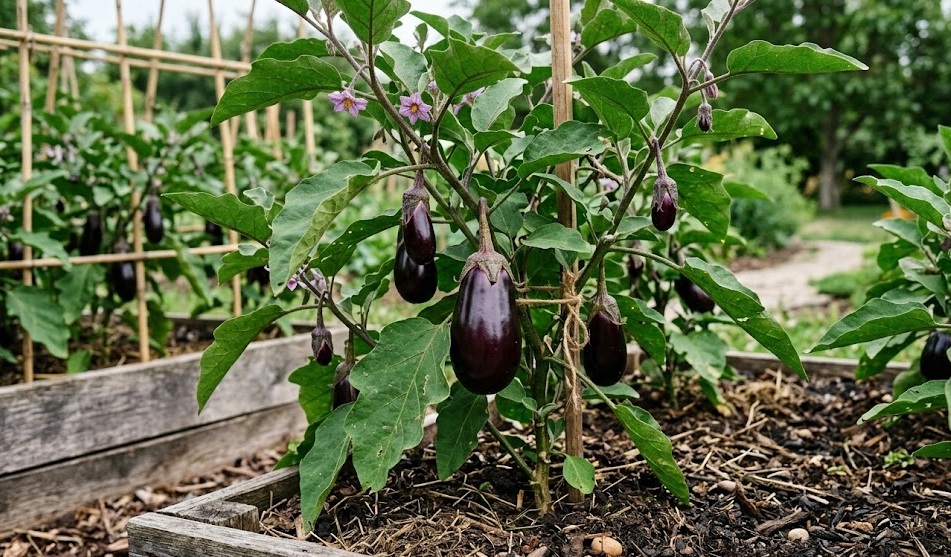
When preparing the planting holes, incorporate a generous amount of well-rotted compost or aged manure to provide a nutrient-rich base. Space the plants about forty-five to sixty centimeters apart to ensure adequate air circulation and room for the mature canopy to spread. Water the seedlings thoroughly both before and immediately after transplanting to settle the soil and reduce transplant shock. Adding a temporary shade cover for the first few days in the garden can provide an extra layer of protection during this critical adjustment period.
Alternative propagation and specialized techniques
While starting from seed is the most common method, some gardeners experiment with vegetative propagation using stem cuttings. This technique involves taking a healthy, non-flowering shoot from an existing plant and encouraging it to form new roots. While more challenging than seed starting, it can be a useful way to preserve a specific high-performing individual or extend the season. Cuttings require a very high-humidity environment and bottom heat to successfully generate a new root system from the stem tissue.
Grafting is another advanced propagation technique used primarily by commercial growers to combat soil-borne diseases and increase vigor. This involves taking a desired eggplant variety (the scion) and joining it onto a disease-resistant rootstock, often from a wild relative or a hardy tomato variety. The resulting plant combines the fruit quality of the scion with the powerful, resilient root system of the rootstock. While it requires precision and a specialized “healing chamber,” grafted eggplants often produce significantly higher yields in challenging conditions.
For those with limited space, propagating eggplants for container gardening requires selecting varieties specifically bred for smaller footprints. These “patio” varieties are often started the same way but may require earlier potting up to maintain their compact shape. When planting into containers, use a high-quality soilless mix that offers superior drainage, as pots can easily become waterlogged. Ensure the container is large enough—at least fifteen to twenty liters—to accommodate the extensive root system of a mature eggplant.
Finally, saving your own seeds is a rewarding part of the propagation cycle for those growing open-pollinated or heirloom varieties. You must allow the fruit to over-ripen on the vine until it loses its shine and turns a brownish or yellowish color. Extract the seeds, wash them thoroughly to remove any pulp, and dry them in a cool, ventilated area away from direct sunlight. Stored in a cool, dry place, these seeds can remain viable for several years, allowing you to build a local strain adapted to your specific garden conditions.