
Mastering the irrigation and nutritional requirements of potatoes is essential for anyone aiming to produce a high-quality, professional-grade harvest. Potatoes are surprisingly sensitive to fluctuations in water availability and nutrient levels, which can directly affect tuber size, shape, and internal quality. You should view watering and fertilizing as a dynamic process that evolves according to the specific growth stages of the plant. A balanced approach ensures that the potato has the energy and hydration needed to build complex starches and resist environmental stressors.
The early stages of growth require a steady but moderate supply of moisture to help the root system establish itself in the soil. You should avoid overwatering at this point, as excessively wet conditions can discourage the roots from growing deep in search of resources. However, allowing the soil to dry out completely can stunt the young sprouts and delay the development of the foliage canopy. Maintaining a consistent moisture level is the primary goal during the first few weeks after planting.
As the plant transitions into the tuber initiation and bulking phases, its demand for water increases significantly. This is the most critical time for irrigation, as any period of drought can lead to “growth cracks” or hollow hearts in the developing potatoes. You must ensure that the water penetrates deep into the soil to reach the active root zone rather than just wetting the surface. Deep, thorough watering sessions are far more effective than frequent shallow sprinkles for long-term plant health.
Fertilization should also be timed to support these different phases of the plant’s lifecycle without causing nutrient imbalances. While nitrogen is necessary for leafy growth, an excess of it late in the season can delay tuber formation and reduce the starch content. You should aim for a holistic feeding strategy that includes primary, secondary, and micronutrients to support all biological functions. Understanding the chemistry of your soil and the needs of the potato is the key to professional agricultural success.
Critical growth stages for water management
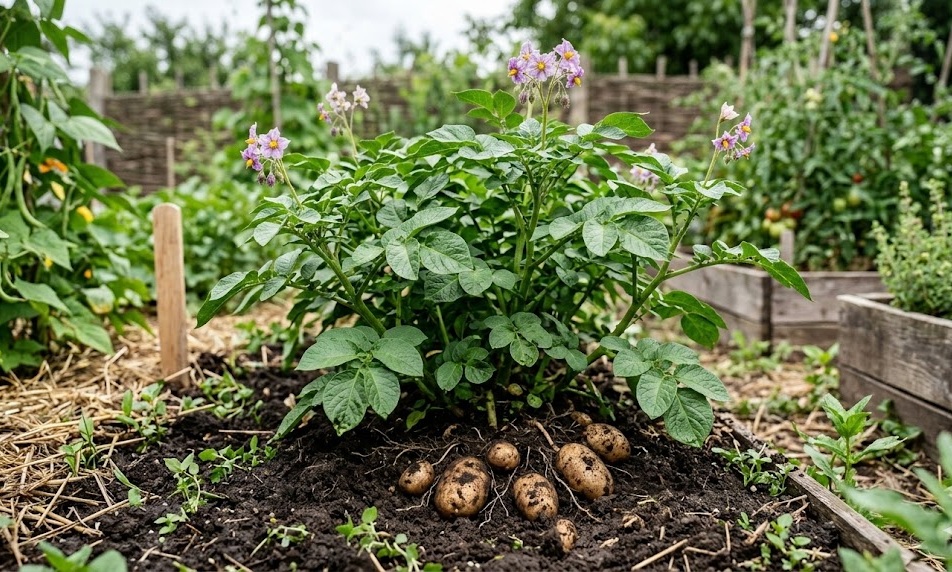
The period of tuber initiation, which usually coincides with the appearance of the first flowers, is the most sensitive time for water stress. During these two to three weeks, the plant decides how many tubers it will produce based on the available resources. You should monitor the soil moisture daily during this window and ensure that the plants never show signs of wilting. Even a few days of dry soil can drastically reduce the potential number of potatoes you will harvest later.
More articles on this topic
Once the tubers have been initiated, the plant enters the bulking stage, where the existing potatoes rapidly expand in size. This stage requires a consistent and heavy supply of water to transport the carbohydrates produced in the leaves down into the underground storage organs. You should aim to keep the soil moisture levels at approximately sixty to eighty percent of its field capacity during this time. Consistency is more important than the total volume of water, as fluctuating moisture levels cause the tubers to grow unevenly.
As the potato vines begin to turn yellow and die back, you should gradually reduce the frequency and amount of irrigation. This signal from the plant indicates that it is entering dormancy and that the tuber skins are starting to toughen up for storage. Excessive watering during this late stage can lead to lenticel enlargement, which makes the potatoes more susceptible to rot and pathogens. Stopping irrigation entirely about two weeks before harvest is a standard professional practice to improve storage longevity.
Environmental factors like wind, temperature, and sun exposure will dictate how often you need to apply water to your potato patch. On hot, breezy days, the rate of evapotranspiration increases, meaning the plants lose moisture much faster through their leaves. You should adjust your watering schedule based on these real-time conditions rather than sticking to a rigid calendar-based routine. Being responsive to the needs of the crop is what separates an expert gardener from a hobbyist.
Advanced irrigation methods for optimal results
Drip irrigation is widely considered the most efficient and professional way to water potatoes in both large and small-scale operations. This system delivers water directly to the base of the plant, minimizing evaporation and keeping the foliage dry to prevent fungal diseases. You can set these systems on timers to ensure that the plants receive a precise amount of water at the most beneficial times of day. It is an investment that pays for itself through improved yields and significantly reduced water waste.
More articles on this topic
Soaker hoses are a more accessible alternative to complex drip systems but still provide many of the same benefits for the home gardener. These porous hoses allow water to seep out slowly along their entire length, ensuring that the soil remains evenly moist without creating runoff. You should bury the soaker hoses under a layer of mulch to further reduce evaporation and keep the water targeted at the root zone. This method is particularly effective for long, straight rows of potatoes where manual watering would be tedious.
If you must use overhead sprinklers, it is crucial to time your watering sessions during the early morning hours. This allows the sun to dry the leaves quickly throughout the day, which reduces the window of opportunity for pathogens like late blight to infect the plant. Watering in the evening or at night is a common mistake that creates a humid environment perfect for mold and mildew. Always prioritize the health of the foliage when deciding how and when to apply water from above.
Regardless of the method you choose, you should periodically check the depth of water penetration by digging a small hole near your plants. The soil should be moist to a depth of at least twenty to thirty centimeters to ensure that the entire root system is being serviced. If the water is only reaching the top few centimeters, you need to increase the duration of your irrigation sessions. Understanding the physical behavior of water in your specific soil type is vital for effective management.
Nutrient requirements and NPK balance
The potato is a “heavy feeder,” meaning it extracts a significant amount of nutrients from the soil during its relatively short growing season. Nitrogen (N) is essential for the early development of strong stems and lush green foliage that powers photosynthesis. You should ensure that nitrogen is available in the early stages, but avoid over-applying it as the season progresses. Too much nitrogen late in the year will result in massive plants with very few or very small tubers.
Phosphorus (P) is the key element for root development and the initiation of tubers, making it vital during the planting phase. It helps the plant establish a robust foundation and ensures that the energy transfer processes within the cells are functioning correctly. You should incorporate phosphorus-rich amendments, like bone meal or specific mineral fertilizers, deep into the soil before planting. This ensures that the nutrient is exactly where the roots will be as they begin to grow.
Potassium (K) is perhaps the most important nutrient for the final quality and storage life of the potato tubers. It regulates water movement within the plant and is directly involved in the synthesis and transport of starches to the underground storage. High levels of potassium help the plant resist diseases and improve the thickness and durability of the potato skin. You should ensure that your fertilization program includes a significant boost of potassium during the tuber bulking phase.
Secondary nutrients like calcium and magnesium also play a critical role in preventing physiological disorders in potatoes. Calcium is necessary for cell wall strength, and a deficiency can lead to internal brown spots or poor storage qualities. Magnesium is a central component of chlorophyll, meaning it is essential for the plant’s ability to produce energy from sunlight. A professional soil test is the only way to know for sure if your garden is lacking these vital secondary elements.
Organic versus synthetic fertilizer strategies
Choosing between organic and synthetic fertilizers is a decision that depends on your specific gardening philosophy and the needs of your soil. Organic options, such as well-rotted manure, compost, and seaweed meal, focus on building long-term soil health and microbial activity. These materials release their nutrients slowly over time, providing a steady supply of food for the potatoes throughout the season. They also improve the soil’s structure and its ability to hold onto both water and air.
Synthetic fertilizers offer a more immediate and precise way to deliver nutrients to the crop, which can be useful in nutrient-poor soils. You can choose specific formulations, such as a 5-10-10 or 10-20-20 NPK ratio, to match the exact requirements of the potato plant. These products are easy to apply and provide a predictable response, which is why many commercial growers rely on them. However, you must be careful not to over-apply them, as the salts can build up in the soil and damage the roots.
Liquid fertilizers are an excellent professional tool for providing a quick boost to the plants during critical growth stages. You can use fish emulsion or compost tea as a soil drench or even as a foliar spray to bypass the soil entirely. This method is particularly helpful if you notice signs of a specific nutrient deficiency that needs immediate correction. Liquid feeding allows for a high degree of control and can be easily integrated into your regular watering routine.
Green manures and cover crops are an advanced organic strategy for preparing the soil for potatoes in the following year. Planting legumes like clover or vetch during the off-season fixes nitrogen in the soil and adds a massive amount of organic matter when tilled in. This practice reduces the need for external fertilizer inputs and creates a naturally rich environment for the next potato crop. Incorporating these natural cycles into your garden plan is a hallmark of sustainable, professional agriculture.
Foliar feeding and precision timing
Foliar feeding is a sophisticated technique where you apply dilute nutrient solutions directly to the leaves of the potato plant. The leaves can absorb many minerals more quickly than the roots, making this an ideal way to address micronutrient deficiencies. You should perform foliar sprays during the early morning or late evening when the stomata of the leaves are open. This professional intervention can provide that extra edge needed to produce prize-winning tubers or a record-breaking harvest.
The timing of your primary fertilizer applications should follow the “little and often” rule to prevent nutrient leaching and plant stress. You should apply a base layer of fertilizer at planting, followed by “side-dressing” just before the first and second hilling sessions. This ensures that the nutrients are placed near the active roots and are immediately covered by soil to prevent loss to the atmosphere. Synchronizing your feeding with the physical maintenance of the plants is highly efficient and effective.
You should always water your plants thoroughly after applying dry fertilizer to help the nutrients dissolve and move into the root zone. Applying fertilizer to dry soil can lead to “root burn,” where the high concentration of salts actually sucks moisture out of the plant. A gentle irrigation session immediately following fertilization ensures that the chemicals are safely diluted and ready for uptake. This simple step is often overlooked by amateurs but is standard practice for professional growers.
Finally, you should stop all fertilization at least four to six weeks before you plan to harvest your potatoes. Late-season feeding can lead to regrowth of the foliage, which distracts the plant from the essential task of maturing its tubers. Allowing the nutrient levels to naturally decline encourages the plant to finish its lifecycle and move into the dormancy phase. Respecting the natural rhythms of the plant ensures that your potatoes are chemically and biologically ready for the cellar.