
Providing the right amount of moisture and nutrients is the foundation of a professional approach to maintaining these beautiful and productive shrubs. You will find that while they are relatively drought-tolerant once established, their fruit production depends heavily on consistent care. Your goal should be to create a stable environment where the roots never experience extreme stress from lack of water or food. A balanced watering and fertilizing schedule ensures that your plants remain vibrant and healthy through every season.
The first few years of the plant’s life are the most critical for establishing a deep and resilient root system in your garden. You should water young shrubs frequently during their first two growing seasons to ensure that the soil around the root ball stays consistently damp. This regular hydration allows the roots to expand quickly into the surrounding earth and anchor the plant firmly against the wind. Providing this early support is a professional investment that pays off in the long-term vitality of the specimen.
You must pay close attention to the weather patterns in your area and adjust your watering schedule according to the temperature and rainfall. During periods of intense heat and low humidity, the plant will lose moisture rapidly through its leaves and will need extra support from you. You should aim to water deeply and thoroughly rather than providing shallow, frequent sprinkles that only wet the surface of the soil. Deep watering encourages the roots to grow further down into the earth, where they are better protected from the heat.
Mulching plays a vital role in your watering strategy by significantly reducing the rate of evaporation from the soil surface. You should maintain a thick layer of organic material around the base of the plant to help keep the root zone cool and moist. This practice not only saves water but also creates a more consistent environment that prevents the fruit from splitting due to sudden moisture changes. A well-mulched plant is much more capable of thriving during the challenging summer months without constant intervention.
Mature tree irrigation
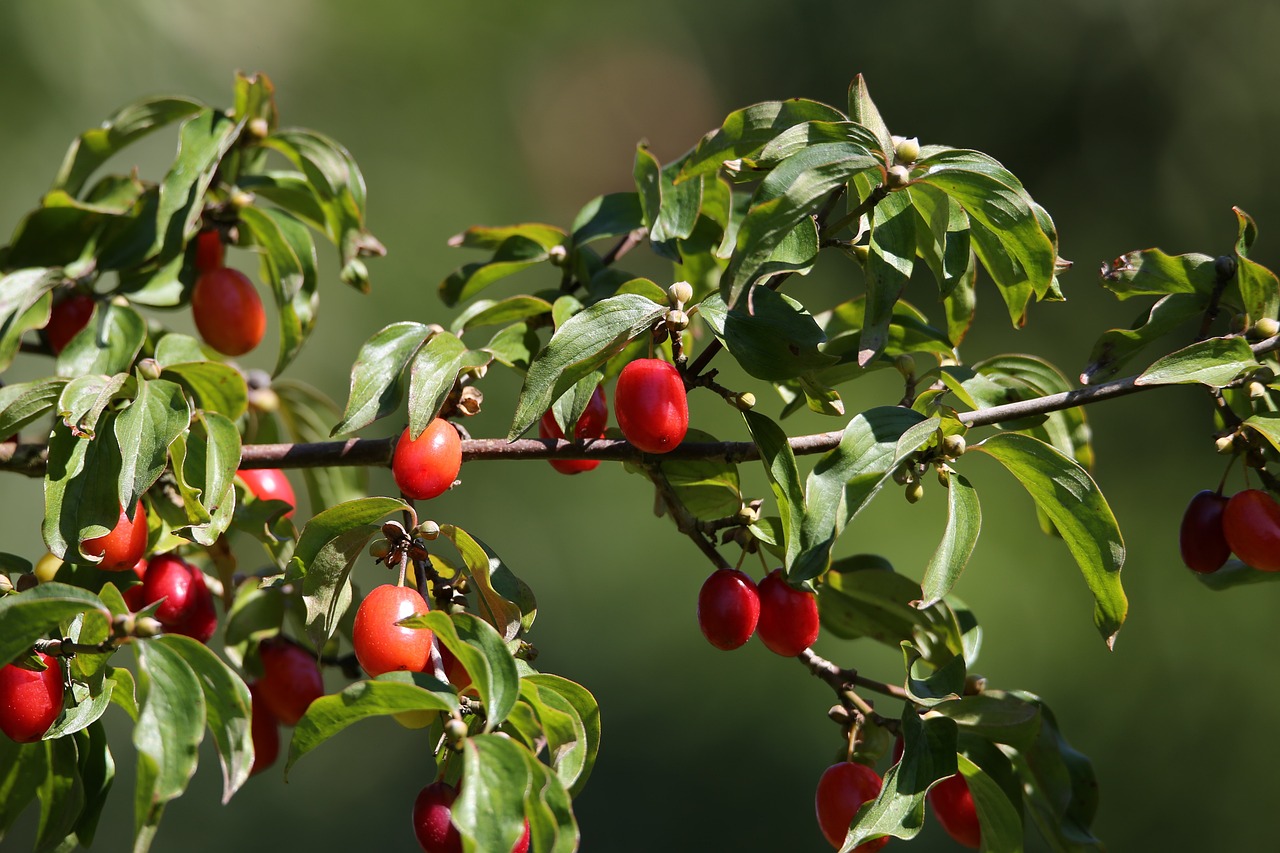
As the shrub matures and its root system becomes fully established, its need for constant supplemental watering will naturally decrease. You can then transition to a more strategic irrigation schedule that focuses on the most critical phases of the plant’s annual cycle. The period from flowering to fruit ripening is when the cornelian cherry requires the most consistent access to ground moisture. Providing adequate water during this time ensures that the berries grow to their full size and develop a rich, complex flavor profile.
More articles on this topic
You should monitor the soil moisture at a depth of about ten centimeters to determine when it is truly time to provide extra water. If the soil feels dry at this level, it is a clear sign that the plant needs a deep soaking to replenish its internal reserves. You will find that a thorough watering once every week or two during the height of summer is usually sufficient for mature specimens. This approach mimics the natural deep-soil moisture that the plant would find in its native forest habitats.
Drip irrigation systems are a professional and efficient way to deliver water directly to the root zone without wasting a single drop. You can set these systems on a timer to ensure that the plant receives a precise amount of water at the coolest times of the day. This method also keeps the foliage dry, which is an important step in preventing the spread of fungal diseases on the leaves. Investing in a good irrigation setup saves you time and ensures the best possible results for your garden.
In the late autumn, you should gradually reduce the amount of water you provide as the plant prepares to enter its winter dormancy. This reduction helps the wood to harden properly and signals to the plant that it is time to slow down its metabolic processes. You should still ensure that the soil is not completely dry before the ground freezes for the winter, as some moisture is needed to protect the roots. A professional gardener always thinks one season ahead when managing the hydration of their plants.
Organic fertilizers
Feeding your cornelian cherry with organic materials is the best way to support long-term soil health and plant productivity in your garden. You should focus on building a rich, living soil that provides a steady stream of nutrients to the roots throughout the growing season. Applying a layer of high-quality compost or well-rotted manure every spring is an excellent way to replenish the earth’s natural reserves. This slow-release approach ensures that the plant has access to what it needs without the risk of nutrient leaching.
More articles on this topic
You can also use organic liquid feeds, such as seaweed extract or compost tea, to provide a quick boost of energy during the peak growing periods. These supplements are easily absorbed by the roots and the leaves, providing essential micronutrients that are often missing from standard garden soils. Applying these feeds once every few weeks in the late spring and early summer can significantly improve the health and appearance of the foliage. This natural enhancement supports the plant’s own immune system and increases its resistance to various environmental stressors.
It is important to avoid over-fertilizing with high-nitrogen products, as this can lead to excessive leaf growth at the expense of fruit production. You want a balanced approach that encourages the plant to put its energy into developing strong branches and a heavy crop of berries. Watching the growth pattern of your shrub will tell you if you are providing the right amount of nutrients for its specific needs. A professional touch is about finding the perfect balance that promotes healthy, sustainable growth over many years.
Mulching with nutrient-rich materials like alfalfa pellets or shredded leaves also contributes to the fertility of the soil as they decompose. You are essentially creating a self-sustaining cycle where the waste products of the garden are turned back into food for the plants. This holistic approach reduces your reliance on external inputs and creates a more resilient and natural garden environment for your shrubs. Over time, you will see the benefits of this organic strategy in the vibrant color and heavy harvests of your cornelian cherry.
Mineral supplements
Sometimes, even the best organic practices need to be supplemented with specific minerals to address unique soil deficiencies in your local area. You should conduct a professional soil test every few years to identify exactly which elements might be lacking in your garden. The cornelian cherry is a calcicole plant, which means it thrives in soils that are rich in calcium and have a slightly higher pH. Adding lime or crushed eggshells can help create the alkaline conditions that this species prefers for its best performance.
Potassium is another essential mineral that plays a crucial role in the development of high-quality fruit and the hardening of the wood for winter. You can provide this element through organic sources like wood ash or specialized mineral fertilizers if your soil test indicates a significant deficiency. Ensuring adequate potassium levels will result in sweeter fruit and a plant that is much better at surviving cold temperatures. This attention to mineral balance is what separates an expert grower from a casual gardener.
Magnesium is often the missing piece of the puzzle when it comes to maintaining the dark green, healthy appearance of the leaves. If you notice yellowing between the veins of the older leaves, it might be a sign that the plant is struggling to find enough magnesium in the soil. Epsom salts dissolved in water can be used as a quick foliar spray to correct this issue and restore the plant’s health. Addressing these specific mineral needs ensures that every part of the shrub is functioning at its absolute best.
You should always apply mineral supplements with care and follow the recommendations of your soil test to avoid creating new imbalances. Adding too much of one element can sometimes prevent the plant from absorbing others, leading to complex nutritional problems that are hard to solve. A professional approach involves precise applications and careful monitoring of the plant’s reaction to each change you make in the garden. Your goal is to provide a complete and balanced diet that supports every aspect of the plant’s life.
Drought and stress management
In an era of changing weather patterns, knowing how to manage your plants during extreme drought is a vital skill for any gardener. You should prioritize your watering efforts during these times to ensure that the core health of the shrub is protected even if the fruit crop is reduced. Deep mulching and wind protection can significantly reduce the amount of stress the plant experiences during a prolonged dry spell. A proactive approach to stress management can save a mature specimen from permanent damage during a difficult summer.
If the plant begins to show signs of severe wilting or premature leaf drop, it is a clear signal that it has exhausted its internal water reserves. You should respond by providing a slow, deep soaking that reaches the deepest parts of the root system without running off the surface. It might also be helpful to prune away some of the non-essential growth to reduce the amount of foliage the plant needs to support. These emergency measures can help the shrub survive until the rains return and the temperatures cool down.
During periods of high stress, you should avoid applying heavy fertilizers, as the plant does not have the energy to process new nutrients effectively. Instead, focus purely on hydration and protection until the plant shows signs of recovery and new, healthy growth begins to appear. You will find that the cornelian cherry is remarkably resilient and can often bounce back from significant stress if given the right support. Your role as a professional is to be the steady hand that guides the plant through these challenging times.
Finally, observing how different specimens in your garden react to drought can help you make better planting decisions in the future. You might notice that certain varieties or locations are much better at handling heat and low moisture than others. This knowledge allows you you to refine your garden design and care routines to create a more sustainable and low-maintenance landscape. Professional gardening is a continuous process of learning from the plants themselves and adapting your techniques to meet their needs.