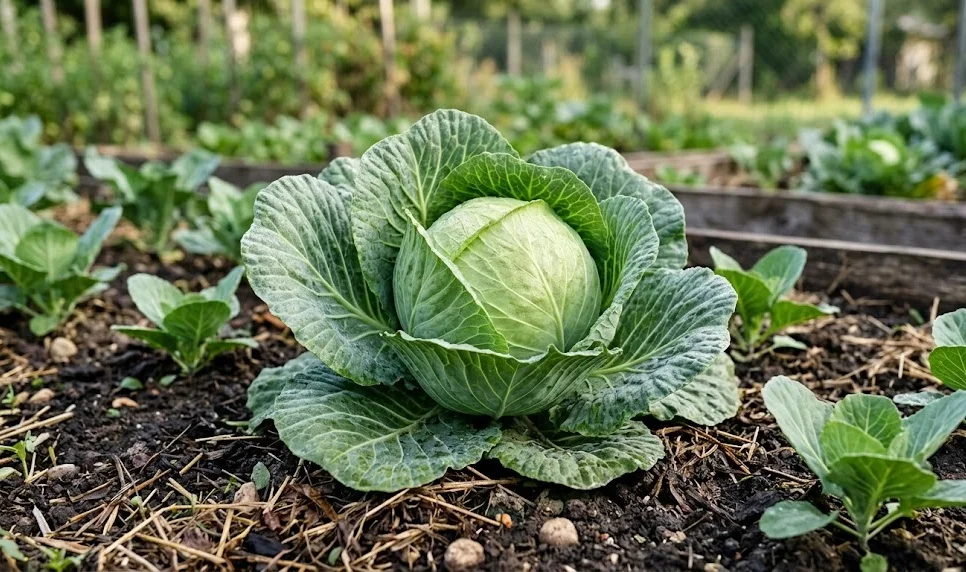

Watering is perhaps the most critical daily task in the management of a cabbage crop, as these plants are composed primarily of water and require a consistent supply to remain healthy. You must aim to keep the soil moisture levels even, avoiding the cycle of extreme drying followed by heavy saturation which can cause the heads to split. A deep, thorough soak that reaches the lower root zone is much more effective than frequent light sprinklings that only wet the surface. This professional approach to hydration ensures that the plant can maintain the internal pressure necessary for steady leaf development and structural integrity.
During the early stages of growth, the young cabbage plants are particularly vulnerable to drought, which can permanently stunt their development and lead to poor yields. You should check the soil moisture every morning by feeling the earth a few centimeters below the surface to see if it remains cool and damp. If the soil feels dry or dusty, it is time to intervene with a targeted application of water at the base of each plant. This early attention to detail builds a resilient root system that will be better equipped to handle the heat of mid-summer.
As the weather warms up, the rate of transpiration increases significantly, and the large leaves of the cabbage act like solar panels that pull moisture out of the ground. You might notice the leaves wilting slightly during the peak of the afternoon, which is a natural defense mechanism, but they should recover quickly as the sun goes down. If the plants remain wilted in the evening, it is a clear sign that the water supply is insufficient for the current demand. Adjusting your watering volume based on these visual cues is a skill that comes with experience and careful observation of your garden.
Drip irrigation systems are highly recommended for cabbage because they deliver water directly to the soil without wetting the foliage, which reduces the risk of disease. You can set these systems on a timer to ensure that the garden receives its hydration at the optimal time, usually in the late evening or very early morning. This efficiency not only saves water but also ensures that every plant gets a uniform amount, leading to a more consistent harvest across the entire bed. Investing in high-quality irrigation is a hallmark of a professional-level agricultural operation, even on a small garden scale.
Establishing a professional fertilization schedule
Fertilizing cabbage requires a balanced approach that provides the necessary nutrients without overwhelming the soil or causing excessive, weak growth. You should begin by incorporating a high-quality organic compost into the bed before planting to establish a baseline of fertility and improve soil structure. This slow-release source of nutrients provides the fundamental building blocks that the cabbage will draw upon during its first few weeks of life. A well-prepared bed reduces the need for heavy chemical interventions later in the season, which is better for the long-term health of your garden.
More articles on this topic
Once the cabbage has established itself and begins to grow rapidly, it will benefit from a supplemental application of nitrogen-rich fertilizer to support leaf production. You can use a side-dressing of well-rotted manure or a specialized organic liquid feed every three to four weeks during the active growth phase. It is important to apply these nutrients a few centimeters away from the stem to avoid burning the delicate tissues of the plant. Watching the leaves turn a vibrant, deep green will confirm that your fertilization strategy is working as intended.
The transition from leaf growth to head formation is a critical moment when you should shift your focus toward minerals that support structural density and flavor. Phosphorus and potassium become more important at this stage, helping the plant to build a solid core and resist environmental stressors. You might consider using a wood ash tea or a kelp-based fertilizer to provide these essential elements along with a wide range of trace minerals. This professional refinement of your nutrient inputs ensures that the final product is not only large but also packed with nutrition and superior taste.
It is vital to avoid over-fertilizing with nitrogen as the head nears maturity, as this can lead to “loose” heads that do not store well and are more attractive to pests. You should monitor the growth rate and stop all heavy fertilization about three weeks before your expected harvest date. This allows the plant to finish its development naturally and results in a more stable and high-quality vegetable for your kitchen. Keeping a detailed log of what you applied and when will help you create a perfect fertilization roadmap for your future cabbage crops.
Understanding soil pH and mineral availability
The availability of nutrients in your soil is heavily influenced by the pH level, and cabbage has a specific range where it performs at its absolute best. You should aim for a soil pH between six point five and seven point zero, which is slightly acidic to neutral, to ensure that all essential minerals are chemically accessible to the roots. If your soil is too acidic, you can apply garden lime in the fall to gradually raise the pH and create a more hospitable environment for the next season. Maintaining this chemical balance is a professional technique that prevents mysterious nutrient deficiencies even when the soil is rich in organic matter.
More articles on this topic
In soils that are too alkaline, certain micronutrients like iron and manganese can become locked away, leading to yellowing between the leaf veins. You can correct this by adding elemental sulfur or using acidifying organic mulches like pine needles to slowly bring the pH down over time. It is a good practice to perform a professional soil test every two years to get an accurate reading of your pH and nutrient levels. This data-driven approach removes the guesswork from your gardening and allows you to make precise adjustments that directly benefit your cabbage.
Cabbage is also particularly sensitive to boron deficiency, which can cause the center of the stem to turn brown and hollow out. If you suspect this issue, a very dilute application of borax dissolved in water can provide a quick fix, but you must be extremely careful with the dosage as boron can be toxic in high amounts. Most healthy, compost-rich soils will not have this problem, but it is something to watch for in sandy or heavily leached garden beds. Understanding these subtle mineral requirements is what separates an expert grower from a casual hobbyist.
Finally, the health of the soil’s microbial life is just as important as the chemical balance for nutrient uptake. You should avoid over-tilling and the use of harsh synthetic chemicals that can kill the beneficial fungi and bacteria that help the cabbage roots absorb minerals. By fostering a living soil, you create a partnership between the plant and its environment that results in a more resilient and productive crop. A professional gardener views the soil not just as dirt, but as a complex biological system that needs to be nurtured and respected.
Managing moisture in different weather conditions
Managing the water requirements of your cabbage means you must be ready to adapt your routine as the weather shifts from cool spring days to the intense heat of summer. During periods of heavy rain, your primary concern should be ensuring that the soil drains well so that the roots do not sit in stagnant water, which can lead to rot. You might consider planting in raised beds if your garden is prone to flooding, as this provides better control over the drainage and oxygen levels in the root zone. Being proactive about drainage is just as important as knowing when to add water during a drought.
When a heatwave is forecasted, you should increase your watering frequency but maintain the depth of each application to ensure the moisture reaches the bottom of the root system. Mulching becomes your best ally during these times, as it reflects heat away from the ground and slows the rate of evaporation significantly. You can also use temporary shade structures to reduce the sun’s intensity, which in turn lowers the plant’s water demand and prevents thermal stress. These extra steps during extreme weather can be the difference between a successful harvest and a total crop failure.
In the late summer, as the nights begin to cool, the cabbage’s water needs will naturally decrease, and you should adjust your irrigation schedule accordingly. Over-watering during this period can lead to the heads absorbing too much moisture too quickly, resulting in the outer leaves bursting or splitting. You should aim for a “steady state” where the soil is consistently moist but never soggy as the heads reach their final size. This refined control over hydration during the final weeks of growth ensures that the cabbage remains in peak condition for the harvest.
Tracking the rainfall in your garden using a simple rain gauge is a professional habit that prevents you from over-watering or missing a critical dry spell. You should record the weekly precipitation and compare it to the estimated needs of your plants, which for cabbage is usually about two to three centimeters per week. This disciplined monitoring allows you to supplement the natural rainfall with precision, ensuring that the moisture levels remain perfectly balanced throughout the season. Consistency is the key to producing professional-grade vegetables in any climate.
Enhancing nutrition through organic amendments
Using organic amendments is the most sustainable way to build a nutrient-rich environment that supports the heavy feeding habits of a cabbage crop. You should consider using cover crops like clover or vetch during the off-season to naturally fix nitrogen into the soil and improve the overall organic content. Turning these green manures into the earth a few weeks before planting provides a massive boost of bioavailable nutrients for your future cabbage seedlings. This “living fertilizer” strategy is a professional-grade technique that reduces your reliance on external inputs and builds long-term soil health.
Liquid organic fertilizers, such as compost tea or diluted fish emulsion, are excellent for providing a quick nutrient boost during critical growth periods. You can apply these directly to the soil or as a foliar spray, allowing the large cabbage leaves to absorb the minerals through their stomata. This direct delivery system is particularly useful if the plants appear a bit pale or if you need to correct a minor deficiency quickly. It is a flexible and effective way to fine-tune your nutrient management throughout the entire life cycle of the plant.
Regularly adding high-quality compost to your garden beds also improves the soil’s ability to hold onto both water and nutrients, creating a more stable environment for your crops. You should aim for a compost that is fully decomposed and smells like rich earth, ensuring that it is free from pathogens or weed seeds that could harm your garden. This ongoing investment in soil quality pays dividends not just for your current cabbage crop, but for every plant you grow in that space in the future. A professional gardener knows that the best fertilizer is often the one you make yourself from garden waste and kitchen scraps.
Finally, understanding the timing of nutrient release from different organic sources will help you plan your fertilization schedule with greater precision. For example, bone meal provides a slow-release source of phosphorus that is best applied early in the season, while blood meal offers a much faster hit of nitrogen. By combining different amendments based on their release rates, you can create a continuous supply of nutrition that matches the changing needs of the cabbage as it grows. This sophisticated approach to fertilization is the hallmark of a truly expert and professional grower.