
Properly managing moisture and nutrients is the cornerstone of maintaining a healthy and floriferous display of these alpine perennials. While they are relatively adaptable, their specific needs for consistent hydration and balanced feeding must be met to avoid stress. In a garden environment, we aim to replicate the natural conditions of their mountain origins where water is plentiful but never stagnant. Achieving this balance requires a keen eye and a professional approach to seasonal adjustments and soil management.
Watering is perhaps the most critical task during the first growing season after planting to help the root system establish itself. Once the plants are settled, they exhibit a moderate level of drought tolerance, but they will always perform better with regular moisture. The goal is to keep the soil surface damp to the touch without allowing it to become a muddy slurry. Understanding the relationship between soil type and water retention will help you develop a perfect schedule.
Fertilization should be handled with a “less is more” philosophy to prevent excessive foliage growth that can mask the flowers. These plants are accustomed to mineral-rich but relatively lean soils in the wild, so over-feeding can actually be detrimental to their structure. A well-timed application of the right nutrients can enhance the intensity of the flower color and the strength of the stems. By observing the plant’s growth rate and color, you can tailor your fertilization strategy to its specific needs.
Ultimately, the synergy between water and nutrients determines the overall vigor and longevity of your garden specimens. A plant that is stressed by thirst will not be able to take up the minerals it needs, regardless of how much fertilizer you apply. Conversely, a waterlogged plant will suffer from root damage that prevents it from utilizing any available nutrients. Professional care involves monitoring both factors simultaneously to ensure a stable and supportive growing environment.
Principles of effective hydration
The best time to water these perennials is in the early morning before the sun reaches its full strength. This allows the foliage to dry out quickly, which is a key factor in preventing fungal infections on the leaves. Watering at the base of the plant rather than from overhead is a professional technique that delivers moisture exactly where it is needed. This method also conserves water by reducing evaporation and ensures the deep roots are reached.
More articles on this topic
During periods of active growth and flowering, the water demand of the plant increases significantly. You should monitor the soil moisture daily during heatwaves, as these low-growing plants can dry out quickly due to their shallow root systems. If you notice the foliage beginning to lose its turgidity or looking slightly dull, it is an immediate signal that water is needed. A deep soaking is always more effective than frequent, shallow sprinklings which only encourage roots to stay near the surface.
In the autumn, as the plant begins to prepare for dormancy, the frequency of watering can be gradually reduced. However, it is important not to let the soil dry out completely before the ground freezes for the winter. Maintaining a baseline of moisture in the soil helps protect the roots from extreme temperature fluctuations during the cold months. This late-season hydration is often overlooked but is vital for a successful spring awakening.
Soil drainage plays an equal role in the hydration equation, as it determines how long the water remains available to the roots. In gardens with heavy soil, you may need to water less frequently but more intensely to ensure deep penetration. Adding organic matter to the soil can improve its water-holding capacity while still allowing excess moisture to drain away. This creates a “sponge-like” effect that provides a consistent supply of water to the plant without the risk of rot.
Nutritional requirements and timing
Fertilizing should ideally begin in the early spring as soon as you see the first signs of green growth emerging from the crown. A balanced, slow-release granular fertilizer is usually the best choice for providing a steady stream of nutrients over several months. This avoids the “spike and crash” effect of quick-release liquid fertilizers which can cause soft, weak growth. Look for a formula with an equal ratio of nitrogen, phosphorus, and potassium for general health.
More articles on this topic
If you prefer organic methods, a thin layer of well-rotted compost or leaf mold applied in the spring can provide all the nutrients necessary. This not only feeds the plant but also improves the microbial life in the soil, which helps the plant’s roots absorb minerals more efficiently. Organic amendments also help maintain the slightly alkaline to neutral pH that these flowers prefer. Avoid using fresh manure, as the high ammonia content can burn the delicate roots and foliage.
As the plant enters its peak blooming phase in mid-summer, a light application of a potassium-rich fertilizer can help sustain the flower production. Potassium is essential for water regulation within the plant and supports the development of strong cell walls. This can be particularly helpful if you have trimmed the plants back to encourage a second flush of blooms. Always water the plants thoroughly after applying any fertilizer to help wash the nutrients down to the root zone.
Stop all fertilization by late summer to allow the plant to naturally slow its growth in preparation for the winter. Providing nutrients too late in the season can stimulate new, tender growth that will be easily damaged by the first frost. The goal is to have a sturdy, well-fed plant that enters dormancy with plenty of stored energy in its roots. This professional timing ensures that the plant remains hardy and resilient against the coming cold.
Signs of over and under watering
Recognizing the visual cues of water stress is a skill that every dedicated gardener should develop. Under-watered plants will often show wilting, especially in the heat of the afternoon, and the leaves may start to turn brown and crispy at the edges. The flowers will also fade much faster than usual, and new buds may fail to open and instead drop off the plant. These are clear signs that your irrigation routine needs to be increased immediately.
Over-watering can be more deceptive because its initial symptoms can sometimes look like wilting. However, instead of dry and crispy leaves, the foliage will often appear yellow, soft, and somewhat translucent. If the soil remains saturated for too long, the roots will begin to rot, and the entire plant may eventually collapse and die. Feeling the soil a few inches below the surface is the most reliable way to determine if the plant actually needs water.
A plant that is consistently over-watered may also develop a weak, sprawling habit as it struggles to find oxygen in the waterlogged soil. You might see moss or algae growing on the soil surface around the base of the plant, which is a sure sign of poor drainage. In such cases, it may be necessary to lift the plant and improve the soil structure before replanting. Correcting drainage issues is a long-term solution that is far better than simply reducing the amount of water applied.
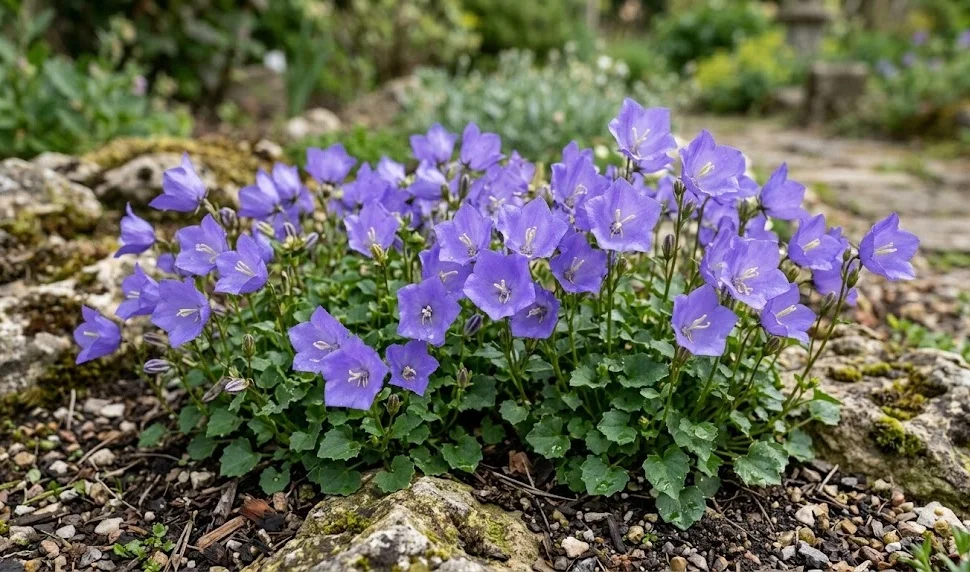
Consistent monitoring and quick response to these signs will keep your bellflowers in peak condition. It is helpful to keep a garden journal to note how the plants react to different weather conditions and watering schedules. Over time, you will learn to anticipate the needs of your plants based on the look of their foliage and the feel of the soil. This intuitive understanding is what separates a professional gardener from a casual hobbyist.
Fertilizer types and application methods
There are several types of fertilizers available, and choosing the right one depends on your garden’s specific needs and your personal preference. Granular fertilizers are popular because they are easy to apply and provide long-lasting nutrition with minimal effort. You simply scatter the granules around the base of the plant and lightly scratch them into the soil surface. This method is ideal for established borders where you want a “set it and forget it” solution.
Liquid fertilizers are useful when you need to give a quick boost to a plant that is looking a bit pale or struggling to bloom. Because the nutrients are already dissolved, they are immediately available to the roots for rapid uptake. This can be a great way to support container-grown plants which have a limited volume of soil to draw from. However, be careful not to overdo it, as the effects are temporary and frequent applications are required.
Foliar feeding, where you spray a diluted nutrient solution directly onto the leaves, is another specialized technique. This can be helpful for delivering micronutrients like iron or magnesium if the soil pH is slightly off and blocking root uptake. However, for these perennials, root-zone fertilization is generally more effective and less likely to cause leaf scorch. Always follow the manufacturer’s instructions for dilution to avoid damaging the delicate plant tissues.
No matter which type you choose, the method of application is just as important as the product itself. Never apply fertilizer to bone-dry soil, as this can lead to root burn; always ensure the plant is well-hydrated first. Keep the fertilizer away from the direct center of the crown to prevent rot or chemical damage to the new shoots. Professional application ensures that the plant receives all the benefits of the nutrients without any of the risks.
Adjusting for seasonal and local conditions
The local climate and the specific microclimate of your garden will dictate how you should manage water and nutrients. In regions with frequent rainfall, you may rarely need to supplement the water, but you might need to fertilize more often as nutrients are leached away. Conversely, in arid climates, your focus will be almost entirely on maintaining adequate moisture levels throughout the long summer. Adapting your care routine to the reality of your environment is a key professional skill.
Sandy soils drain very quickly and do not hold onto nutrients well, necessitating more frequent watering and light, regular fertilization. Clay soils hold onto both water and nutrients for much longer, so you must be very careful not to over-water or over-fertilize. Understanding your soil texture allows you to work with your garden rather than against it. A simple soil test can provide invaluable information about what is already present in your earth and what needs to be added.
Seasonal changes also require a shift in your approach to care as the daylight hours and temperatures fluctuate. In the spring, the focus is on growth and energy, while the summer is all about maintaining the bloom and managing heat stress. The autumn is a time for stabilization and preparation for the dormant period when the plant’s metabolic rate slows down. By following the natural rhythm of the seasons, you support the plant’s biological cycle and ensure its long-term health.
Finally, keep in mind that every plant is an individual and may react differently to your care routine. What works for a bellflower in a sunny, windswept rock garden might not be appropriate for one in a sheltered, woodland-edge border. Pay attention to the specific needs of each plant and be willing to adjust your methods as you gain more experience. This personalized approach is what truly makes a garden flourish and brings professional-level results to your outdoor space.