
Achieving the perfect balance of moisture and nutrients is essential for the health of lamb’s ear, a plant that evolved for survival in rugged conditions. Unlike many garden favorites that require constant pampering, this silver-leaved perennial actually performs better when managed with a degree of restraint. Over-watering and over-feeding are common pitfalls that can lead to the decline of an otherwise healthy patch. Understanding the professional nuances of hydration and nutrition will help you maintain the plant’s characteristic texture and resilience.
Understanding water needs and drought tolerance
The lamb’s ear is highly regarded for its exceptional drought tolerance, which is a result of the dense hairs covering its leaves. These hairs trap a layer of air against the leaf surface, reducing moisture loss through evaporation during hot weather. Consequently, once the plant is established, it requires very little supplemental watering in most temperate climates. It is far more likely to suffer from excessive moisture than from a temporary lack of water.
In a garden setting, you should only reach for the watering can when the soil feels dry several inches below the surface. During extended periods of dry weather, the plant may begin to wilt slightly as a defense mechanism, but it usually recovers quickly once hydrated. You should observe the plant’s behavior during heatwaves to determine if intervention is truly necessary. Many experienced gardeners find that the natural rainfall in their region is sufficient for this plant’s needs throughout the growing season.
Newly planted lamb’s ear is the only exception to this hands-off approach, as it needs regular moisture to establish its root system. For the first few weeks after planting, check the soil daily and provide enough water to keep the root zone slightly moist. Once you see new growth emerging, you can gradually reduce the frequency of watering as the plant becomes more self-sufficient. This transition period is vital for building the deep roots that will eventually provide the plant’s drought resistance.
The danger of over-watering cannot be overstated, particularly in areas with poor soil drainage or high humidity. Saturated soil prevents oxygen from reaching the roots, which can lead to rapid decay and the death of the plant. If you notice the leaves turning yellow or feeling mushy at the base, it is an immediate sign that the soil is too wet. In such cases, the best course of action is to stop watering entirely and allow the ground to dry out completely.
More articles on this topic
Proper watering techniques for foliage health
When you do need to water your lamb’s ear, the method you use is just as important as the amount of water provided. The silver, woolly leaves are designed to shed water, but the dense hairs can also trap moisture if they become saturated. To avoid problems, you should always apply water directly to the soil at the base of the plant rather than using a sprinkler. This keeps the foliage dry and prevents the environment that encourages fungal growth and rot.
Watering in the early morning is the most effective strategy for maintaining a healthy garden environment. This allows any accidental moisture on the leaves to evaporate quickly as the sun rises and the temperature increases. Avoid watering in the evening, as damp foliage sitting in cool night air is a primary cause of many plant diseases. By timing your hydration correctly, you are working with the natural cycle of the plant to minimize stress and maximize health.
If your garden uses an automated irrigation system, ensure that the lamb’s ear is not located directly in the path of a high-pressure spray. Drip irrigation or soaker hoses are much better alternatives for this plant, as they deliver water slowly and precisely to the roots. You should also check that other, more water-thirsty plants are not sharing the same irrigation zone as your lamb’s ear. Grouping plants with similar water requirements together, a practice known as hydrozoning, is a hallmark of professional garden design.
In very humid climates, you may need to be even more cautious with your watering routine. The ambient moisture in the air can be enough to sustain the plant, and any additional water might push it toward fungal issues. If the weather is consistently muggy, it is better to err on the side of caution and let the plant go thirsty for a day or two. Your goal is to keep the crown of the plant as dry and airy as possible throughout the entire year.
More articles on this topic
Fertilizer requirements and growth control
Lamb’s ear is a plant that thrives in lean soil and generally does not require a regular fertilization schedule. In fact, applying too much fertilizer can be counterproductive, leading to excessive foliage growth that lacks structural integrity. When the plant grows too quickly, the leaves may become larger but less silver, and the stems can become floppy and prone to breaking. For most garden soils, the natural nutrient content is more than enough to support healthy development.
If you feel your soil is extremely depleted, a single application of a balanced, slow-release fertilizer in early spring can be beneficial. Look for a formula that does not have an excessively high nitrogen content, as nitrogen specifically promotes the kind of soft growth you want to avoid. A light top-dressing of well-rotted compost around the base of the plant can also provide a gentle nutrient boost. This organic approach improves the soil structure while delivering minerals at a pace the plant can handle.
You should avoid fertilizing the plant during the summer or autumn, as this can stimulate new growth that won’t have time to harden off before winter. Late-season fertilization makes the plant more vulnerable to frost damage and can disrupt its natural dormancy cycle. Consistency is not about frequent feeding but about providing a stable environment where the plant can grow at its own natural pace. Professional gardeners often find that “less is more” when it comes to nourishing this particular species.
Observation is your best guide when deciding whether to add nutrients to your garden beds. If your lamb’s ear is producing vibrant silver leaves and spreading steadily, it is a clear sign that the soil is providing everything it needs. On the other hand, if the growth is stunted and the color is pale despite proper light and water, a soil test might be in order. Only add what is missing, and always follow the application instructions on any product you choose to use.
Balancing nutrients for optimal color
The iconic silver color of the lamb’s ear is directly influenced by its health and the balance of minerals in the soil. While the plant isn’t picky, certain micronutrients play a role in the development of the leaf hairs that create the silver sheen. Ensuring that your soil has a healthy biological life can help make these minerals more available to the plant’s roots. Avoiding heavy chemical use in the garden supports the natural soil ecosystem that these plants depend on.
If you notice that the silver color is fading even in full sun, it might be due to an imbalance of nutrients. Sometimes, an excess of one mineral can block the uptake of another, leading to subtle changes in foliage appearance. Rather than adding more fertilizer, try incorporating a small amount of mineral-rich rock dust or seaweed meal to provide a broad range of trace elements. These natural amendments are less likely to cause the growth spurts associated with synthetic fertilizers.
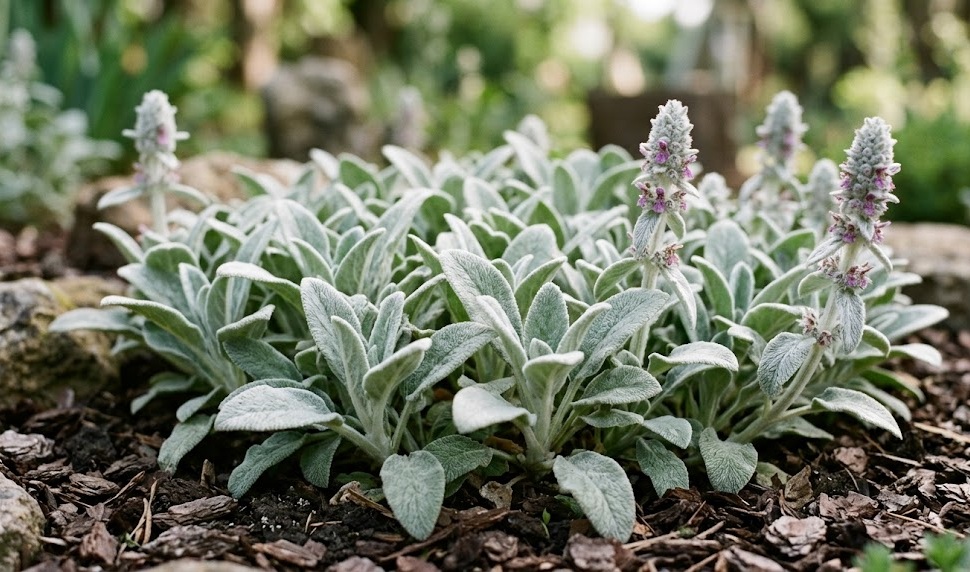
The physical appearance of the leaves is a direct reflection of the plant’s internal chemistry and environmental conditions. Healthy leaves should be thick, soft, and covered in a dense layer of fine white hairs. If the leaves appear thin or the hair coverage is sparse, it could indicate that the plant is under stress from its feeding routine. Adjusting your approach to be more minimalist often results in a visual improvement within a few weeks.
Remember that the goal of fertilization in a professional landscape is to support the plant’s natural form, not to force it into unnatural sizes. A lamb’s ear that is over-fed will lose the tight, carpet-like habit that makes it so useful as a groundcover. By keeping the nutrient levels moderate, you ensure that the plant remains compact and visually striking. This restraint is what allows the plant’s natural beauty to shine through without the need for constant correction.
Avoiding common mistakes in hydration and feeding
One of the most frequent errors made with lamb’s ear is treating it like a typical bedding plant that needs daily attention. Many people mistakenly water it every time they water their flowers, which quickly leads to the plant’s demise. You must learn to ignore the plant occasionally and trust in its ability to handle dry conditions. This shift in mindset is often the hardest part for new gardeners to master when dealing with Mediterranean-style plants.
Another common mistake is applying liquid fertilizers directly onto the woolly foliage, which can cause unsightly burning or spotting. The delicate hairs are sensitive to the salts found in many fertilizers and can be permanently damaged by direct contact. Always pull back the leaves and apply any products directly to the soil surface to protect the plant’s aesthetic value. This careful application ensures that the nutrients go exactly where they are needed without harming the visible parts of the plant.
Over-mulching with materials that retain water right up against the plant’s crown is a recipe for disaster. While mulching is generally good for the garden, you must leave a clear space around the base of the lamb’s ear to allow for air exchange. If the mulch is too thick or too wet, it acts as a sponge that keeps the plant’s base in a constant state of dampness. Using a thin layer of grit or pea gravel is a professional alternative that provides the benefits of mulch without the risks.
Lastly, do not feel pressured to feed the plant just because it is the “season” to do so for other garden inhabitants. Each plant in your landscape has its own rhythm and requirements, and the lamb’s ear is a champion of self-sufficiency. By respecting its preference for lean conditions and moderate water, you will be rewarded with a healthy, beautiful display. Professional success with this plant comes from a deep understanding of its natural adaptations and a commitment to providing a compatible environment.