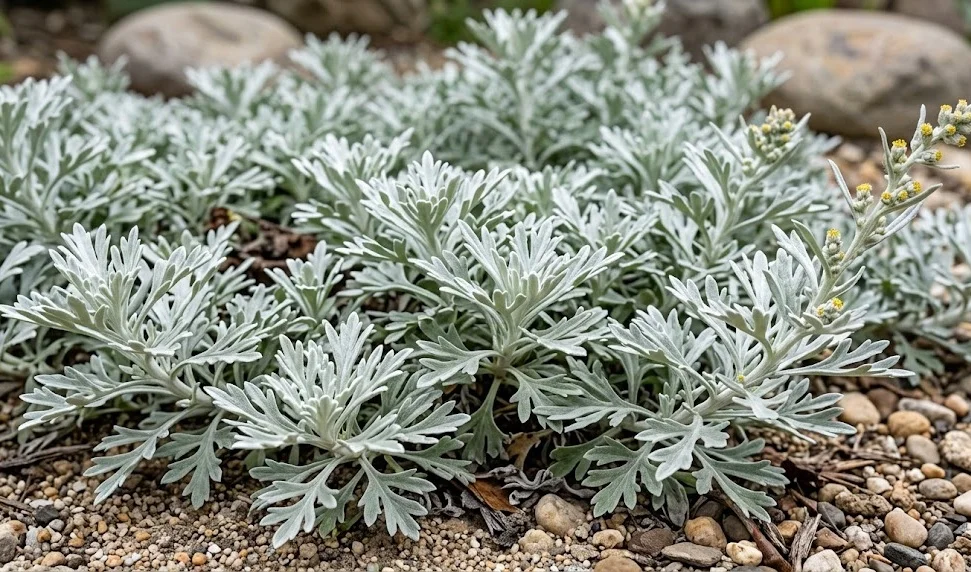

Watering and fertilization of dusty miller are two of the most misunderstood aspects of its care, as many gardeners tend to overdo both. This silver-foliage perennial has evolved to survive in lean, coastal environments where water is scarce and nutrients are minimal. Consequently, the secret to a professional-looking plant often lies in restraint rather than abundance. When you provide just enough of what the plant needs without crossing into excess, you ensure its characteristic compact form and brilliant color.
Proper hydration management is essential for preventing the common pitfalls of fungal diseases and root rot. You must learn to read the plant’s signals, such as a slight drooping of the leaves or a change in the texture of the stems. Because the foliage is covered in fine hairs, the plant is naturally equipped to resist evaporation, making it quite drought-tolerant once established. Developing a watering schedule that respects the soil’s drainage capacity is the first step toward long-term success.
Fertilization follows a similar philosophy of minimalism to maintain the integrity of the plant’s appearance. If you provide too much nitrogen, the plant will produce rapid, weak growth that is more green than silver and prone to flopping. Professional horticulturists often rely on the natural nutrients in the soil or a very light application of organic matter. Understanding how the plant interacts with its environment will help you decide when and if supplemental feeding is actually necessary.
Monitoring the environmental conditions of your garden is a continuous part of the watering and feeding process. Heatwaves, extended rainy periods, and seasonal shifts all dictate how much intervention the plant requires from you. By taking a professional, hands-off approach when possible, you allow the plant to develop its natural resilience. This article will guide you through the technical details of keeping your dusty miller perfectly hydrated and nourished without compromising its health.
Understanding water requirements in the early stages
When you first introduce a young plant to your garden, its water needs are significantly different from those of a mature specimen. You should focus on keeping the root zone consistently moist but never waterlogged for the first few weeks of its life. This initial period is critical for the development of a deep and expansive root system that will eventually support the plant through dry spells. You can check the moisture level by inserting a finger an inch into the soil near the base.
More articles on this topic
Overhead watering should be avoided at all costs, even for young plants, to protect the delicate silver foliage. You should apply water directly to the soil surface around the base of the plant to keep the leaves as dry as possible. Wet foliage can become heavy and mat down, which invites pathogens and reduces the plant’s ability to photosynthesize effectively. Using a soaker hose or a drip irrigation system is a professional method that delivers water exactly where it is needed.
The frequency of watering will depend largely on your local climate and the composition of your garden soil. In sandy soils, you may need to water more often because the moisture drains away very quickly. Conversely, in heavier soils, you must be extremely cautious not to create a stagnant environment around the roots. You should always wait for the surface of the soil to dry out before you think about applying more water to the area.
As the plant begins to show signs of new growth and appears more established, you can gradually increase the interval between waterings. This process encourages the roots to grow deeper into the ground in search of moisture, which is the key to creating a hardy plant. You will notice the plant becoming more self-sufficient as the season progresses, requiring less and less of your direct intervention. Observing this transition is an important part of becoming a skilled gardener.
Irrigation techniques for mature plants
Once your plants have reached maturity, they are remarkably efficient at managing their own water needs. You should only provide supplemental irrigation during periods of extreme heat or prolonged drought when natural rainfall is insufficient. A mature plant that is overwatered will often lose its tight, cushion-like shape and become unsightly and leggy. In many temperate regions, the natural weather patterns provide all the moisture a healthy dusty miller needs to thrive.
More articles on this topic
The timing of your irrigation can have a significant impact on the plant’s health and its visual appeal. You should water in the early morning hours so that any accidental moisture on the foliage has time to evaporate before the sun gets too intense. Watering late in the evening is discouraged because it leaves the plant in a damp state overnight, which is the perfect condition for fungal growth. A professional schedule prioritizes the plant’s need to stay dry during the cooling hours of the day.
Deep watering is much more effective than light, frequent sprinkling for these silver-leaved perennials. You should apply enough water to penetrate several inches into the soil, which encourages the roots to stay deep where the earth is cooler. This technique builds a resilient plant that can withstand a few days of neglect or a sudden spike in temperature. After a deep watering session, you can often go a week or more without needing to irrigate again.
You should also take the surrounding landscape into account when planning your irrigation strategy. If the plant is situated near a lawn that is watered daily, it may be receiving too much moisture through overspray or seepage. You might need to adjust your sprinklers or create a physical barrier to keep the artemisia’s root zone drier than the grass. Managing the moisture levels of the entire garden bed ensures that each species gets exactly what it needs.
Nutrient management and fertilization principles
This plant is naturally adapted to poor soils, so your fertilization strategy should be very conservative. You should avoid high-nitrogen fertilizers that stimulate excessive leafy growth at the expense of the plant’s overall structure and color. A balanced, slow-release fertilizer applied once in the early spring is usually more than enough for the entire growing season. If the soil is already healthy and contains plenty of organic matter, you might not need to fertilize at all.
Applying fertilizer incorrectly can lead to a buildup of salts in the soil, which can damage the sensitive roots of the plant. You should always apply granular products to damp soil and water them in lightly to help the nutrients reach the root zone. Avoid letting any fertilizer granules touch the foliage or the crown of the plant, as this can cause chemical burns. A “less is more” approach is the golden rule when it comes to feeding silver-foliage species.
If you notice that the plant is growing very slowly or that the silver color is beginning to look dull, it may be a sign of a minor nutrient deficiency. You can use a diluted liquid seaweed or compost tea to provide a gentle boost of micronutrients without the risk of over-stimulation. This organic approach is often preferred by professionals because it supports the overall health of the soil ecosystem. Observe the plant’s response over the following weeks before deciding if further action is needed.
The age of the plant also dictates how you should handle its nutritional needs over time. Younger plants may benefit from a bit more support to help them establish their structure, while older plants require very little. As a plant matures, its root system becomes more efficient at scavenging what it needs from the existing soil. Maintaining a stable, low-nutrient environment is the best way to ensure your dusty miller stays healthy for many years.
Using organic amendments for soil health
Instead of relying on synthetic chemicals, you should consider using organic amendments to maintain the soil’s vitality. A thin layer of well-rotted compost spread around the base of the plant in the spring provides a steady, natural supply of nutrients. This method also improves the soil structure and supports beneficial microbes that help the plant resist diseases. Organic matter should be used sparingly to ensure the soil doesn’t become too rich or moisture-retentive.
Mulching with inorganic materials, as mentioned in other sections, is still the best practice for the surface, but the soil underneath can be enhanced. You can mix a small amount of bone meal or rock phosphate into the soil at planting time to support strong root development. These slow-acting organic sources provide long-term benefits without the risk of a sudden growth spurt. A professional gardener looks at the soil as a living system that needs to be nurtured gently over time.
Leaf mold is another excellent organic amendment that can be used to improve the texture of the soil without adding too much nitrogen. You should ensure that any organic material you use is fully decomposed and free of weed seeds or pathogens. Applying these amendments at the beginning of the growing season allows the plant to take full advantage of the improved soil conditions as it wakes up from dormancy. Healthy soil leads to a hardy plant that can better withstand environmental stresses.
Monitoring the pH of your soil is also a part of professional nutrient management for this species. If the soil becomes too acidic, the availability of certain nutrients can change, affecting the plant’s vigor. You can use organic lime to raise the pH if necessary, but this should only be done based on the results of a reliable soil test. Keeping the soil in the neutral to slightly alkaline range is ideal for maintaining the silver brilliance of the foliage.
Monitoring plant health and making adjustments
The most important tool in your gardening kit is your ability to observe the subtle changes in your plants. You should regularly check the foliage for any signs of yellowing, which can indicate either a nitrogen deficiency or, more commonly, overwatering. If the leaves look wilted despite the soil being moist, it is a strong warning sign of root issues caused by excess water. Being able to distinguish between these symptoms is a key skill for any professional horticulturist.
Environmental factors like humidity and temperature play a huge role in how the plant processes water and nutrients. During a very humid summer, the plant’s transpiration rate slows down, meaning it needs less water than it would in dry, windy weather. You should adjust your care routine based on the daily weather patterns rather than sticking to a rigid, pre-set schedule. Flexibility is the hallmark of a gardener who truly understands the needs of their plants.
If you find that your plants are becoming too large or leggy, you should look at your fertilization and watering habits first. Reducing the frequency of irrigation and cutting back on feeding will often help the plant return to a more compact form. You can also prune the plant to shape it, but the underlying cause of the legginess must be addressed for long-term results. The goal is to create a plant that looks naturally robust and well-proportioned within its space.
Finally, keep in mind that every garden has its own unique characteristics that affect how plants grow. What works in a sandy coastal garden might not be exactly right for a backyard with heavy loam. You should take the principles of watering and fertilization and adapt them to suit your specific site conditions. By paying close attention to your dusty miller and responding to its needs, you will achieve professional results that enhance the beauty of your garden.