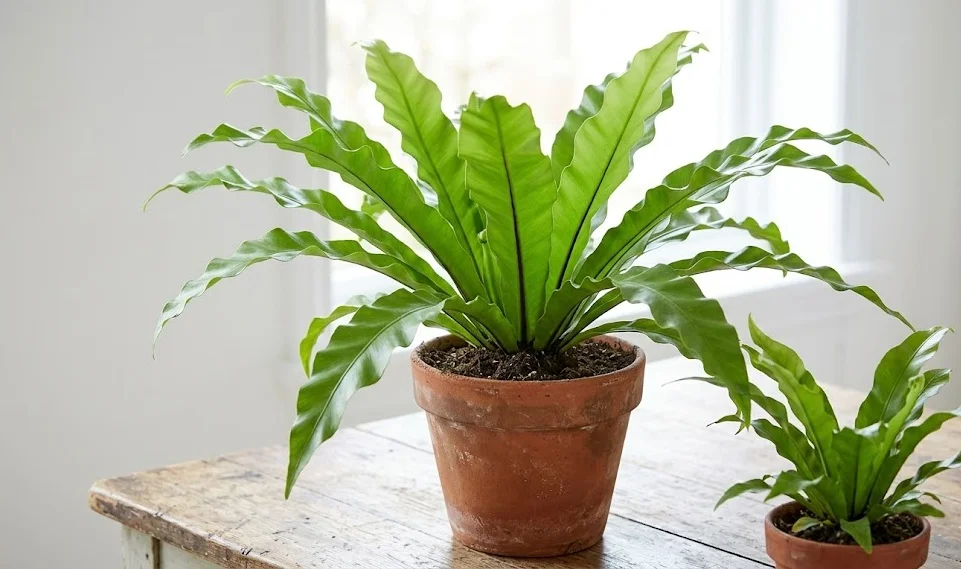

Pruning and trimming are essential maintenance tasks that keep your bird’s-nest fern looking its best and prevent the development of health issues. Unlike some garden plants that require heavy pruning to encourage flowering, this fern only needs targeted intervention to maintain its architectural form and hygiene. A professional approach to trimming involves using the right tools, understanding the plant’s growth cycles, and knowing exactly when to leave the plant alone. By mastering these simple techniques, you can ensure your fern remains a clean, vibrant, and impressive focal point in your indoor garden.
Knowing when to use the shears
The primary reason to prune a bird’s-nest fern is to remove old, damaged, or diseased fronds that are no longer contributing to the plant’s beauty or health. These ferns naturally shed their oldest leaves from the bottom of the rosette as they grow new ones from the center. When you see a frond turning yellow or brown at the very base of the plant, it is time to step in and remove it. This not only keeps the plant looking tidy but also prevents dead organic matter from attracting pests or harboring fungal spores.
It is important to wait until a frond has completely turned brown before removing it, as the plant will often reabsorb nutrients from the dying leaf. If you prune away leaves that are still mostly green, you are depriving the plant of the energy it has stored in those tissues. However, if a leaf is heavily infested with pests or shows signs of an active disease, you should remove it immediately regardless of its color. Balancing aesthetic preferences with the biological needs of the plant is the key to successful maintenance.
The best time for a general “cleanup” prune is in the early spring, just as the plant is beginning its most active growth phase. Removing the winter’s accumulated dead material at this time will improve air circulation around the new fronds as they emerge. During the height of summer, you should only prune if absolutely necessary to avoid stressing the plant during the hottest months. In the winter, minimal intervention is best, as the plant’s ability to heal and recover from wounds is significantly reduced.
Never attempt to prune the central “nest” or the fuzzy brown crown of the fern, as this is where all new growth originates. Any damage to this sensitive area can permanently disfigure the plant or even lead to its death if the growing point is destroyed. Focus your trimming efforts strictly on the outer, older fronds that have finished their life cycle. A professional gardener respects the structural integrity of the plant and only removes what is truly necessary for its long-term wellbeing.
More articles on this topic
Shaping and maintaining the central nest
The architectural beauty of the bird’s-nest fern lies in the symmetry and fullness of its central rosette, which you can help maintain through careful observation. Sometimes, a frond may grow in an awkward direction or become bent due to accidental physical contact in a high-traffic area. While you cannot “train” a fern in the way you might a vine, you can remove unsightly or broken fronds to keep the overall shape balanced. Always consider the impact on the plant’s symmetry before you make a cut, as it will take time for a new leaf to fill the gap.
As the fern grows larger, the older fronds at the base may start to sag and take up a significant amount of horizontal space. Trimming these lower leaves can help give the plant a more “upright” and cleaner appearance, which is often preferred for display on pedestals or shelves. This also helps expose the interesting texture of the base and allows you to more easily monitor the health of the soil and roots. Just be careful not to remove too many leaves at once, as the plant needs a certain amount of foliage to produce energy.
Maintaining the “cleanliness” of the central nest is also a form of trimming that involves removing fallen debris or dust that has accumulated in the center. In the wild, this debris would break down into nutrients, but in a home environment, it can often lead to rot if it stays too wet. You can use a soft brush or a gentle puff of air to clear out any dry material without touching the sensitive growing tips. Keeping the nest clear allows the new fronds to emerge without any physical obstructions or risks of infection.
If your bird’s-nest fern has grown too large for its current location, you might be tempted to trim the tips of the fronds to make it fit. This is a practice you should strictly avoid, as cutting the tips of the leaves will result in permanent brown edges that look very unsightly. A fern frond does not grow back from a cut tip; instead, the wound will remain visible for the rest of the leaf’s life. If the plant is truly too large, it is better to move it to a more spacious area or consider sharing it with a friend who has more room.
More articles on this topic
Tool sanitation and post-pruning recovery
Using the correct tools is essential for making clean, precise cuts that heal quickly and do not introduce pathogens into the plant. A pair of sharp, high-quality bypass pruners or heavy-duty gardening shears is ideal for cutting through the somewhat leathery bases of the fronds. Never use dull scissors that might crush the tissue, as this creates a ragged wound that is much more susceptible to infection. Investing in a good set of tools is a hallmark of a professional gardener and will make all your maintenance tasks much easier.
Sanitation is perhaps the most important part of the pruning process that is frequently overlooked by many casual indoor gardeners. Before you begin working on your bird’s-nest fern, always wipe the blades of your tools with isopropyl alcohol or a household disinfectant. This ensures that you are not transferring any bacteria, fungi, or microscopic pests from one plant to another. It is a small step that takes only a few seconds but can save the life of your plant by preventing the spread of invisible diseases.
After you have removed a frond, you can leave the small remaining stub at the base to dry out naturally and eventually fall away. Do not try to tear the frond off the plant, as this can cause significant damage to the delicate tissue of the main stem. The plant will naturally seal the wound with its own protective juices, and within a few days, the area will be fully healed. If you have removed a large number of leaves, keep the plant in a slightly more humid and shaded spot for a few days to help it recover from the stress.
Monitoring the plant’s reaction to pruning will give you confidence in your technique and help you refine your approach over time. You should see the plant continue to produce new growth from the center, often with renewed vigor now that it is not supporting dead or dying material. A well-maintained bird’s-nest fern is a testament to the skill and dedication of its owner, showing off its lush, green, and architectural form. Treat every pruning session as an opportunity to connect with your plant and ensure its health for many years to come.