
Pruning and cutting back potatoes are professional techniques used to manage the plant’s energy, control its growth cycle, and prepare for a successful harvest. While most casual gardeners let their potatoes grow undisturbed until they die back naturally, an expert knows that strategic intervention can improve both the quality and storage potential of the tubers. You should view pruning not as a way to shape the plant, but as a functional tool to influence its biological priorities. Mastering these techniques allows you to take full control over the final stages of the agricultural season.
One of the most common forms of pruning involves the removal of the flowers and seed pods that appear on the potato vines in mid-summer. Producing flowers and seeds requires a significant amount of energy that the plant would otherwise direct toward tuber development. By snipping off these blooms as soon as they appear, you are essentially forcing the plant to refocus its resources underground. It is a simple but effective way to ensure that every bit of photosynthetic energy is used to increase the size and starch content of your potatoes.
Cutting back the foliage, often referred to as “topping” or “top-killing,” is a critical step taken toward the end of the growing season. You should do this about two weeks before you plan to harvest to signal to the tubers that it is time to enter dormancy and toughen their skins. This process prevents the tubers from continuing to grow into unmanageable sizes and makes them much easier to handle during the lifting process. It is a standard professional practice for anyone intending to store their potatoes through the winter months.
You must also be prepared to prune away any diseased or damaged foliage throughout the season to prevent the spread of pathogens. This “sanitary pruning” is an essential part of disease management, especially when dealing with early signs of blight or fungal spots. Removing a few infected leaves early can save the entire plant from a systemic infection that would otherwise destroy the crop. Always use clean, sharp tools and dispose of the clippings far away from your garden to maintain a professional level of hygiene.
Managing flowers and seed pods for energy redirection
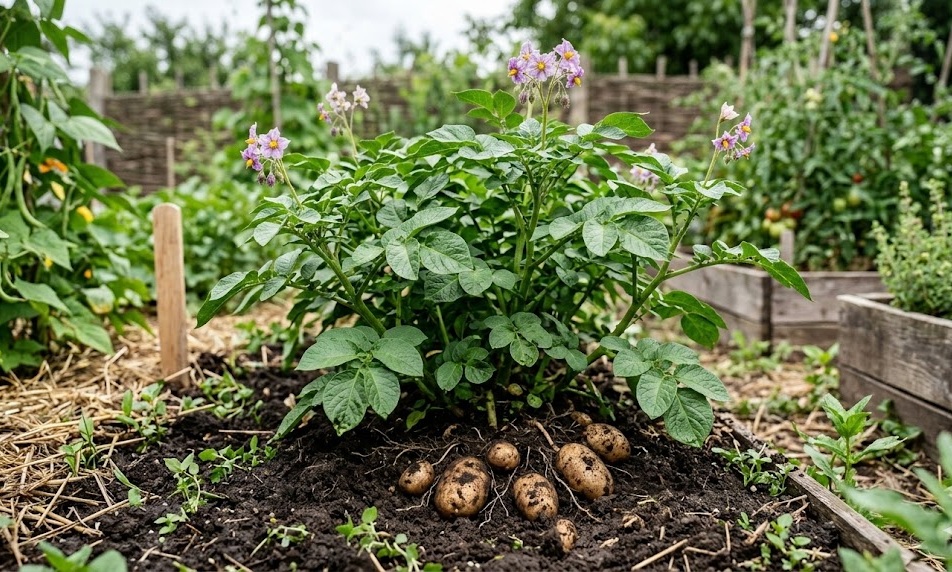
When a potato plant begins to bloom, it is entering a reproductive phase where it attempts to produce true botanical seeds. You will see clusters of white, pink, or purple flowers that eventually turn into small, green, tomato-like fruits containing the seeds. While these “potato apples” are interesting to look at, they are highly toxic and serve no purpose for the typical grower looking for edible tubers. You should remove these reproductive structures to prevent the plant from wasting valuable nutrients on a process that doesn’t benefit your harvest.
More articles on this topic
The act of removing flowers is most effective when done early, before the plant has invested too much energy into their development. You can simply pinch off the flower buds with your fingers or use a small pair of garden snips for a cleaner cut. This intervention is particularly useful for varieties that are known to be heavy bloomers and might otherwise lose a noticeable percentage of their yield to seed production. It is a small task that, when done consistently across a whole patch, can lead to a measurable increase in total weight.
Some professional research suggests that removing flowers can also help the plant stay more resilient during periods of environmental stress. By not having to support the additional metabolic load of reproduction, the plant can better regulate its water use and maintain its leaf health. This is especially true during heatwaves, where the plant is already struggling to keep its internal systems functioning correctly. Strategic pruning acts as a form of stress relief for the potato, allowing it to focus on its primary storage organs.
You should always be careful not to damage the main stems or the surrounding foliage when you are removing the flowers. Rough handling can create wounds that might become entry points for bacteria or fungi, especially in humid conditions. Take your time to move through the rows and perform the task with precision and care. This attention to detail is what characterizes a professional approach to even the smallest maintenance tasks in the garden.
Sanitary pruning and foliage management
During the peak of the summer, the potato canopy can become very dense, which may restrict airflow and encourage the development of diseases. You might find it necessary to selectively remove some of the lower, older leaves that are touching the soil and starting to yellow. This improves ventilation around the base of the plant and reduces the “bridge” that soil-borne pathogens can use to climb up into the foliage. Keeping the bottom of the plant clean and airy is a proactive professional strategy for maintaining long-term health.
More articles on this topic
If you notice a specific branch or section of the plant that has been broken by wind or damaged by insects, you should prune it back to healthy tissue immediately. Damaged plant parts are often the first to be colonized by opportunistic fungi, which can then spread to the rest of the healthy canopy. By making a clean cut at a node, you help the plant heal more quickly and prevent the rot from traveling down the stem. Constant vigilance and quick intervention are the keys to a successful agricultural season.
In some cases, if the foliage becomes excessively lush due to high nitrogen levels, you may need to thin out the vines to ensure sunlight reaches the interior of the patch. You should be careful not to over-prune, as the leaves are the source of all the energy stored in the tubers. However, a light thinning can sometimes be beneficial in very humid climates to prevent the “smothering” effect of a too-dense canopy. Balancing leaf area with airflow is a sophisticated task that requires experience and observation.
Always disinfect your pruning tools between plants, especially if you suspect any disease is present in your garden. A simple dip in a solution of seventy percent alcohol is enough to kill most common plant pathogens and prevent their spread. This level of hygiene is standard in professional nurseries and should be adopted by any serious gardener who wants to protect their investment. Treating your tools with respect is a direct reflection of how you treat your plants and your soil.
The final cut-back before the harvest sequence
The decision to cut back the entire foliage of your potato crop is one based on timing, weather, and your specific goals for the harvest. You should wait until the plants have completed their natural growth cycle and at least fifty percent of the leaves have started to yellow. Using a pair of shears or a mechanical mower, you should cut the stems down to about five to ten centimeters above the soil level. This “top-killing” forces the plant to stop moving sugars and start the physiological process of skin set.
By removing the green tops, you also eliminate the risk of late-season blight infecting the tubers if a sudden rainstorm occurs. The spores of many diseases live on the leaves and can be washed down into the soil where they ruin the potatoes just before they are dug. Removing the source of the infection and allowing the soil to dry out a bit is a professional way to ensure a clean harvest. It also makes the physical task of digging much easier since you don’t have to wrestle with large, heavy vines.
You must leave the tubers in the ground for at least ten to fourteen days after cutting back the foliage before you start digging them up. During this time, the potato skins will undergo a chemical change that makes them much thicker and more resistant to mechanical damage. You can test this by digging up a single “scout” potato and rubbing the skin with your thumb; if it stays in place, the crop is ready. This waiting period is essential for ensuring that your potatoes have a long and successful storage life.
Finally, cutting back the foliage allows you to control the size of your potatoes, which is particularly useful if you prefer “new” or baby potatoes. If you see that the tubers have reached your ideal size, you can stop their growth immediately by removing the leaves. This gives you a level of precision over your harvest that is impossible if you simply wait for the plants to die on their own. Taking charge of the end of the season ensures that you get exactly the kind of harvest you worked for all year long.