
Pruning is the most powerful tool you have for controlling the size, shape, and flowering potential of a vigorous climbing vine in your garden. You should understand that this species is incredibly resilient and actually benefits from a regular and sometimes quite drastic cutting back of its woody stems. Without proper management, the plant can quickly become a tangled, unproductive mess that hides its beautiful flowers deep within a canopy of old, dead wood. Mastering the art of pruning will allow you to maintain a healthy, balanced, and spectacular vertical display year after year.
The timing of your pruning is critical because this specific plant belongs to the group that flowers on the current season’s new growth in late summer. You should aim to do your major pruning in the late winter or very early spring, just as the buds are beginning to show signs of life. This timing ensures that the plant has the entire growing season ahead of it to produce the fresh stems that will eventually carry the abundance of white blossoms. Cutting the plant back early also makes it much easier to manage the regrowth and train the new shoots exactly where you want them to go.
Hard pruning is a technique where you cut the entire plant back to a short framework of stems, usually about 30 to 50 centimeters above the ground. You should not be afraid to do this, as it encourages a flush of incredibly vigorous and healthy new growth from the base and the protected underground buds. This method is especially useful for older vines that have become bare at the bottom and are only producing leaves and flowers at the very top of their support structure. Hard pruning effectively “resets” the plant and ensures that the foliage and flowers are distributed more evenly across the entire trellis or wall.
Maintenance pruning throughout the summer involves removing any wayward shoots or thinning out the dense interior to improve light penetration and air movement. You should use this time to guide the plant and ensure that it is not invading areas where it is not wanted, like gutters or nearby delicate shrubs. Removing the spent flowers can also help keep the garden looking tidy, although many people enjoy the decorative, feathery seed heads that follow the blooms. Regular, light-touch maintenance is much easier and less stressful for both the gardener and the plant than a single, massive intervention once a year.
The essentials of spring pruning
Before you start cutting, you should take a moment to inspect the entire vine and identify the strongest and healthiest stems that will form the future framework. Look for the lowest pair of healthy buds on each stem and make your cut just above them using a sharp and clean pair of bypass pruners. You should aim to leave a short, tidy skeleton of woody branches that the new growth can use as a starting point for its upward journey. This process may feel a bit extreme the first time you do it, but the plant’s rapid response will soon put your mind at ease.
More articles on this topic
Cleaning out the dead wood is a vital part of the spring routine that improves the overall health and appearance of your climbing vine in the garden. You should remove any stems that are brittle, shriveled, or show no signs of green tissue when you gently scratch the bark with your fingernail. These dead sections are of no use to the plant and can actually harbor pests or fungal spores if they are left in place to rot. Removing them opens up the structure and allows the plant’s energy to be focused entirely on the productive and living parts of the organism.
Training the new shoots as they emerge from the pruned stems is the key to creating a beautiful and well-distributed display on your trellis or wall. You should guide the soft, green growth horizontally and diagonally across the support structure to ensure that the entire area is covered evenly. If you let all the shoots grow straight up, you will end up with a narrow pillar of foliage that leaves most of your support structure bare and exposed. Use soft garden ties or twine to secure the young stems in place until they can support themselves with their own natural climbing mechanisms.
Pruning for rejuvenation is a more drastic version of the spring cut that is used to bring an old, neglected vine back to its former glory and productivity. You should cut the entire plant back to about 15 centimeters from the ground, ensuring that you leave a few buds on the remaining stubs of the woody stems. This intense intervention triggers a massive response from the root system, resulting in a flush of very strong and healthy new growth that can completely replace the old structure. While you might sacrifice some flowering in the first year, the long-term benefits for the health and appearance of the vine are absolutely worth the temporary loss.
Summer maintenance and thinning
During the height of the growing season, the vine can put on several centimeters of growth in a single day, requiring your constant attention and guidance. You should check the plant every week or two to tuck in any wandering shoots and ensure they are heading in the right direction on your support structure. If a particular area is becoming too dense and crowded, don’t be afraid to remove a few entire shoots to allow more light and air to reach the interior. This “thinning out” is essential for preventing the buildup of humidity that can lead to powdery mildew and other common garden diseases.
More articles on this topic
Managing the boundaries is a practical task that ensures your vigorous climber does not become a nuisance to your neighbors or a threat to your home’s infrastructure. You should trim back any growth that is heading toward windows, doors, or architectural features that could be damaged by the heavy woody stems. It is much easier to divert a soft green shoot than to have to cut a thick, mature branch that has already woven itself into a gutter or under a roof shingle. Regular boundary management keeps the relationship between your garden and your home harmonious and safe for everyone involved.
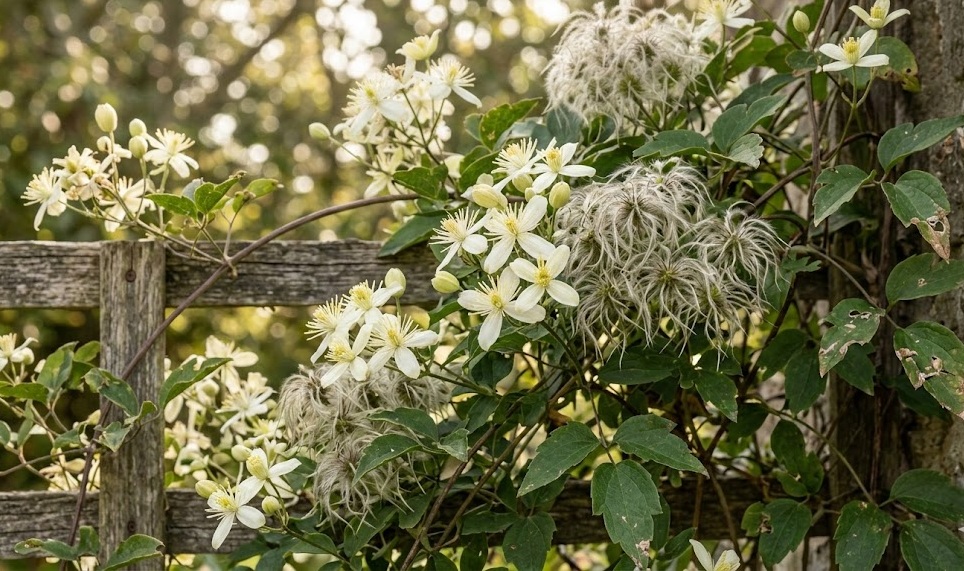
Deadheading, or removing the spent flowers, is a cosmetic task that can also help the plant focus its energy on its own health rather than on seed production. While this specific species is known for its beautiful “old man’s beard” seed heads, you might want to remove some of them to prevent excessive self-seeding in the surrounding garden beds. Using a pair of snips to remove the faded blossoms is a relaxing garden task that keeps the vine looking fresh and vibrant throughout the late summer and early autumn. If you want to keep the seed heads for winter interest, you can always leave the last flush of flowers on the plant to mature naturally.
Checking the ties and support structures during the summer is important because the rapid growth and the weight of the foliage can put a lot of strain on them. You should ensure that your ties are not too tight, as the stems will continue to expand in diameter as they mature and become more woody over time. If a tie is cutting into the bark, remove it immediately and replace it with a looser, softer material like a piece of old pantyhose or a dedicated soft garden wire. Keeping the physical connection between the plant and its support secure but flexible is the mark of an experienced and thoughtful gardener.
Tools and safety for heavy pruning
Using the right tools for the job makes the task of pruning a large and vigorous climber much safer and more efficient for you as the gardener. You should have a high-quality pair of bypass pruners for the majority of the work and a small pruning saw for the thicker, older woody stems at the base. Ensure that your blades are sharp, as clean cuts heal much faster and are less likely to become entry points for pathogens or wood-boring insects. I always recommend carrying a sharpening stone in your garden kit so you can touch up the edges of your tools as you work.
Hygiene is just as important in pruning as it is in any other part of garden maintenance, especially when you are working on multiple plants in the same area. You should disinfect your tools with rubbing alcohol or a mild bleach solution after finishing each plant to prevent the accidental spread of invisible diseases. This simple habit is the best way to ensure that you are not moving fungal spores or bacteria from one part of your garden to another on your pruning blades. It only takes a few seconds but can save you a lot of heartache and effort in the long run by preventing preventable infections.
Safety should be your first priority when you are pruning a tall vine that requires the use of a ladder to reach the upper sections of the growth. You should always ensure that your ladder is on stable, level ground and that you have someone nearby to assist you if the structure is particularly high or awkward. Avoid reaching too far to the side while on the ladder; it is much safer to climb down and move the ladder a few feet than to risk a fall. Wearing gloves and eye protection is also a wise precaution when you are working among the dense and often dusty stems of a mature climbing plant.
Finally, remember that pruning is a skill that you will improve over time as you observe how your specific plants respond to your different cutting techniques and timings. Don’t be afraid to experiment a little and see what works best for the unique microclimate and conditions of your own garden or agricultural site. Every cut is a learning opportunity, and the more you interact with your vine, the better you will understand its needs and its potential for beauty and growth. Pruning is not just a chore; it is a creative conversation between the gardener and the living landscape that results in a more beautiful world for everyone.