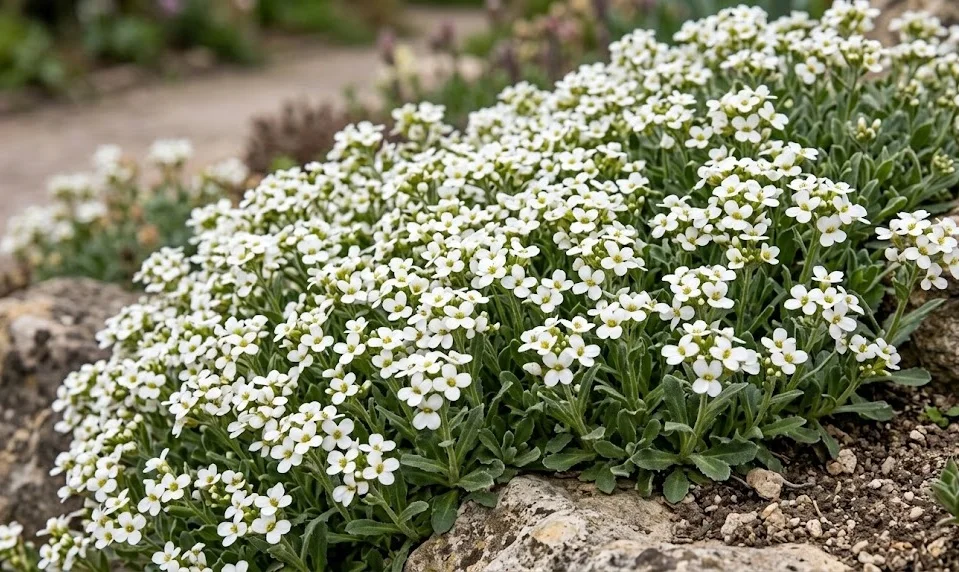

Maintaining the tidy appearance and long-term health of Caucasian rockcress involves a consistent and professional approach to pruning. While this plant does not require intensive shearing, a few well-timed interventions can significantly improve its vigor and aesthetic appeal. By removing spent flowers and controlling the spread of the foliage, you encourage the plant to remain dense and productive for many years. Pruning is also an excellent opportunity to inspect the inner parts of the mat for any signs of pests or disease.
The most important pruning task occurs immediately after the main flowering period has concluded in late spring or early summer. You should use a sharp pair of garden shears to remove the faded flower stalks right down to the level of the foliage. This process, known as deadheading, prevents the plant from wasting energy on seed production and encourages it to focus on vegetative growth. It also instantly cleans up the appearance of the garden, leaving behind a neat carpet of silver-green leaves.
In addition to removing the flowers, you can lightly trim the tips of the foliage to encourage a more branched and compact growth habit. You should avoid cutting back into the old, woody stems at the base of the plant, as these may not sprout new growth as easily. A light “haircut” across the top of the mat is usually all that is needed to maintain a professional look. This simple task ensures that the plant does not become too thin or sprawling as it expands across the ground.
Regular pruning also helps to improve air circulation within the dense mats of foliage, which is vital for preventing rot. You should take this time to clear out any dead or yellowing leaves that have accumulated in the center of the plant. Maintaining a clean and open structure allows the plant to breathe and reduces the humidity that can lead to fungal problems. A well-maintained rockcress mat is not only more beautiful but also much more resilient to environmental stress.
Revitalizing old mats and shaping techniques
As the Caucasian rockcress ages, it can sometimes become woody in the center and lose its lush, green appearance. You should consider a more significant rejuvenation pruning every three or four years to keep the plant looking its best. This involves cutting back the outer, more vigorous sections of the plant to encourage new growth from the middle. If the center has become completely bare, it may be time to lift and divide the plant to start fresh with younger sections.
More articles on this topic
Shaping the plant is another aspect of pruning that allows you to integrate it perfectly into your garden design. You should trim the edges of the mat to prevent it from encroaching on neighboring plants or spilling over pathways. This boundary maintenance keeps the garden looking intentional and prevents the rockcress from becoming an aggressive spreader. A well-defined shape highlights the unique texture of the plant and creates a sense of order in the rock garden.
The tools you use for pruning can make a significant difference in the speed and quality of the work. You should always ensure that your shears are sharp and clean to make precise cuts that heal quickly. Dull blades can crush the stems, leaving them open to infection and slowing down the recovery process. Sanitizing your tools between plants is also a good practice to prevent the accidental spread of any hidden diseases.
Consistency is key when it comes to pruning, and doing a little bit each year is much better than waiting until the plant is overgrown. You should make it a part of your regular garden maintenance routine to check the condition of your rockcress mats. By staying ahead of the growth, you can maintain a perfect balance between the natural mountain look and a well-cared-for garden aesthetic. Professional pruning is one of the simplest ways to ensure your Caucasian rockcress remains a highlight of your spring landscape.
Timing and seasonal considerations for pruning
Understanding the timing of your pruning efforts is essential for working with the plant’s natural lifecycle rather than against it. You should always prioritize the post-bloom prune as the most critical time for structural maintenance. Pruning too early in the spring could remove the flower buds and ruin the season’s display, so patience is required. Conversely, pruning too late in the autumn can stimulate new growth that won’t have time to harden before the winter frosts.
More articles on this topic
In late summer, you might notice some sections of the mat looking a bit tired or scorched by the heat. You can perform a light tidying-up at this stage, removing any damaged foliage to improve the plant’s overall health. However, you should avoid heavy pruning during periods of extreme drought or high temperatures, as this can further stress the plant. Wait for a cooler, overcast day to do any significant work to minimize the impact on the plant’s moisture levels.
Late winter or very early spring is a good time to do a final check of the foliage before the new growth begins. You should remove any bits that were damaged by snow or ice to make a clear path for the upcoming flower stalks. This “winter cleanup” is a satisfying task that signals the start of the new gardening season. Starting with a clean and healthy plant in the spring sets the stage for a successful and beautiful year of growth.
By observing how your plants respond to pruning over several seasons, you will develop a feel for exactly how much to cut. You might find that some varieties are more vigorous and need a bit more attention than others. Every garden is different, and tailoring your pruning techniques to your specific environment is a mark of a skilled and dedicated gardener. Enjoy the process of shaping and caring for your Caucasian rockcress, and it will reward you with years of reliable performance.