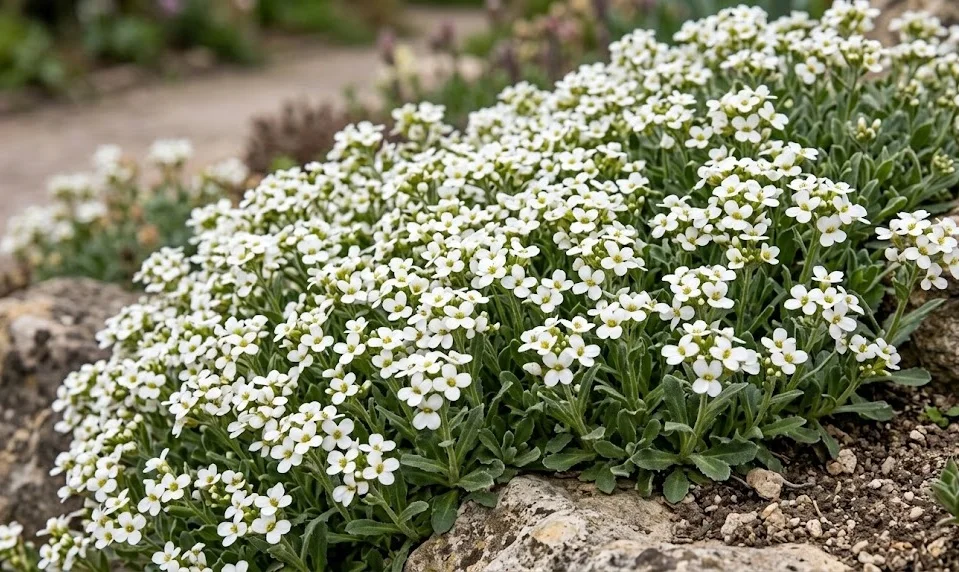

Preparing the Caucasian rockcress for the cold months is a critical step in ensuring its longevity and vibrant return in the spring. This species is naturally adapted to cold mountain environments, which gives it an inherent advantage during the winter season. However, the conditions in a typical garden can be quite different from its native habitat, requiring some strategic adjustments from the gardener. By focusing on root protection and moisture control, you can help your plants navigate the winter dormancy with ease.
The process of overwintering begins long before the first frost arrives in your garden. You should ensure that the plants are healthy and well-established throughout the summer and autumn to build up their energy reserves. Avoiding late-season fertilization is crucial, as you do not want to encourage tender new growth that would be easily damaged by freezing temperatures. A naturally hardened plant is far more resilient to the stresses of winter than one that is still actively growing.
During the late autumn, you should take the time to clean up the area around your rockcress mats. You should remove any fallen tree leaves or debris that could trap moisture against the foliage and cause rot during the damp winter months. While the plant’s own foliage provides some protection, a layer of wet leaves can become a breeding ground for pathogens. A clean and tidy environment allows for better air circulation and reduces the risk of winter-related diseases.
Monitoring the weather as the transition to winter occurs will help you decide if any additional steps are necessary. You should be particularly aware of the difference between consistent cold and the damaging cycle of repeated freezing and thawing. In regions with reliable snow cover, the plants are often well-protected by the insulating layer of snow. In areas with fluctuating temperatures and bare ground, you may need to provide a little more assistance to your plants.
Protective measures and mulching techniques
Applying a layer of inorganic mulch is one of the most effective ways to protect the Caucasian rockcress from the physical stresses of winter. You should use a coarse grit or fine gravel around the base of the plant to provide insulation for the roots and drainage for the crown. This mulch also helps to prevent frost heave, which can push the plant out of the soil and expose the delicate roots to the cold air. A well-mulched garden bed remains more stable and provides a safer environment for overwintering perennials.
More articles on this topic
In extremely cold climates without reliable snow, you might consider using evergreen boughs or a light layer of straw as a temporary winter cover. You should apply these materials only after the ground has frozen to prevent rodents from making a home underneath them. This additional layer provides a buffer against the wind and helps to maintain a more consistent soil temperature. Be sure to remove these covers as soon as the weather begins to warm in the early spring to allow for new growth.
Drainage becomes even more important during the winter when the plant is dormant and less able to process excess water. You should ensure that your rock garden is designed so that melting snow and winter rain flow away from the plants quickly. Standing water in the winter is the leading cause of death for many alpine species, including the Caucasian rockcress. If you notice puddles forming near your plants, you may need to adjust the grading of the soil or add more grit to the area.
Container-grown plants require special consideration because their roots are much more exposed to the cold than those in the ground. You should consider moving your pots to a more sheltered location, such as against a south-facing wall or into an unheated garage or shed. Wrapping the containers in burlap or bubble wrap can also provide the extra insulation needed to keep the root balls from freezing solid. Proper container management ensures that your patio displays survive even the harshest winters.
Winter physiology and dormancy
Understanding how the Caucasian rockcress changes its internal chemistry during the winter can help you provide better care. You will notice that the foliage often takes on a darker or more purplish hue as the temperatures drop. This is a natural response to the cold and indicates that the plant is producing protective pigments and sugars to prevent its cells from freezing. This physiological shift is a fascinating example of how mountain plants have evolved to survive in extreme conditions.
More articles on this topic
During the dormant phase, the plant’s metabolism slows down significantly, and its need for water is minimal. You should only provide supplemental water if the soil becomes extremely dry during a long period without rain or snow. Over-watering during dormancy is a common mistake that can lead to root rot and the death of the plant before spring arrives. Trusting the plant’s natural ability to wait out the winter is often the best strategy for success.
The duration of the dormant period can vary depending on your local climate and the specific weather patterns of the year. You should be patient and avoid trying to “wake up” the plant too early with water or fertilizer. The rockcress will naturally respond to the increasing day length and rising temperatures when the time is right. Observing these subtle cues from nature is a rewarding part of being a professional and attentive gardener.
Snow cover acts as a natural insulator, keeping the soil temperature around the roots relatively constant regardless of the air temperature. You should avoid shoveling heavy, compacted snow onto your rock garden, as this can crush the foliage and restrict air exchange. However, a light, fluffy layer of natural snow is the best protection your plants can have. Embracing the beauty of the winter landscape means recognizing the vital role that snow plays in the lifecycle of alpine plants.
Spring recovery and transition
The arrival of spring is an exciting time as the Caucasian rockcress begins to show the first signs of new life. You should start by gently removing any winter covers or debris that were used to protect the plants during the cold months. As the sun warms the soil, the plants will begin to produce fresh green shoots from the center of the mats. This transition from dormancy to active growth is the perfect time to evaluate how well your overwintering strategy worked.
One of the first tasks in the spring is to check for any signs of frost heave or physical damage that occurred over the winter. You should carefully press any lifted plants back into the ground and firm the soil around them to re-establish root contact. If some parts of the mat have died back, you can trim away the brown foliage to make room for new growth. This early maintenance helps the plant focus its energy on producing a spectacular spring bloom.
Watering should be increased gradually as the plant enters its peak growing phase and begins to develop flower buds. You should still be careful not to over-saturate the soil, but ensuring consistent moisture will support the upcoming floral display. A light application of a balanced fertilizer can also be beneficial at this stage to provide the nutrients needed for the burst of energy. Watching the garden come back to life is the ultimate reward for your winter preparation efforts.
By reflecting on the performance of your plants each spring, you can refine your overwintering techniques for the following year. You might find that certain areas of your garden require more protection or that different mulching materials work better in your climate. Constant learning and adaptation are what make gardening such a fulfilling and dynamic hobby. Your Caucasian rockcress will continue to thrive and expand, bringing joy to your garden for many seasons to come.