
Understanding the specific light preferences of wood sorrel is the cornerstone of successful cultivation, as light dictates everything from foliage color to the plant’s unique rhythmic movements. While these plants are often marketed as easy-to-grow, they are quite sensitive to the intensity and duration of the light they receive. Finding the “sweet spot” between too much and too little illumination is what separates a leggy, struggling specimen from a compact, vibrant one. Professional management involves adjusting placement based on the season and observing the plant’s daily responses to its environment.
Optimum light intensity
The vast majority of ornamental wood sorrel varieties thrive best in bright, indirect light rather than the harsh, direct rays of the midday sun. In their natural habitats, many species grow in the dappled shade of forest edges or in rocky crevices where they are protected from extreme heat. Indoors, this translates to a spot near a window that receives plenty of ambient light but is shielded by a sheer curtain or positioned just out of the sun’s direct path. This balance provides enough energy for photosynthesis while preventing the delicate leaves from becoming scorched or bleached.
Direct morning sun is often highly beneficial, as it is less intense than afternoon light and helps stimulate the plant to open its leaves for the day. An east-facing window is frequently cited as the ideal location for indoor wood sorrel, providing that gentle morning boost and bright light for the rest of the day. If the plant is kept in a south-facing window, it must be placed a few feet back from the glass to avoid the magnifying effect of the sun during the hottest part of the day. Monitoring the temperature of the leaves can tell you if the light is too intense; they should feel cool to the touch.
In outdoor settings, the light requirements are often met by placing the plants in areas with “filtered” sun, such as under the canopy of a light-foliage tree. This allows the wood sorrel to receive the high-quality light it needs without the risk of dehydration or heat stress that comes with full exposure. In cooler, northern climates, the plants may be able to handle more direct sun than in the intense heat of the south. Local environmental factors must always be considered when deciding on the permanent outdoor placement of your collection.
Insufficient light is one of the most common reasons for poor performance, leading to a phenomenon known as etiolation, where the stems grow excessively long and weak. If your wood sorrel appears “leggy” or if the leaves are spaced far apart on the stems, it is likely crying out for more light. Conversely, if the leaves develop brown, crispy patches or if the vibrant colors start to fade into a dull gray-green, the light may be too intense. Adjusting the plant’s position by just a few inches can often make a world of difference in its overall health and appearance.
More articles on this topic
Managing indoor light exposure
For many urban gardeners, providing enough natural light indoors can be a challenge, especially during the shorter days of autumn and winter. If your home lacks bright windows, supplemental lighting with full-spectrum grow lights can be an excellent way to maintain your wood sorrel’s health. These lights mimic the natural spectrum of the sun and can be set on a timer to provide a consistent 12 to 14 hours of “daylight” each day. Position the lights about 30 to 50 centimeters above the foliage to provide adequate intensity without causing heat damage.
The orientation of the plant in relation to the light source should be rotated regularly to ensure even growth on all sides. Wood sorrel is highly phototropic, meaning it will grow toward the light, which can lead to a lopsided or leaning appearance if left in one position for too long. A simple quarter-turn every time you water the plant is a professional tip that keeps the mounded shape symmetrical and aesthetically pleasing. This practice also ensures that the inner leaves receive enough light to remain healthy and vibrant.
During the winter months, the quality of light through windows can change significantly, and you may need to move your plants closer to the glass to compensate for the weaker sun. However, be mindful of the cold drafts that often occur near windows in winter, as wood sorrel does not appreciate sudden temperature drops. A balanced approach might involve moving the plant to a brighter room during the day and ensuring it stays in a stable, warm environment at night. Light management indoors is a dynamic process that requires seasonal adjustments to be truly effective.
Artificial light should never completely replace natural light if it can be avoided, as the subtle shifts in natural light quality help regulate the plant’s internal clock. The nyctinastic movements of the leaves are a direct response to these shifts, and a plant that never experiences true darkness may become stressed. Ensuring the plant has a distinct “night” period is just as important as providing enough light during the day. This rhythm is essential for the plant’s long-term vitality and its ability to properly manage its energy reserves.
More articles on this topic
Recognizing light-related stress
Wood sorrel has a unique way of communicating its light-related stress through its leaf movements and overall posture. If the leaves remain folded or “closed” during the middle of the day, it is often a sign that the light intensity is too high and the plant is trying to protect itself. This is a defensive posture designed to reduce the surface area exposed to the sun and minimize moisture loss through transpiration. If you see this behavior, moving the plant to a slightly shadier spot will usually result in the leaves reopening within an hour.
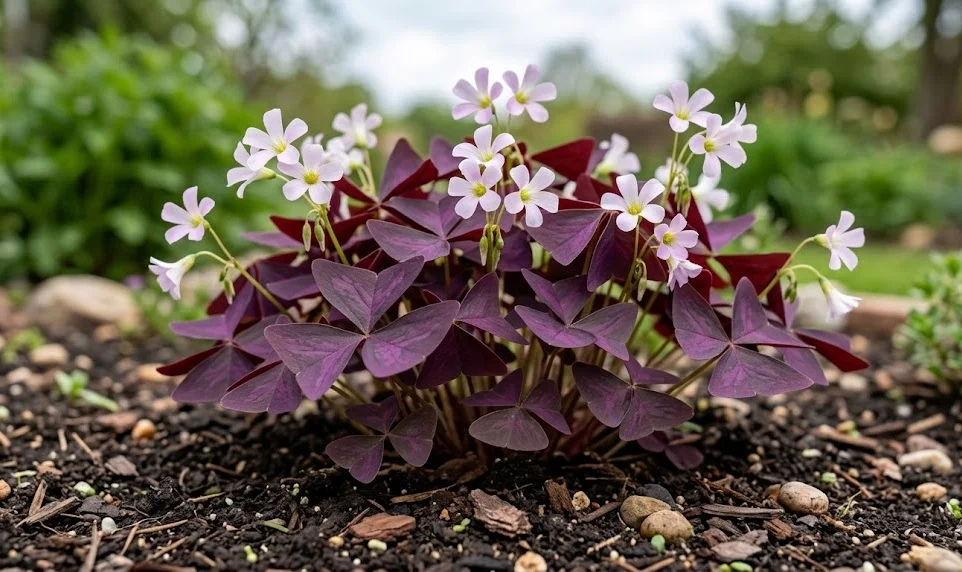
Another sign of light stress is the loss of pigmentation, particularly in varieties with deep purple or variegated leaves. These colors are produced by pigments that require a certain level of light to develop, but they can be “bleached” out if the exposure is too extreme. If your dark purple plant starts to look pale or develops green streaks, it is a signal to re-evaluate its placement. Restoring the correct light levels will usually see the new growth returning to its characteristic vibrant hue, though older bleached leaves may not fully recover.
On the opposite end of the spectrum, a plant that does not receive enough light will often stop flowering and focus all its limited energy on stretching its stems toward the nearest light source. This “reaching” behavior results in a plant that looks sparse and unappealing, often losing its lower leaves as the plant sacrifices them to support the growing tips. If you notice your wood sorrel becoming top-heavy or floppy, it is a clear indication that it needs a brighter home. Regular pruning can help restore the shape, but the underlying light issue must be addressed first.
Ultimately, the best way to master light requirements is through careful observation and a willingness to experiment with different locations. Each home and garden has its own unique light profile, and what works for one grower may not work for another. By paying attention to the daily “breathing” of the leaves and the seasonal shifts in growth habits, you will develop an intuitive understanding of your plant’s needs. Light is the primary fuel for your wood sorrel’s beauty, and managing it correctly is the hallmark of a skilled and attentive gardener.