
The success of a professional planting of western spicebush is heavily dependent on the quality and quantity of light it receives. In its natural habitat, this species is often found in the filtered light of riparian woodlands or along the edges of open meadows. Translating these natural lighting conditions into a garden or agricultural setting requires a careful assessment of your site’s solar orientation. Providing the optimal light balance is essential for achieving the best foliage color and a heavy display of flowers.
Most experts recommend a position that offers partial shade, especially during the hottest part of the afternoon. While the western spicebush can tolerate full sun in cooler coastal climates, it often struggles in the intense heat of inland areas. In such locations, the large leaves can become scorched, and the plant may require excessive amounts of water to stay healthy. A spot that receives morning sun and afternoon shade is often considered the “gold standard” for this particular species.
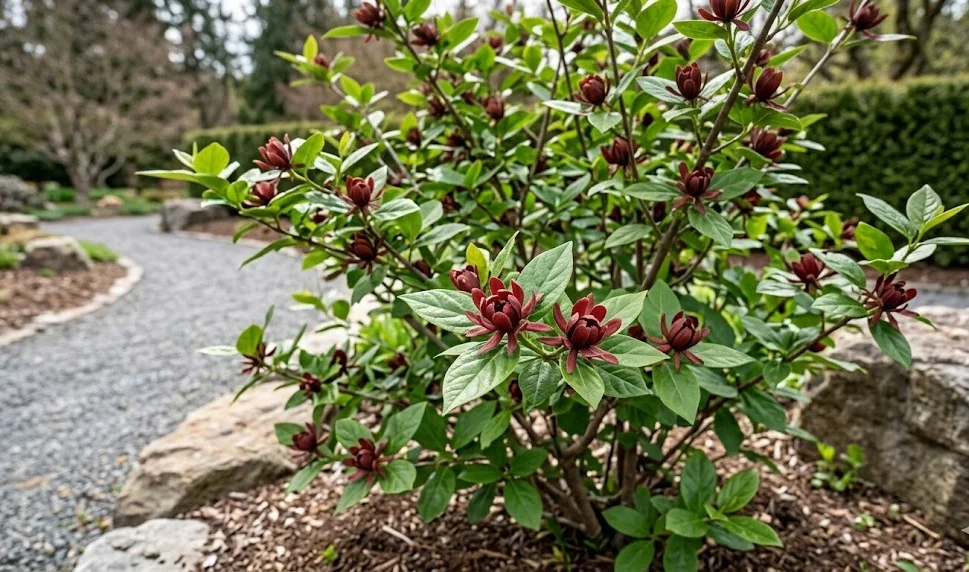
If the plant is grown in too much shade, it may become leggy and produce fewer of its characteristic maroon blossoms. The overall growth rate will slow down, and the shrub may lose its compact, rounded form as it stretches toward the available light. Professional gardeners monitor the development of the plant and may choose to thin out neighboring trees to increase light penetration. Achieving the right balance is a dynamic process that may change as the rest of your garden matures.
Light also affects the fragrance of the flowers, with warmer and brighter conditions often leading to a more intense scent. The essential oils responsible for the plant’s unique aroma are produced more readily when the plant is vigorous and well-lit. However, you must be careful not to cross the line into heat stress, which will have the opposite effect on the plant’s health. Professional site selection is about finding that perfect middle ground where the plant can thrive without being overwhelmed.
Optimizing solar exposure for growth
Understanding the path of the sun throughout the different seasons is a fundamental skill for any professional horticulturalist. A spot that is perfectly shaded in the summer might be in full sun during the winter after the surrounding deciduous trees lose their leaves. This seasonal variation can actually be beneficial for the western spicebush, as it enjoys the extra light during its dormant period. Map the light patterns in your garden before you decide on a permanent location for your shrub.
More articles on this topic
Reflection from nearby buildings or light-colored fences can also increase the total amount of light and heat the plant receives. In some cases, this “bonus” light can help the plant grow faster, but it can also increase the risk of leaf burn in the summer. If you are planting near a wall, choose one that faces east or north to avoid the most intense southern solar radiation. This professional level of detail ensures that you are considering all aspects of the plant’s environment.
If you are planting multiple spicebushes, be sure to space them far enough apart so they do not shade each other out. As the shrubs grow larger, their dense canopies can create a very dark environment underneath that may inhibit the growth of lower branches. Proper spacing allows light to reach all parts of the plant, promoting a full and balanced appearance from the ground up. This structural integrity is a direct result of consistent light availability throughout the life of the shrub.
For plants grown in containers, you have the professional advantage of being able to move them as the light conditions change. You can provide more sun in the early spring to jump-start growth and then move them to a more sheltered spot as the summer heat intensifies. This flexibility allows you to fine-tune the plant’s exposure and respond to unusual weather patterns. Just be sure to transition the plant gradually to avoid the shock of sudden environmental changes.
Light and foliage quality maintenance
The color and texture of the foliage are excellent indicators of whether the light levels are correct for your spicebush. Leaves that are a deep, rich green and have a slightly leathery feel usually mean the plant is happy with its current exposure. If the leaves look pale or yellowish, it may be a sign of too much light or a related nutrient deficiency caused by heat stress. Conversely, very dark green but thin and weak leaves often suggest that the plant is not getting enough light for efficient photosynthesis.
More articles on this topic
Monitoring the growth of new shoots can also provide clues about the lighting conditions in your professional landscape. Healthy new growth should be robust and have relatively short internodes (the space between the leaves on the stem). If you notice very long stems with few leaves, it is a clear sign that the plant is “searching” for more light. Professional pruning can help correct some of the aesthetic issues caused by poor light, but it cannot replace the need for proper solar exposure.
In very large gardens or agricultural settings, you can use specialized light meters to get an accurate reading of the photosynthetically active radiation (PAR). This data allows you to make scientific decisions about where to place different species for maximum productivity. While not always necessary for the home gardener, this level of precision is common in professional nursery and research environments. It takes the guesswork out of plant placement and ensures the best possible start for your western spicebush.
Finally, remember that light is the primary source of energy for all the plant’s biological processes, from root growth to seed production. By prioritizing the light requirements of the western spicebush, you are ensuring that all other aspects of its care will be more effective. A well-placed plant is naturally more resilient to pests, diseases, and environmental fluctuations. Professional gardening is often about making the right choices at the beginning so that nature can do the rest of the work for you.