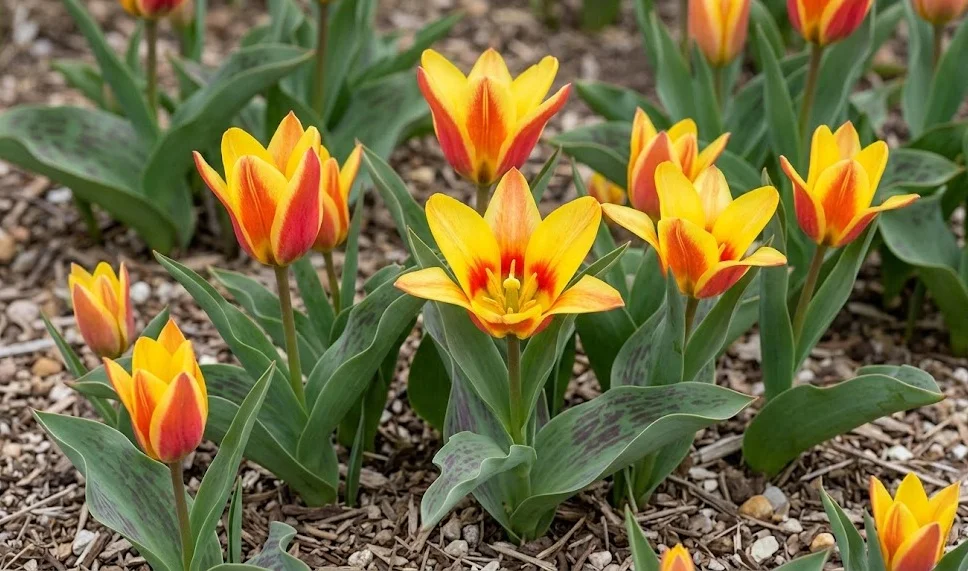

The kaufmann tulip is a sun-loving species that relies on high light intensity to trigger its daily floral movements and maintain its compact growth habit. In its native habitat, it is exposed to the bright, unfiltered sunlight of mountainous regions, which has shaped its physiological needs. You must ensure that your planting site provides the necessary luminosity to achieve the characteristic “waterlily” effect of the blossoms. Understanding the relationship between light and the tulip’s life cycle is essential for any professional gardener aiming for a spectacular spring display.
One of the most fascinating aspects of this tulip is its nyctinastic and thermonastic movements, where the petals open wide in the sun and close at night or during cloudy weather. This behavior is a direct response to light and temperature, serving to protect the reproductive organs while maximizing the chance of pollination. If you plant these tulips in a shaded location, you will likely find that they rarely open fully, depriving you of their most beautiful feature. Providing a site with at least six to eight hours of direct sunlight is the standard recommendation for optimal performance.
Beyond the aesthetics of the flower, light also plays a critical role in the development of the plant’s distinctively patterned foliage. The purple or brownish mottling on the leaves of many kaufmann varieties is most intense when the plant is grown in bright light. In lower light conditions, these patterns may fade or become less distinct, reducing the ornamental value of the plant before it even blooms. Ensuring adequate light exposure is therefore a matter of both health and beauty for this particular species.
Finally, light availability is the primary driver of photosynthesis, which is how the tulip bulb recharges its energy stores for the following year. After the flowers have faded, the green leaves must continue to receive ample sunlight to produce the carbohydrates needed for next year’s growth. A site that is sunny in early spring but becomes heavily shaded as deciduous trees leaf out can be a challenging environment for long-term tulip health. Strategic placement within the garden landscape is necessary to account for these changing light patterns.
Optimal light exposure and intensity
To get the most out of your kaufmann tulips, you should choose a site that faces south or west, where the spring sun is strongest. These tulips are among the earliest to bloom, and they need the warmth of the sun to push through the cold spring soil. A location that is bathed in direct sunlight from mid-morning to late afternoon will produce the sturdiest stems and most vibrant colors. Light intensity at this time of year is naturally lower than in summer, so maximizing exposure is crucial.
More articles on this topic
If you are planting in a garden with many structures or large evergreens, you must be careful to avoid “light shadows” that can stunt the tulips’ growth. Even a few hours of shade during the peak of the day can cause the plants to lean toward the light, resulting in crooked or weak stems. You should observe your garden in the late winter to see where the shadows fall before committing to a planting location. A professional approach to light management involves careful observation and seasonal planning.
Reflected light can also be a valuable resource for tulips planted near light-colored walls or fences. This additional luminosity can help warm the soil and provide the extra energy needed for an early and vigorous bloom. However, you must be careful that the reflected heat does not become too intense, as this could shorten the life of the individual flowers. Balancing direct and reflected light is a subtle art that can significantly enhance the performance of your tulip collection.
In very bright, high-altitude regions, the light intensity may be so high that the flowers open and close very rapidly. You might find that the flowers are only fully open for a few hours each day when the sun is at its zenith. This is a natural response and ensures that the delicate inner parts of the flower are not scorched by the intense ultraviolet rays. Understanding these natural adaptations helps you appreciate the complex biology of the kaufmann tulip in its various light environments.
Impact of shade on growth and flowering
Planting kaufmann tulips in significant shade is generally not recommended, as it leads to a host of physiological problems. You will notice that shade-grown tulips tend to have much longer, thinner leaves and stems as they reach upward in search of light. This “etiolation” makes the plants much more susceptible to damage from wind or heavy rain. Furthermore, the lack of light will often result in fewer flowers, and those that do appear will be smaller and less colorful.
More articles on this topic
Partial shade can be tolerated, but only if it occurs in the late afternoon after the plants have already received several hours of strong morning sun. In fact, a bit of late-day shade can sometimes help prolong the life of the flowers by keeping them cooler during unseasonably warm spring days. However, you must ensure that the primary “charging” period of the morning and midday sun is never compromised. A professional gardener always prioritizes the peak sunlight hours for their tulip beds.
Dappled shade under deciduous trees can be an acceptable environment if the tulips bloom before the trees fully leaf out. This is a common strategy in many woodland-style gardens, allowing the tulips to take advantage of the spring light before the canopy closes. You should choose kaufmann varieties that are known for being particularly early bloomers to make the most of this window. Coordinating the bloom time of your tulips with the leafing-out schedule of your trees is a mark of advanced garden planning.
If you find that your existing tulip beds have become too shaded over time due to the growth of nearby shrubs, you may need to relocate the bulbs. You will notice a gradual decline in the vigor of the colony as the light levels decrease year after year. Lifting and moving the bulbs to a sunnier spot during their summer dormancy is the best way to rejuvenate a struggling collection. Being willing to adapt your garden layout to the changing light conditions is essential for long-term success.
Light and the tulip life cycle
The role of light does not end once the flowers have withered and been removed from the plant. In fact, the post-bloom period is when the leaves are working their hardest to capture solar energy and convert it into stored starch within the bulb. You must ensure that the foliage remains in full light during this critical “recharging” phase, which can last for several weeks. Any shading from fast-growing summer perennials at this stage will directly impact the quality of next year’s floral display.
Many gardeners make the mistake of tying or braiding the tulip leaves to make them look tidier, but this significantly reduces the surface area exposed to the sun. You should always allow the leaves to grow naturally and spread out as much as possible to maximize their photosynthetic potential. A professional gardener understands that “ugly” yellowing leaves are a sign of a bulb that is successfully preparing for the future. Patience during this phase is rewarded with a more robust and beautiful garden in the following year.
The quality of light in the autumn also plays a minor role in the development of the bulb’s root system before the winter sets in. While the bulbs are underground, the temperature of the soil is influenced by the amount of sun hitting the surface during the day. A sunny autumn helps keep the soil warm enough for active root growth well into the late fall. This strong start is essential for the plant’s ability to absorb moisture and nutrients the moment spring arrives.
In conclusion, light is perhaps the most important environmental factor in the successful cultivation of kaufmann tulips. From triggering the opening of the blossoms to fueling the growth of the bulb, every stage of the life cycle is light-dependent. You should treat light as a vital nutrient, just as important as water or fertilizer, and manage it with the same level of professional care. A garden designed with light in mind will always produce the most spectacular results with this stunning tulip species.